Tanker Boots
Footwear Definitions — shoes, boots and footwear terms from Apparel Search
Tanker boots are military boots closely associated with soldiers who serve on tanks and tracked vehicles in general. Whereas regular combat boots are laced through metal eyelets in the leather upper, tanker boots are fastened with leather straps which wrap around the upper and buckle near the top.
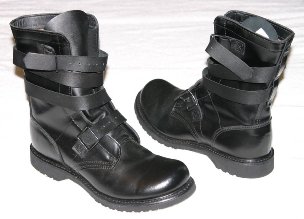
- Many boots have nylon or canvas panels in their uppers and also nylon laces which will melt if exposed to fire. Melting boots and laces will serve to further injure a crewman and make his/her evacuation of the vehicle more difficult.
- Tracked crewmen typically find themselves working in very muddy environments. Another advantage of Tanker Boots is that they are much easier to loosen than a regular laced boot when caked in mud.
- Also, today's modern tankers are exposed to many harmful chemicals - Flame-Resistant Hydraulic Fluid (FRH), Turboshaft transmission fluid, Grease, oils and various fuels. The all-leather construction of Tanker Boots prevents absorption into the boots and these chemicals from coming into close and prolonged contact with the wearer's skin.
- Tanker Boots also allow for improved circulation to crewmember's feet, as they may be sitting or immobile for long periods of time. Tank crewman during the Gulf War reported remaining seated at their gunners', drivers', and commanders' stations for periods up to the entire 100 hours of ground combat.
- An unauthorized variant of the tanker boot is the cav boot which is higher above the ankle (in imitation of riding boots worn by the old horse cavalry) and might be worn by soldiers assigned to divisional cavalry squadrons and scout units.
The above definition is for Tanker Boots.. If you are looking for another clothing term with the word tank, try Tank Tops.
| Textile & Clothing definitions and Glossaries: |
| Clothing & Fashion Industry Definitions |
| Fashion Definitions |
| Footwear & Shoe Industry Definitions |
| Miscellaneous Apparel Industry Terms |
Built for Fire, Mud and ChemistryEvery detail of the tanker boot answers a hazard of the armoured vehicle. Fire comes first: a crewman escaping a burning tank cannot afford equipment that turns against him, and where regular boots use nylon or canvas panels and nylon laces that melt when exposed to fire, the tanker boot is all leather with leather straps, materials that char rather than melt onto the skin. Mud comes second: tracked crewmen typically work in very muddy environments, and a strap and buckle can be freed in seconds where a lace caked in mud must be picked loose knot by knot, which also makes the boot much easier to loosen for a wounded man. Chemistry comes third: modern tankers are exposed to flame-resistant hydraulic fluid, turboshaft transmission fluid, grease, oils and various fuels, and all-leather construction prevents absorption into the boot and keeps those chemicals from prolonged contact with the wearer's skin. Even circulation is designed for: straps allow improved blood flow to the feet of crew members who may sit immobile for long periods, and tank crewmen during the Gulf War reported remaining seated at their gunners', drivers' and commanders' stations for up to the entire 100 hours of ground combat. From Patton's Corps to the Cavalry VariantThe boot's pedigree is as old as the tank itself. Captain George S. Patton, Jr. established the United States Tank Corps in World War I, and the strap-fastened boot is said to have been borrowed from the French crewmen his men encountered, making it one of the first pieces of kit designed for armoured warfare rather than adapted from the infantry. The design has changed little since, because the hazards have changed little: tanks still burn, still wallow in mud and still soak their crews in fluids. Its one flourish is the unauthorised cav boot, cut higher above the ankle in imitation of the riding boots of the old horse cavalry and worn by soldiers in divisional cavalry squadrons and scout units, a deliberate link between the armoured cavalry of today and the mounted regiments whose name they keep. Anyone looking for the other clothing term built on the same word should note that tanker boots have nothing to do with tank tops, the sleeveless shirts that borrowed the name of the tank suit worn for swimming a century ago. Common QuestionsWhy do tanker boots use straps instead of laces?Nylon laces will melt if exposed to fire, and melting boots and laces further injure a crewman and make evacuation of the vehicle more difficult. Leather straps and buckles do not melt, and they loosen faster than laces when caked in mud. Who is credited with the tanker boot idea?It is said the idea was borrowed from the French crewmen encountered during World War I when then-Captain George S. Patton, Jr. established the United States Tank Corps. Patton's tankers needed footwear suited to work around tracked vehicles. What is a cav boot?An unauthorised variant of the tanker boot is the cav boot, which is higher above the ankle in imitation of the riding boots worn by the old horse cavalry, and might be worn by soldiers assigned to divisional cavalry squadrons and scout units. More to ExploreMore from Apparel Search: Footwear Definitions | Clothing Industry Glossary | Fashion Terms | Apparel Search Home
|