Leather
Fabric Definitions — fabric and textile definitions from Apparel Search
Search Apparel Search
At a Glance
Definition: Leather is a material created through the tanning of hides, pelts and skins of animals — most often cow hide today — which makes the hide durable, flexible and resistant to decay.
Category: Fabric Definitions
Leather is a material created through the tanning of hides, pelts and skins of animals. Together with wood, leather formed the basis of much ancient technology, and it was a very important clothing material with legion other uses. Leather with the fur still attached is simply called fur. Today most leather is made of cow hides, but lamb and deer skin are used for soft leather in more expensive apparel. For the complete picture, from leather grades to the hides used for clothing, the tanning process and the care of finished leather, see our Leather Guide.
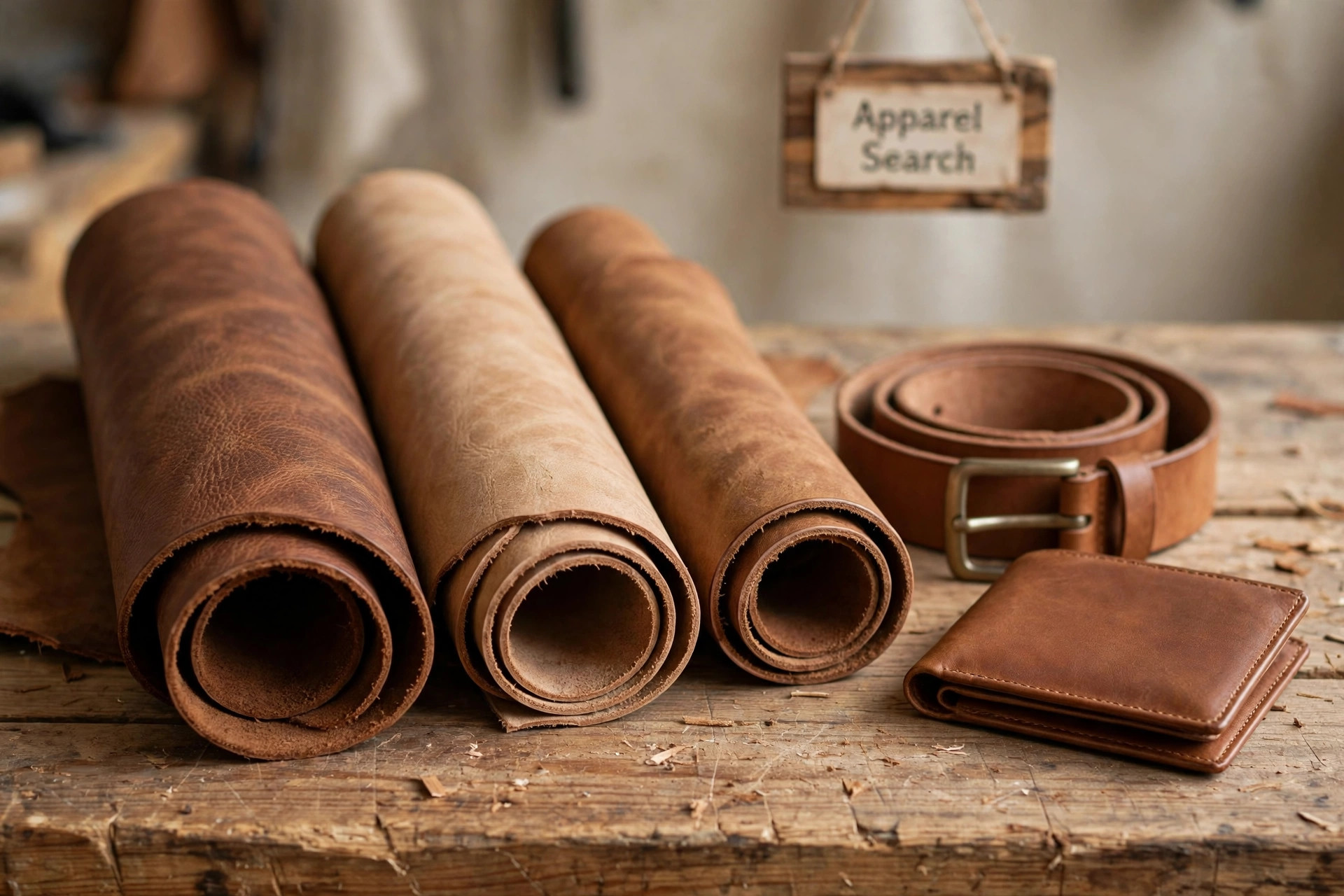
Hides and Skins: From Cow to Sting Ray
Today, most leather is made of cow hides, but many exceptions exist. Lamb and deer skin are used for soft leather in more expensive apparel, because their skins are thinner and finer-grained. The leather made from some more exotic skins has during different times in history been considered very beautiful; for this reason certain snakes and crocodiles have been hunted to near extinction. In the 1990s, farming of ostriches and emus for their meat became popular, and as a side product ostrich leather became a fad for a while: ostrich leather has a characteristic goose-bump look because of the large follicles from which the feathers grew.
In Thailand, sting ray leather is used in wallets and belts in the same way as regular cow leather. Sting ray leather is as tough and durable as hard plastic — even a metal file cannot leave a scratch. The leather is often dyed black and covered with tiny round bumps in the natural pattern of the back ridge of the animal; these bumps are then usually dyed white to highlight the decoration. Species maps onto use throughout the family: cow hides dominate by supply and all-round durability, lamb and deer give the soft leathers of expensive apparel and gloves, and exotic skins are priced by rarity and by the pattern their follicles or scales give the surface.
From Hide to Leather: Grades and Surfaces
Tanning chemically stabilizes the hide so it does not rot, and makes it durable, flexible and resistant to water and bacterial attack: a raw hide dries stiff and putrefies when wet, while a tanned hide keeps its fiber structure permanently workable. The tanned hide is then divided by layer and finish. The outer layer, with its tight natural grain, is the strongest and smoothest — full-grain leather keeps that surface intact and ages by developing patina, while corrected and embossed leathers have the surface sanded and re-grained for uniformity. Lower layers split from the hide give suede and split leathers, softer and weaker, used where the grain surface is not needed.
Finishes set the final product: patent leather receives a high-gloss lacquered coating; aniline leathers are dyed through with the grain visible; pigmented leathers carry a colored surface coat for uniformity and stain resistance. Related materials in this section include suede, buckskin and shearling, each defined separately. Leather is decorated by leather carving, leather stamping, leather embossing, pyrography, beading, dyeing of leather or painting on leather — the smooth, firm surface of tanned hide accepts tooling and color in ways cloth cannot.
Leather in Use: Properties and Care
Leather's working properties explain its ancient and modern range: it can be cut without fraying, molded when wet and hold the mold when dry, stitched and riveted at edges that take stress cloth cannot, and it breathes while resisting wind and abrasion — the combination behind footwear, jackets, belts, gloves, upholstery, saddlery and bookbinding from one material family, and behind garments such as chaps and leather jackets. Its limits are water and neglect: soaked leather that dries unconditioned stiffens and cracks, because the tanned fiber network needs its internal lubrication maintained; regular cleaning and conditioning, drying away from direct heat, and storage with air circulation are the standard care.
The record also notes, factually, that ethical vegetarians and vegans avoid the use of leather for moral reasons, and that synthetic alternatives exist for those buyers. Material identification remains physical either way: real leather shows a fibrous cross-section at a cut edge, while coated-fabric imitations show a textile or foam backing beneath a surface film.
Common Questions
What does tanning do to a hide?
Tanning chemically stabilizes the hide so it does not rot, and makes it durable, flexible and resistant to water and bacterial attack. A raw hide dries stiff and putrefies when wet; a tanned hide — leather — keeps its fiber structure permanently workable, which is why leather could serve as a basis of ancient technology alongside wood.
How is leather decorated?
By leather carving, leather stamping, leather embossing, pyrography, beading, dyeing of leather and painting on leather. The smooth, firm surface of tanned hide accepts tooling and color in ways cloth cannot, so decoration is worked into or onto the material itself rather than applied as a separate fabric layer.
How do specialty leathers such as ostrich and sting ray differ?
By skin structure. Ostrich leather has a characteristic goose-bump look from the large follicles the feathers grew from. Sting ray leather, used in wallets and belts in Thailand as cow leather is elsewhere, is as tough and durable as hard plastic — a metal file cannot scratch it — and is often dyed black with its tiny natural back-ridge bumps dyed white to highlight the pattern.