Buckskin
Fabric Definitions — fabric and textile definitions from Apparel Search
Search Apparel Search
At a Glance
Definition: Buckskin is a soft, pliable leather traditionally made from the hide of a deer or elk, valued for its cloth-like flexibility and its matte, pale buff surface.
Category: Fabric Definitions
Word Origin
The word names the animal the leather came from: a buck is a male deer, and buckskin was, in its original sense, the prepared skin of that animal.
Buckskin is a soft, supple leather that was traditionally prepared from the hide of a deer or an elk. Present-day material sold under the same name may instead start as sheepskin, tanned and coloured to imitate the original. What defines the material is not a surface finish but a character: it stays flexible, folds much like a heavy cloth, and presents a matte, pale buff face. Clothing sewn from it has its own collective name — buckskins.
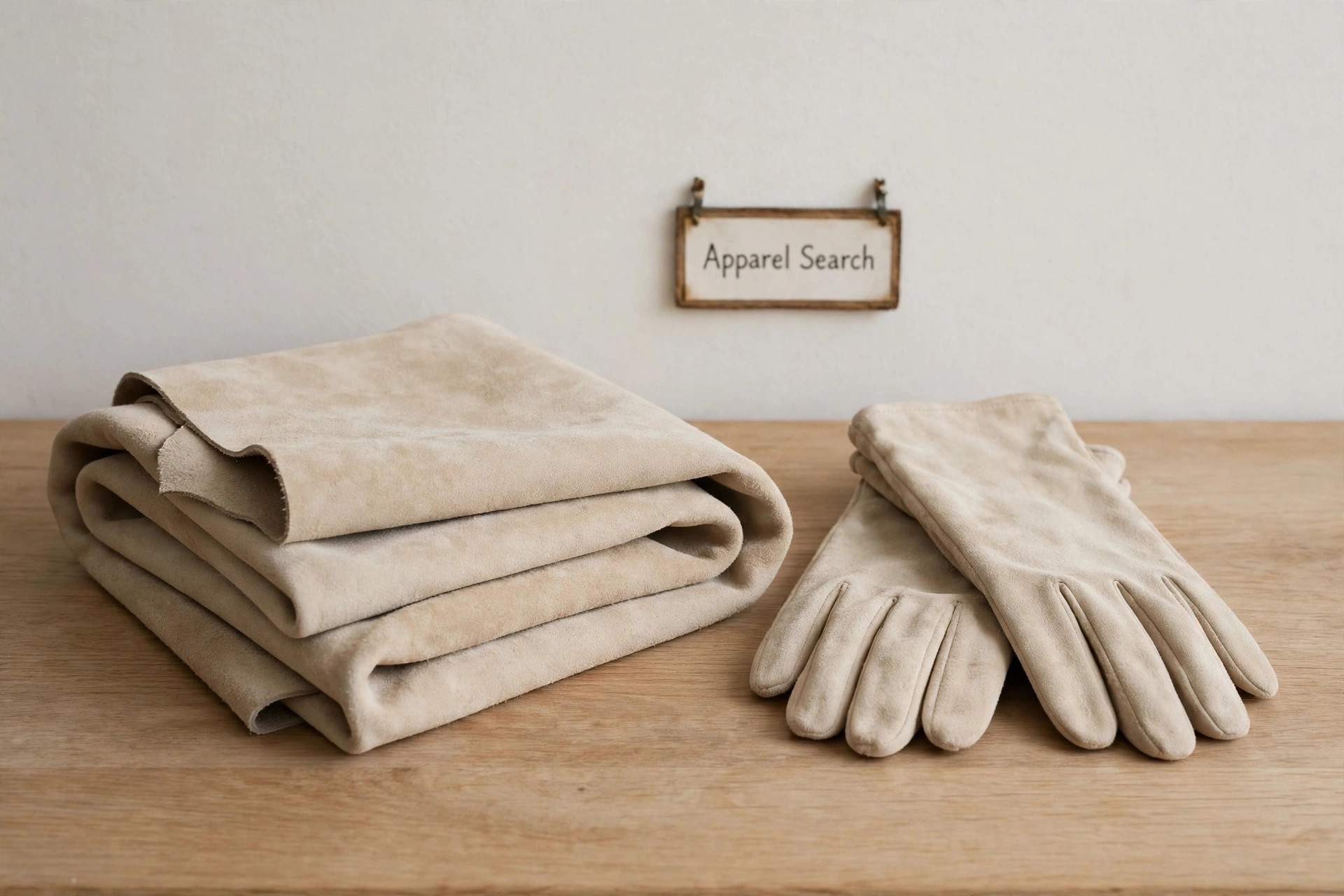
Softness From Hide and Tanning Together
Most leathers are prized for firmness, structure or a polished surface. Buckskin is prized for nearly the opposite set of qualities: pliability, softness, and a willingness to bend and move with the wearer that is closer to cloth than to a stiff hide. Both halves of its making contribute. Deer and elk hides are comparatively thin, with a fine grain, and the traditional soft tanning worked the hide until the fibres inside it remained separated and mobile instead of setting into the rigid sheet that heavier tanning methods produce.
The result is a leather that breathes more freely than heavily finished skins, takes up moisture, and can be cut and sewn on ordinary heavy-duty equipment — the combination that made it a practical clothing material long before it became a fashion reference. Its pale buff surface also accepts dye evenly, and that fact explains the modern substitute: sheepskin versions are coloured precisely to land on the buff tone that buyers have learned to expect from the name buckskin. The trade that supplied the original hides is covered in the deerskin trade definition and the fur trade definition.
Buckskins: The Clothing Made From It
Garments cut from this leather are known collectively as buckskins. The historical wardrobe built on the material — jackets, leggings, shirts and gloves — belongs to frontier and Western dress, and pieces such as chaps and the moccasin belong to the same world of soft, sewn hide clothing; see the westernwear definition for the style tradition they feed into. The fringe so often seen on buckskin garments was not decoration first: hanging strips of leather drew rainwater outward and away from seams and the body, shedding it before it could soak in.
That imagery can obscure the material reason the clothing existed. In the settings that made buckskins famous, a soft hide that could be sewn, patched and repaired with simple tools, that stayed wearable in motion and did not crack stiff, was often simply the most serviceable clothing material at hand. The look became iconic because the performance came first. Fittings from the same animal, such as deer horn buttons, completed garments without recourse to manufactured hardware.
Care and Practical Character
The open, lightly finished surface that makes buckskin comfortable is also where it is vulnerable. It shows water marks, deepens in colour where hands handle it, and — in the manner of lightly tanned leathers generally — will dry stiff after a soaking unless it is flexed and worked back to softness while it dries. Care follows from those facts: spot cleaning where possible, specialist leather cleaning when a full wash is unavoidable, and storage kept dry and ventilated.
In wear, its strengths are comfort and grip. Gloves and work garments in buckskin remain flexible in cold that stiffens heavier leathers, and the matte surface gives the hand natural traction — one reason the material persists for gloves long after its frontier associations faded. Set against a finished skin such as patent leather, which is valued for exactly the sealed, glossy surface buckskin lacks, the contrast shows how wide the family gathered under the fabric definition and the apparel definition really is: buckskin succeeds by leaving the hide almost as open and workable as the tanning allows.
Common Questions
What animal does buckskin come from?
Traditionally deer — the name refers to the buck, the male deer — or elk. Modern material sold as buckskin may instead be sheepskin tanned and dyed to reproduce the soft, matte, buff-coloured character of the original, so what a given product is made from depends on its labelling.
How is buckskin different from suede?
Suede is defined by a finish: the flesh side of a hide buffed up into a nap, and it can be made from many kinds of hide. Buckskin is defined by its source hide and its soft, pliable tanning — a whole leather valued for flexibility and a smooth, velvety feel rather than for a raised nap on one face.
What garments are called buckskins?
Clothing made of buckskin is collectively called buckskins — historically jackets, leggings, shirts and gloves associated with frontier and Western wear, often fringed. The fringe began practically: the hanging strips helped shed rainwater away from seams and the body.