Buckskins
Clothing Definitions — definitions of garments and clothing terms from Apparel Search
Search Apparel Search
At a Glance
Definition: Buckskins are clothing, usually a jacket and leggings, made from buckskin — a soft, sueded leather from the hide of deer or elk — and traditionally trimmed with fringe.
Category: Clothing Definitions
Word Origin
Buckskins take their name from the material: buckskin is the soft, sueded leather made from the hide of a buck — a male deer — or another deer or elk. The plural form, buckskins, came to mean the garments themselves, in the same way that a pair of trousers cut from the leather was once simply called by the name of its cloth.
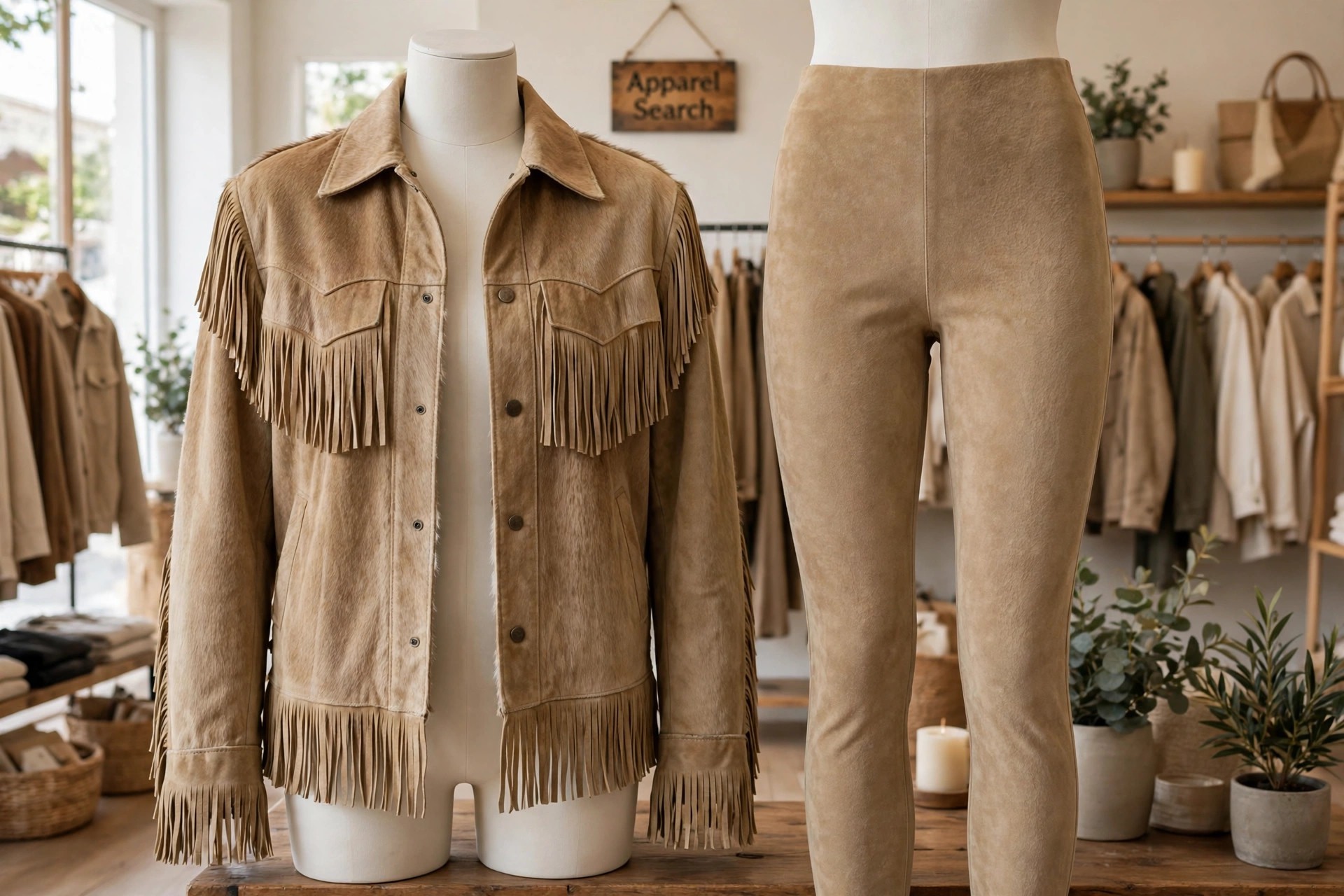
Buckskins are the working clothes of the North American frontier: a jacket and leggings cut from buckskin, the soft, sueded leather tanned from deer or elk hide. The outfit was developed from deerskin clothing worn by Native American hunters, adopted by trappers, scouts and mountain men who needed dress that was quiet in the woods, warm, hard to tear, and repairable far from any tailor. Its hanging fringe and decoration of beads, embroidery or quillwork made it as recognizable as it was practical, and it remains a staple of western wear today.
The Leather Comes First
Everything about buckskins follows from the hide. Traditional buckskin was brain-tanned and smoked, a process that leaves the leather exceptionally soft, breathable and stretchy, with a sueded surface on both sides. Properly smoked buckskin has a quality no ordinary leather matches: it can be soaked and dried repeatedly and still come back supple, where an unsmoked hide stiffens into board. That mattered enormously to people who lived outdoors, crossed rivers and dried their clothes by a fire.
Modern buckskin is tanned commercially, but good deer and elk hide keeps the same character — a fine, tight grain, natural give, and surprising resistance to tearing for so soft a material. The same leather is prized well beyond the jacket and leggings, for gloves, bags and moccasins, anywhere softness and grip are wanted. Our separate definition of buckskin the leather covers the tanning in more detail, and the wider family is covered under leather.

The Garments Themselves
The classic set is two pieces. The jacket is a hunting shirt — pulled over the head or fastened down the front — cut loose enough for work and layering, often dyed or left in the natural tan of the hide. The leggings are separate tubes of leather for each leg, tied or strapped at the waist and gartered below the knee, worn with a breechcloth in the earliest frontier dress and later with trousers or on their own as the lower half of the outfit. Worn with moccasins of the same leather, the whole ensemble was silent, which was a working requirement for a hunter, not a style choice.
Decoration was layered onto that practical base. Beadwork and quillwork — later supplemented by embroidery in thread — marked tribal identity, status and individual taste, and dyed jackets in ochre, brown and black appear throughout the period. The related garment for the mounted West is the chaps, leather leg protection worn over trousers, which shares the buckskin outfit's logic of leather where the brush and the saddle do their damage.
Why the Fringe?
The fringe is the detail everyone notices, and it began as function. The long hanging strips along the seams act as wicks: rain striking the garment runs down the fringe and drips clear of the body instead of soaking into the seams and the clothing beneath. Fringe also breaks up the wearer's outline against brush, a small advantage for a hunter that show performers later turned into pure theatre.
On later western wear and Wild West show costume, the fringe grew longer and more decorative until it became the visual signature of the whole style — the first thing a film costume designer reaches for to say 'frontiersman.' Genuine working fringe stays shorter and is cut from the seam allowances of the hide itself, so it costs no extra material and can be trimmed away as it wears.
From Necessity to Emblem
Buckskins began as Native American dress, perfected over generations for hunting on foot in woodland and plains country. European-American trappers and scouts of the early nineteenth century adopted the outfit wholesale because nothing in woven cloth performed as well, and figures such as the mountain men made it the uniform of the fur trade. By the era of the Wild West shows, the fringed suit had become a costume of identity: scouts and performers wore elaborate, heavily beaded buckskins to announce the frontier at a glance, whether or not they still hunted in them.
The style has returned in waves ever since — as a brief fashion fad in the 1970s, in film and television Westerns, and steadily in historical re-creation, traditional hunting dress and heritage western wear. Caring for real buckskin means keeping it dry in storage, brushing the sueded surface rather than washing it, and accepting that a working garment will darken and polish with wear — part of its character, and exactly what the original wearers expected of it.
Not to Be Confused With
Buckskins are the garments — the jacket and leggings. Buckskin is the leather they are cut from, a soft sueded hide from deer or elk. The two words are often used interchangeably in shops, but a jacket described as buckskin is named for its material, while buckskins as a set means the full frontier outfit.
Common Questions
What are buckskins?
Buckskins are clothing — usually a jacket and leggings — made from buckskin, a soft sueded leather from the hide of deer or elk. They are often trimmed with fringe and decorated with beads, embroidery or quills, and were the practical dress of Native American hunters and of frontiersmen and mountain men.
Why do buckskins have fringe?
The fringe is practical before it is decorative: the hanging strips help rainwater run off the garment and drip clear of the body instead of soaking in at the seams, and they break up the wearer's outline. On later Western and show clothing the fringe became mainly a style feature.
What is buckskin leather?
Buckskin is a soft, sueded leather made from deer or elk hide. Traditionally brain-tanned and smoked, it stays supple after wetting once properly prepared, which is what made it so valuable for clothing that had to survive outdoor life.