Moccasin
Footwear Definitions — the one-piece soft leather shoe of the North American Indian tribes from Apparel Search
Search Apparel Search
At a Glance
Definition: A moccasin is a shoe made in one piece of deerskin or other soft leather, with a soft, flexible sole and an upper often adorned with embroidery, beading or other ornament.
Category: Footwear Definitions
Word Origin
Moccasin is a Native American word whose spelling and pronunciation vary in the different dialects. The name given to the venomous snake called the water moccasin is possibly a distinct word, of which the origin has not been traced.
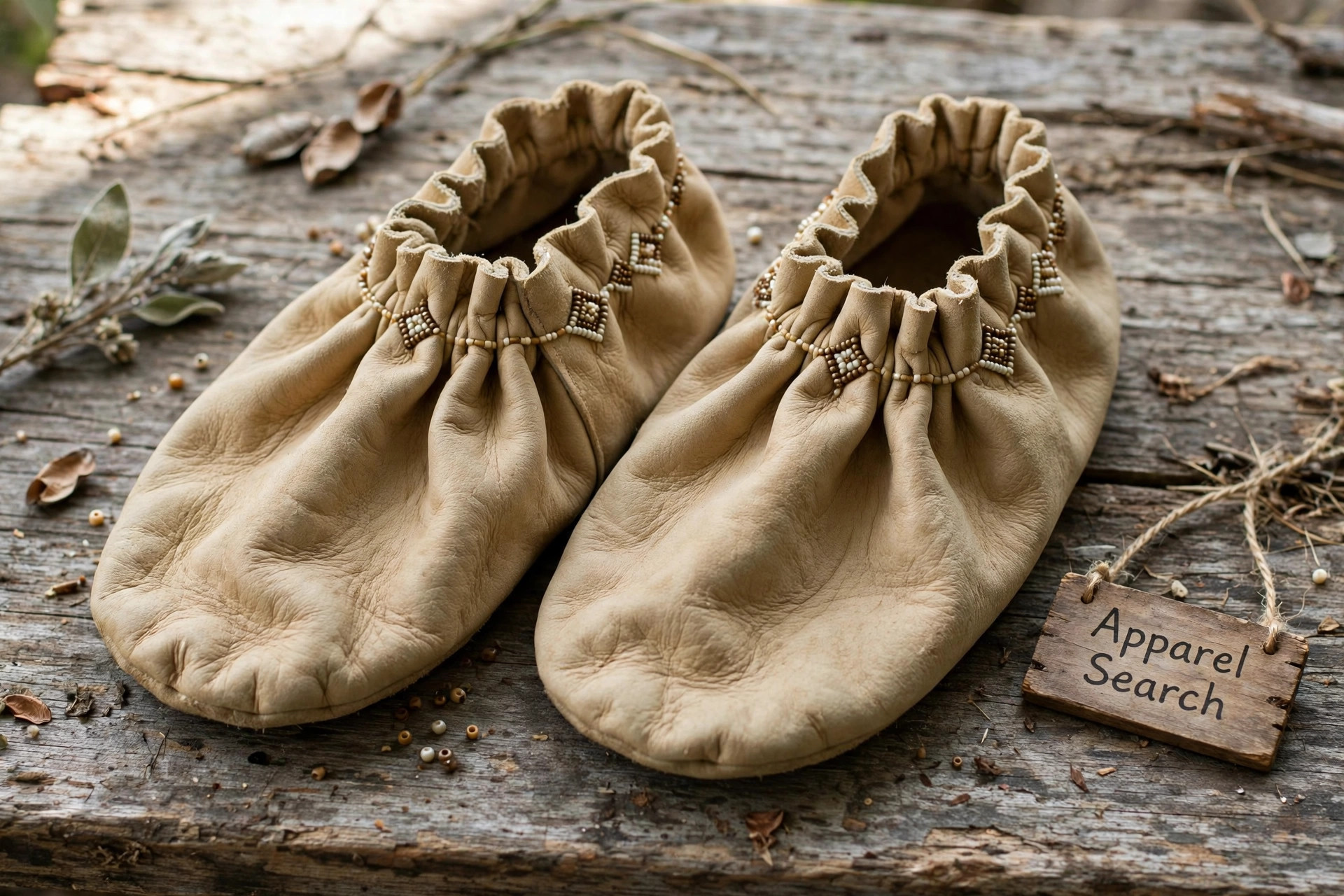
A moccasin is a shoe made of deerskin or other soft leather, made in one piece so that the sole is soft and flexible and the same leather continues up around the foot. The upper is often adorned with embroidery, beading or other ornament. It is the footwear of the North American Indian tribes, and was also worn by hunters, traders and settlers who worked the same ground. Few shoe designs are simpler, and few have travelled further: the gathered, soft-soled construction survives in modern comfort and house shoes, and the moccasin top was borrowed directly by the loafer. This page explains the one-piece construction, the decoration it invites, and the other lives of the name — a flower, a snake, and a shearer's working shoe on the far side of the world.
One Piece of Leather, Shaped by the Foot
The moccasin reverses the logic of European shoemaking. Instead of building a shoe from an upper, a separate sole and a heel, the maker takes one piece of deerskin or other soft leather, places the foot on it, and draws the edges up around the foot, gathering and stitching them over the toes. The result has no hard sole at all: the leather under the foot is the same piece as the leather over it, soft and flexible, so the wearer feels the ground and moves quietly — the qualities hunters valued, and the reason the style was adopted by traders and settlers.
Softness has a price in durability, since a one-piece sole wears through where a joined shoe would be resoled, and different types of leather have different wear characteristics; the choice of hide, deerskin or another soft leather such as buckskin, is therefore part of the making, not an afterthought. The wider world of buckskin clothing belongs to the same frontier wardrobe the moccasin served.
Embroidery, Beading and Ornament
The construction allows the decoration the style is known for: the gathered upper is a natural field for embroidery, beading and other ornament, worked directly into the leather. Ornament is not an addition to a finished shoe so much as part of the same making — the piece of leather that wraps the foot is the piece that carries the pattern. That combination, a purely practical soft shoe that is also a decorated object, is a large part of why the moccasin has remained recognisable across centuries and why moccasin-style uppers still appear on shoes whose soles are made in entirely modern ways.
The Shearers' Moccasin
The shoe keeps a working life far from its first home. In New Zealand and Australia, sheep shearers make for themselves footwear consisting of part of a cured sheepskin with the wool inside, to use while working. These moccasins protect the feet, provide good grip on wooden floors and soak up the sweat of the wearer, while not hurting the animal being shorn — a moccasin in everything but material, arrived at independently because the job asks for exactly what the design gives: softness, grip and quiet contact with the floor. The same softness is why the style sits naturally beside boots in the working wardrobes of hunters and settlers, as the quiet alternative where hard soles would be a handicap; the boot protects by standing between foot and ground, the moccasin by moving with both.
One Name, Several Lives
The word travelled further than the shoe. In botany, the lady's slipper is known in the United States of America as the moccasin flower, from its resemblance to a shoe or moccasin. The name is also given to a venomous snake found as far north as North Carolina and westward to the Rocky Mountains, popularly called cottonmouth from the white rim around the mouth; it is about two feet long and is often found in marshy land, and is called the water moccasin to distinguish it from the upland moccasin, commonly called copperhead, which is found further north in dry and mountainous regions. The snake name is possibly a distinct word whose origin has not been traced, and it should not be read as evidence about the shoe's name.
For the wider family the moccasin belongs to, see the general footwear and clothing definitions; the modern moccasin-style shoe keeps the gathered toe and soft construction as a comfort and house shoe, a direct descendant of this one-piece Indigenous North American design.
Common Questions
How is a moccasin constructed?
A moccasin is made in one piece: the soft leather wraps under the foot so the sole is soft and flexible, and the upper is drawn up and gathered around the foot rather than attached to a separate hard sole.
Who traditionally wore moccasins?
The moccasin is the footwear of the North American Indian tribes and is also worn by hunters, traders and settlers. In New Zealand and Australia, sheep shearers make their own version from part of a cured sheepskin with the wool inside.
Why do shearers wear sheepskin moccasins?
Shearers' moccasins protect the feet, provide good grip on wooden floors and soak up the sweat of the wearer while not hurting the animal being shorn. The soft wool-in construction suits hours of work holding sheep on a board floor.