Slipper
Footwear Definitions — the soft indoor shoe in felt, soft leather and sheepskin from Apparel Search
Search Apparel Search
At a Glance
Definition: A slipper is a soft, light indoor version of a shoe, frequently made of felt or soft leather and sometimes lined, shaped either like a shoe or backless so the foot can be slipped in from behind.
Category: Footwear Definitions
Word Origin
The name describes the act of putting the footwear on: a slipper is a shoe that is slipped onto the foot, and the backless form, entered from behind with no bending down and nothing to fasten, is the shape the verb fits exactly.
A slipper is an indoor version of a shoe, frequently made out of either felt or soft leather, which may or may not be lined with a soft material such as felt. Slippers may be shaped like a shoe, with the foot inserted through the top, or may have no heel, so the foot can be slipped in from the back. That softness is the whole definition: where a shoe is built for the street and boots are built for weather and work, the slipper is built for the floor of a house, and everything about its materials, its two shapes and its lack of structure follows from the room it serves.
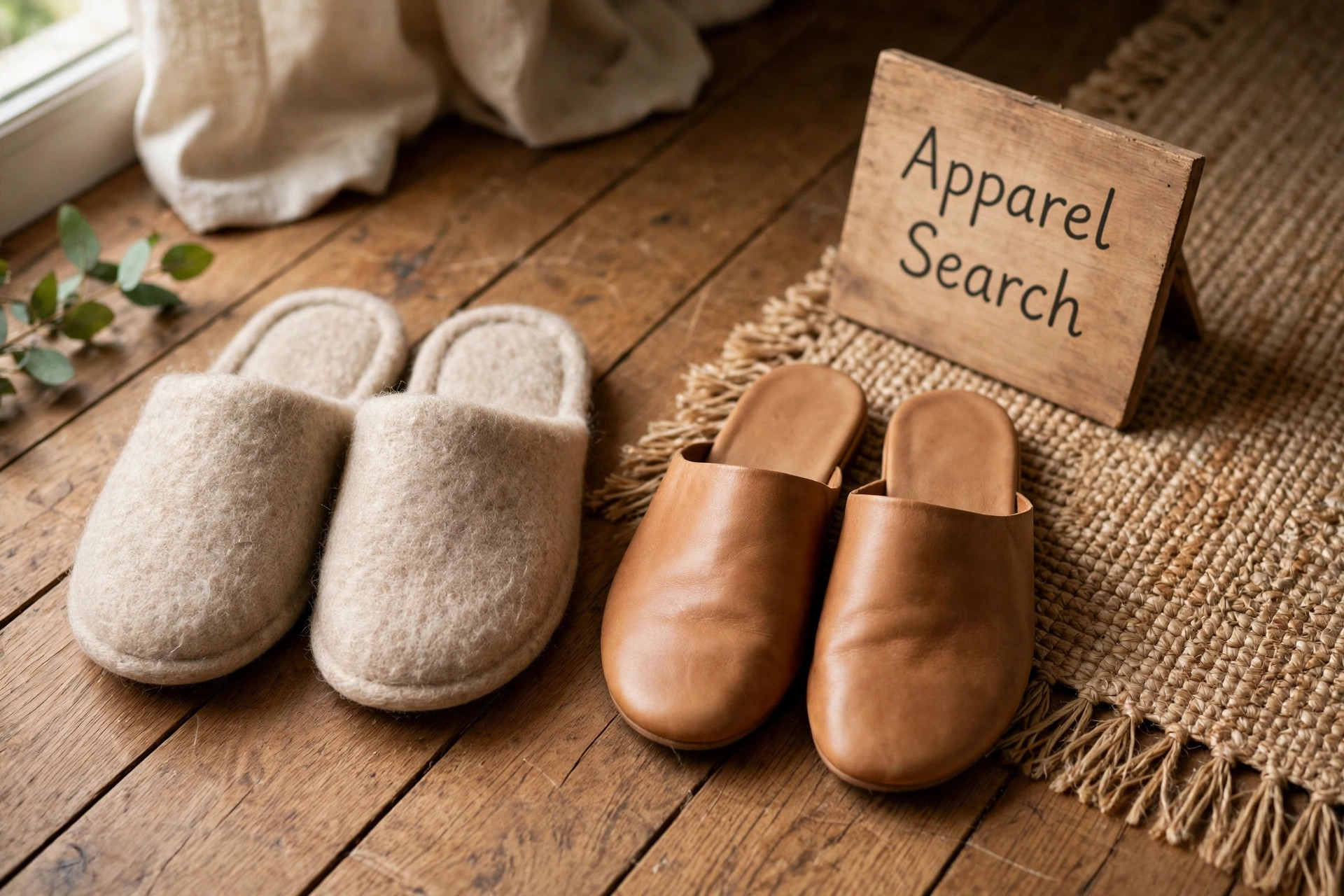
Two Shapes, One Purpose
Slippers divide by how the foot enters. The shoe-shaped slipper encloses the heel and takes the foot through the top, staying on through stairs and quick trips to the door. The backless slipper, a mule shape, lets the foot slip in from behind with no bending down, trading security for speed — and it is the shape meant by the verb the footwear is named for. Both shapes share what the house asks of footwear and the street does not: quietness on hard floors, warmth without weight, and nothing in the construction that would mark a floor or tire a foot at rest.
What no house slipper offers is structure. There is no ankle support, the sole is minimal, and there is no weatherproofing, because the indoor floor asks for none of it. The contrast with the rest of the shoe cupboard is a contrast of materials. Shoes are generally made of canvas, plastic or rubber; boots are generally made out of leather or a leather-like synthetic compound and have hard rubber soles. The slipper gives up all of that armour deliberately: changing out of street shoes at the door is the point, and the softness is the comfort being changed into.
Materials Follow the Room
Felt is the classic slipper material: warm, quiet on hard floors and cheap to replace. Soft leather, sometimes lined with felt or sheepskin, is the durable and warmer option, and sheepskin slippers are a retail category of their own — see the retailers of women's sheepskin slippers for the range. A lining, where one is fitted, is itself usually a soft material such as felt, so the inside of the slipper stays as gentle as the outside. Worn with or without socks, the house slipper is the least engineered item of footwear most people own, and the one worn for the most hours of the day.
The exception proves the rule of materials following the room. Some slippers, particularly those meant to be used near pools, bathrooms or other wet places, are made of plastic or rubber, because felt and leather would stay wet and spoil. The wet-area slipper is a tool shoe rather than a comfort shoe: its job is grip and a barrier against wet floors, and it borrows its materials from outdoor footwear to do it. Between the felt house slipper and the rubber pool slipper, the word covers the full range of what a foot needs between the bedroom, the bathroom and the pool edge; the wider family of slippers as products shows how far that range now runs.
The Slipper Beyond the House
The word slipper does more work than the object does. Hotels and airlines issue disposable slippers as a signal that the guest may treat the room as home; hospitals and spas use washable versions for hygiene. Language stretches the term further still: the term is sometimes used interchangeably with the terms flip-flop and sandal, in Hawaii the flip-flop is itself called a slipper, and in Commonwealth schools a slippering was a punishment administered with a gym shoe, so the same word can name a backless beach sandal, a felt house shoe and a plimsoll depending on where it is spoken. Travellers learn to translate by context.
In the definitions of the footwear trade, though, the slipper keeps its strict sense: the soft indoor counterpart of the shoe, the first footwear put on in the morning and the last taken off at night. Readers who enjoy shoes in all their forms will find the slipper at the quiet end of the subject, but it is the end where footwear is pure comfort, stripped of every demand the street imposes.
Not to Be Confused With
A slipper is not, strictly, a flip-flop or a sandal, although the word is sometimes used interchangeably with both, and in Hawaii flip-flops are themselves called slippers. The slipper in the strict sense is the soft indoor counterpart of the shoe; the flip-flop is an outdoor backless sandal.
Common Questions
What is the difference between a slipper and a shoe?
A slipper is an indoor version along the same vein as a shoe, built soft and light for the house rather than for the street. Shoes are generally made of canvas, plastic or rubber and boots of leather with hard rubber soles, while slippers favour felt and soft leather, sometimes lined with a soft material such as felt.
Why are some slippers made of plastic or rubber?
Slippers meant to be used near pools, bathrooms or other wet places are made of plastic or rubber, because felt and leather would stay wet and spoil. The wet-area slipper is a tool shoe; the felt slipper is a comfort shoe.
Is a slipper the same as a flip-flop or a sandal?
The term slipper is sometimes used interchangeably with the terms flip-flop and sandal, and in Hawaii flip-flops are themselves called slippers. Strictly, though, the slipper is the indoor shoe, and the flip-flop is an outdoor backless sandal.