Women's Leather Sneakers Guide
The leather sneaker is the shoe that ended the line between sport and street — and in full-grain leather it outlasts and out-dresses every mesh rival.
Shop Women's Leather Sneakers Now
Shop Women's Leather Sneakers on Amazon Shop Women's Leather Sneakers on eBayThe Amazon and eBay links on this page are affiliate links. If you make a purchase through them, Apparel Search may earn a commission.
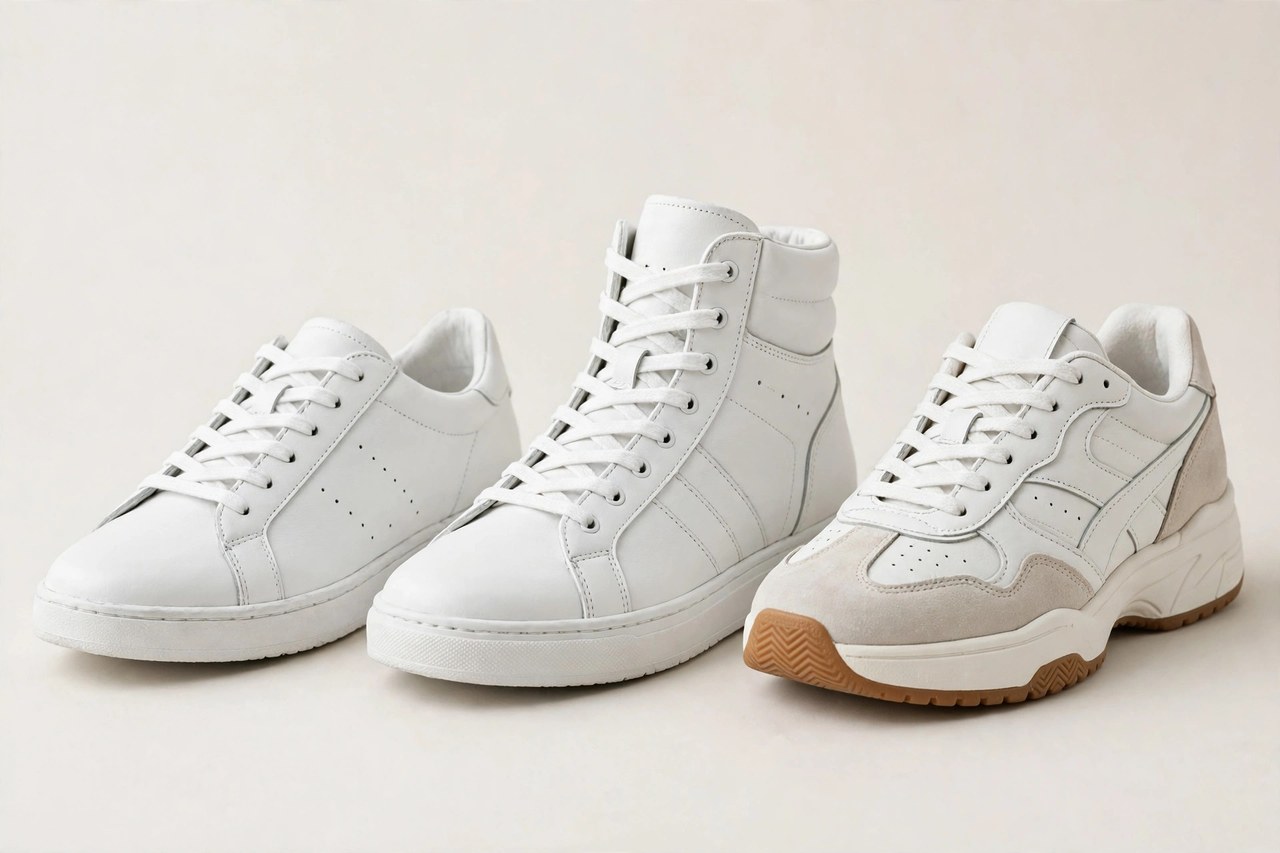
Sneakers began as rubber-soled sport shoes, but the version that conquered everyday dress is the leather one: a clean court-style upper in white or colored leather that goes with everything from jeans to a suit. This guide covers women's leather sneakers — why leather beats mesh for a daily sneaker, the styles, and how to keep white leather white.
Our general women's sneakers guide is linked below; this page is specifically about the leather upper and what it changes.
Leather vs Mesh: The Daily Sneaker Argument
A mesh sneaker is a running shoe; a leather sneaker is a shoe. Leather uppers hold their shape instead of collapsing around the foot, wipe clean instead of absorbing street dirt, block wind and light rain instead of drinking them, and age by creasing gracefully rather than fraying and tearing at the toes. For actual running, take the technical shoe; for the ten thousand steps of ordinary life, leather is the longer-lived, better-looking answer — and the only sneaker most dress codes will accept.
Quality markers mirror the leather shoes guide: full-grain or top-grain upper (a sneaker that boasts only “genuine leather” is usually a coated split), a leather or quality textile lining, a stitched-and-cemented cupsole, and a removable insole over real cushioning.
Styles
The classic low-top court sneaker — plain, white, minimal — is the wardrobe piece: with tailoring, dresses, denim, everything. The retro runner mixes leather with suede and nylon panels and a sculpted sole, the sportier register. High-tops in leather carry the basketball inheritance and the ankle support of a light boot. Platform and fashion sneakers thicken the sole for height. And colored and metallic leathers do the statement work — but the white pair is bought first, twice as often, and worn four times as much.
Fit a sneaker as a shoe, not a slipper: a thumb's width at the toe, heel held by the counter, and enough volume for the thicker socks you will actually wear — leather eases across the foot but the sole unit fixes the length forever.
Keeping White Leather White
The whole art is in little-and-often: wipe white sneakers down after dirty outings before the soil sets, wash the laces (which grey before the leather does), use a dedicated white-leather cream or a gentle soap solution on scuffs, and keep a melamine sponge for sole edges. Condition occasionally — dried-out white leather cracks at the flex point, and a crack cannot be un-cracked, only covered.
Rotate pairs, store them out of sunlight (which yellows white leather and its soles), and never machine-wash a leather sneaker: waterlogging stiffens the hide and kills the cushioning. Treated like the leather shoes they are, a good pair lasts years of daily wear.
Construction has two schools: the cupsole — a pre-formed rubber cup into which the upper is cemented and, on better pairs, also stitched — which gives the classic court profile; and the flat rubber sole stitched to a leather midsole, the minimalist method of the premium end. Either can be durable; what fails first on cheap pairs is the heel lining and foam collar, which is why better leather sneakers line the heel in leather or suede. A last history note: the white leather sneaker's reign began on 1970s tennis courts, where leather replaced canvas as the serious player's upper — fashion simply kept the uniform.
More Leather Guides
Photos

Looking for Women's Clothing Stores?
This guide helps you choose women's leather sneakers, from classic white to high-tops. To browse where to buy, visit our women's clothing store directory, where you can find retailers that carry them.