Women's Sneakers Guide
Sneakers are flexible-soled shoes first designed for sport and exercise, now split into performance lines for training and fashion lines for everyday wear.
Shop Women's Sneakers Now
Shop Women's Sneakers on Amazon Shop Women's Sneakers on eBayThe Amazon and eBay links on this page are affiliate links. If you make a purchase through them, Apparel Search may earn a commission.
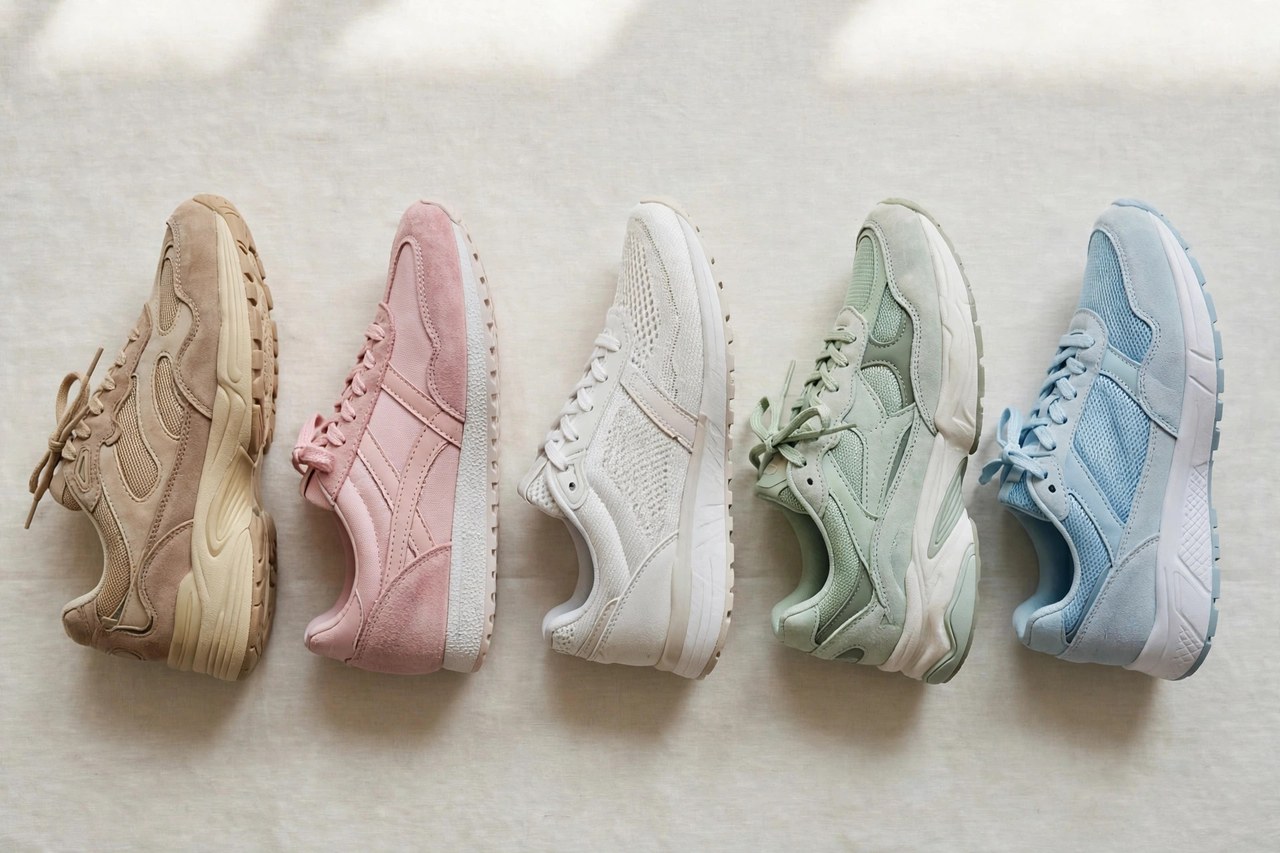
Sneakers are shoes primarily designed for sports or other forms of physical exercise, but now also widely used for everyday wear. The term generally describes footwear with a flexible sole made of rubber or synthetic material and an upper of leather, synthetic substitutes or cloth. Inside that one definition now live two different products: the performance sneaker, engineered for a sport, and the fashion sneaker, engineered for an outfit, and confusing them is the most common buying mistake in the category.
This guide separates those two jobs. It covers what running, training and court sneakers actually do differently, what fashion and retro sneakers borrow and what they leave out, uppers and cushioning in plain terms, and how to fit a shoe whose sizing can usefully be narrowed by size, width, closure and style once you know which of the two products you are shopping for.
Performance Sneakers: Running, Training and Court
Running shoes are built for straight-ahead motion: cushioning stacked for forward impact, a curved, rockered sole, and an upper that holds the midfoot while the toes splay. Cross-training shoes are flatter and more stable side to side, for gym work, classes and lifting, where a soft running sole would feel unstable. Court and trail styles add lateral support and, for trail, lugged grip. Trail-running and cross-training are separate needs, and they genuinely are separate shoes.
Buy performance sneakers for the activity, and replace them by wear, not appearance: running cushioning typically tires after several hundred miles, compressing invisibly while the upper still looks new. Aching knees in an old pair are often the shoe's retirement notice. Athletic sneakers are sold in standard and wide widths, and width matters more here than in fashion styles, because a working foot swells and spreads under load.
Fashion and Retro Sneakers
Fashion sneakers take the sneaker silhouette and prioritize look, comfort for ordinary walking, and outfit range. Retro styles revive archive court and running shapes from past decades in leather and suede; minimalist white leather sneakers are the dressed end, worn with tailoring and dresses; chunky and platform soles are the statement end. The brand landscape — fashion lines from houses such as Lacoste and Skechers alongside athletic names — reflects this split market accurately.
Judge a fashion sneaker as you would any casual shoe: leather quality, sole flexibility, insole cushioning, and whether the shape suits your wardrobe's trousers and hems. Do not judge it by athletic specifications it never claimed, and do not take a fashion sneaker running because it resembles one. Conversely, a technical running shoe worn as a fashion statement is a legitimate style choice, but its higher price buys performance you will use only as looks.
Uppers, Cushioning and Closures
Uppers divide into engineered knit, which is light, breathable and sock-like; leather, which is durable, weather-tolerant and dressier; canvas, the light summer classic; and synthetics tuned for support in sport models. Knit stretches over bunions and swelling kindly but supports less; leather holds shape and cleans easily. For daily walking mileage, a leather or structured knit upper on a cushioned sole is the durable middle ground most wearers settle on.
Cushioning foams trade softness against stability. Very soft, thick midsoles feel wonderful on a short try-on and tiring on a long day for some feet, while firmer foams guide the foot more. Closure is a real variable: laces adjust across the instep and are the performance default, while slip-on and elastic closures trade that adjustment for speed. Heel counters, arch shape and toe-box width differ by brand last, so brand loyalty in sneakers is often just last loyalty.
Fit and Care
Fit sneakers at day's end, in the socks you will wear, with a thumbnail of space ahead of the longest toe for athletic use and slightly less for fashion pairs. Walk, and if you run, jog a few steps in the shop: the heel should hold without the laces being cranked, and no toe should touch the front. Sneaker sizes are not standardized across brands, so treat your size in each brand as separate knowledge, and reorder by model name, not by number alone.
Care extends life in both branches. Rotate two pairs if you walk or train daily, letting foam recover between days. Wash knit uppers gently if the maker allows, never tumble dry performance foams on heat, and keep leather sneakers wiped and conditioned like any leather shoe. Store them uncrushed so toe boxes keep their shape. A sneaker's sole wear pattern is useful information: heavy one-sided wear on a performance pair is worth showing to a fitter when you buy the next one.
Related Women's Guides
Photos


More to Explore on Apparel Search
Looking for Women's Clothing Stores?
This guide helps you choose women's sneakers. To browse where to buy, visit our women's clothing store directory, where you can find retailers that carry them.