Women's Leather Bras Guide
A leather bra is a construction exercise in miniature: the softest hides, fine seams and a mandatory lining, building lingerie's most structured garment.
Shop Women's Leather Bras Now
Shop Women's Leather Bras on Amazon Shop Women's Leather Bras on eBayThe Amazon and eBay links on this page are affiliate links. If you make a purchase through them, Apparel Search may earn a commission.
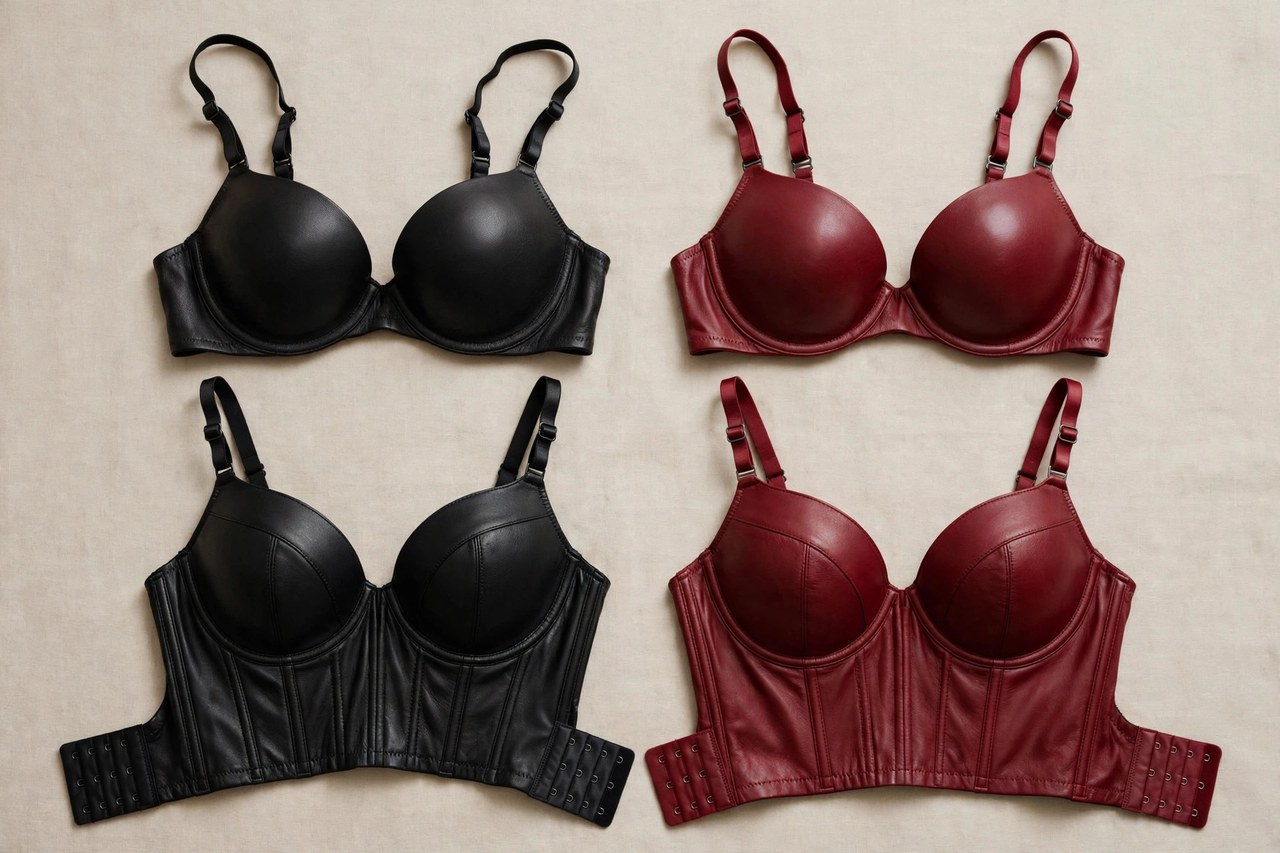
This guide treats the leather bra as what it is in construction terms: the most precisely fitted garment in the leather wardrobe, made from the softest hides in the family. A leather bra is built like any other bra — cups, band, straps, closures — but the material changes every construction decision, and this page covers the styles, the leathers, the lining that is not optional, and how the fit is judged.
Leather bras sit within the wider leather lingerie family covered in this section, and within the general bra category in the B section of this guide.
Styles and Construction
The styles mirror the bra category: soft-cup and bralette forms in thin lambskin are the most common, since leather has no natural elastic give and unlined wires fight the material; longline styles, extending to a banded torso, distribute the fit across more area and suit leather best of all; balconette and demi cups are made with molded or seamed leather panels; and bustier-style pieces blend the bra into the leather tops family.
Construction details decide wearability. Every skin-contact surface must be lined — in cotton jersey, silk or a smooth synthetic — because raw hide against skin chafes and absorbs moisture it cannot release. Seams are flat-lapped; edges are bound; straps are doubled or fabric-backed; and closures are the standard hook-and-eye, set in a fabric extension rather than punched into the hide itself. Underwires, where used, sit in fabric channels exactly as in a cloth bra.
The Leathers Used
Only the lightest garment leathers serve: lambskin first, at its thinnest; stretch leather, whose elastic backing does the fitting work that hide alone cannot; and occasionally fine goatskin for more structured pieces. Suede appears as an outer finish with a smooth lining. Anything stiffer belongs to the tops and bustier category — a bra in mid-weight cowhide would be a costume, not a garment.
Because leather does not breathe like cotton, a leather bra is an occasion garment worn for hours, not a daily-wear bra worn for a season — construction honesty about that is the mark of a well-made one.
Fit and Care
Fit follows bra rules with a leather adjustment: the band should be firm on the loosest hook (leather eases slightly, so there must be room to tighten), cups should sit without the hide creasing across the top, and straps should be adjusted after the garment warms to the body, when the leather relaxes. Between sizes, the lined and stretch-backed styles are the forgiving choice.
Care: air the piece after wearing, inside out; wipe the lining with a barely damp cloth; condition the outer hide very sparingly and never the lining; store flat or on a padded hanger, never crushed among clothes, since creases in thin lambskin set permanently. Specialist leather cleaning only, and only when truly needed.
When shopping, bring the top or dress the bra is meant to be worn under: leather's structure can show seams and edges that cloth bras hide, and a style that is smooth under a knit may print through under silk. Check the profile from the side in the fitting room, sit down in it, and raise your arms — a leather band does not ride up forgivingly the way an elastic one does, so the fit you test is the fit you keep. Sets matter here more than in cloth: a leather bra is usually bought to coordinate with other leather pieces, so compare the hides side by side in daylight, because two leathers both called black can differ in depth and sheen enough to look like a mistake rather than a match.
More Leather Guides
Photos

More to Explore on Apparel Search
Looking for Women's Clothing Stores?
This guide helps you choose women's leather bras and leather lingerie. To browse where to buy, visit our women's clothing store directory, where you can find retailers that carry them.