Women's Lingerie Guide
The umbrella category for undergarments, sleepwear and light robes: what counts as lingerie, how it differs from plain underwear, and the fabrics it is made from.
Shop Women's Lingerie Now
Shop Women's Lingerie on Amazon Shop Women's Lingerie on eBayThe Amazon and eBay links on this page are affiliate links. If you make a purchase through them, Apparel Search may earn a commission.
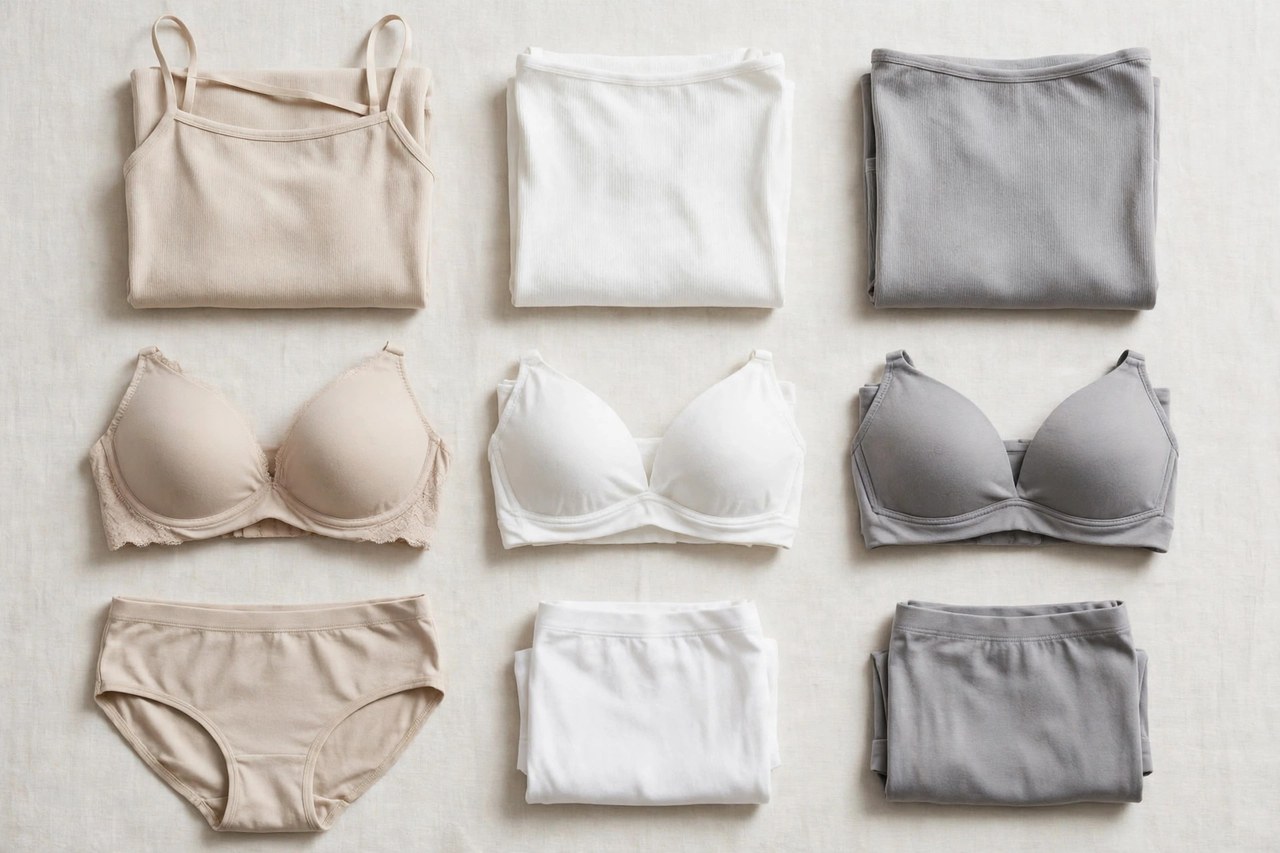
Women's lingerie is a category of clothing that includes undergarments, intimate apparel, sleepwear and lightweight robes. What is the difference between lingerie and underwear? The specific choice of the word “lingerie” is often motivated by an intention to imply the garments are alluring and fashionable. Although potentially appealing, underwear and bras are often thought of as less alluring than “lingerie” — for example, plain granny panties are NOT lingerie.
This guide treats lingerie as the product category it is: the garment types it covers, the fabrics that define it, fit basics that apply across the category, and care. The best lingerie looks great and feels great as well — a pretty piece that digs, rides or itches fails its only job.
The Garment Types
The category spans several families. Bras and panties form the foundation, from everyday t-shirt bras and cotton briefs to lace and silk versions. Camisoles and slips smooth and layer under clothing. Sleepwear — chemises, pajama sets, nightgowns — and lightweight robes complete the at-home wardrobe, while shapewear and bodysuits handle the engineering end of the drawer.
The links below map the category by fabric (silk, cotton, satin), by occasion and by the related sections for underwear, bras and intimates, plus a full run of lingerie by color in our fashion-by-color section. Use those links to go deeper on any branch; this page is the map, not the territory.
Fabrics
Lingerie is made of lightweight, stretchy, smooth, sheer or decorative fabrics such as silk, satin, Lycra, charmeuse, chiffon or lace. Each brings a property: silk regulates temperature and feels cool; satin (a weave, not a fiber) gives the glossy slide under clothes; charmeuse is satin's lighter, drapier cousin; chiffon is the sheer overlay; lace provides the decoration; and elastane (Lycra) provides the fit.
Everyday lingerie borrows the same vocabulary in practical fibers — cotton-modal for breathability, microfiber for a seamless finish under knits, mesh for lightness. The honest shopping rule: the closer a garment sits to the skin and the longer the day, the more natural and breathable the fabric should be; save the pure decoration for short-wear pieces.
Fit Basics
Most fit problems in this category trace back to habit: wearing the same bra size for a decade, or buying panties by dress size instead of hip measurement. A bra should sit level around the body, with the center gore flat and straps that assist rather than carry the load; panties should stay in place without elastic digging. Bodies change with weight, training, pregnancy and age, so a yearly refit is maintenance, not vanity.
Sleepwear fit is about ease: nothing that twists around the body by morning. Robes should close fully at the front without strain. When in doubt between sizes in anything worn to sleep, take the larger one; in anything worn as a foundation under clothes, take the one that disappears.
Care
Lingerie is the most delicate laundry you own. Hook bras closed, use mesh bags, wash cool with mild detergent, and never tumble dry elastane or silk — heat is what kills the stretch and the sheen. Lace and silk pieces earn hand-washing. Store bras nested or hanging to protect molded cups, and rotate daily wear: elastic needs a rest day to recover, exactly like a good pair of shoes.
Replace foundations when the band rides up even on the tightest hook or the straps have lost their spring. A drawer refreshed in small, regular purchases beats a rare, expensive overhaul.
Related Women's Guides
Photos

More to Explore on Apparel Search
- Silk Lingerie
- Cotton Lingerie
- Satin Lingerie
- Plus Size Lingerie
- Lingerie Stores
- Lingerie Wholesalers
- Valentines Day Lingerie
- Lingerie Definition
- Granny Panties
- about lingerie
- underwear
- intimates
- Black Lingerie
- Blue Lingerie
- Brown Lingerie
- Green Lingerie
- Orange Lingerie
- Pink Lingerie
- Purple Lingerie
- Red Lingerie
- Tan Lingerie
- White Lingerie
- Yellow Lingerie
- leather lingerie
Looking for Women's Clothing Stores?
This guide helps you choose women's lingerie. To browse where to buy, visit our women's clothing store directory, where you can find retailers that carry them.