Women's Plus Size Lingerie Guide
A product-focused guide to plus size lingerie in extended band, cup and body sizes — support construction, fabric weights, adjustable straps and accurate sizing for 14W to 5X.
Shop Women's Plus Size Lingerie Now
Shop Women's Plus Size Lingerie on Amazon Shop Women's Plus Size Lingerie on eBayThe Amazon and eBay links on this page are affiliate links. If you make a purchase through them, Apparel Search may earn a commission.
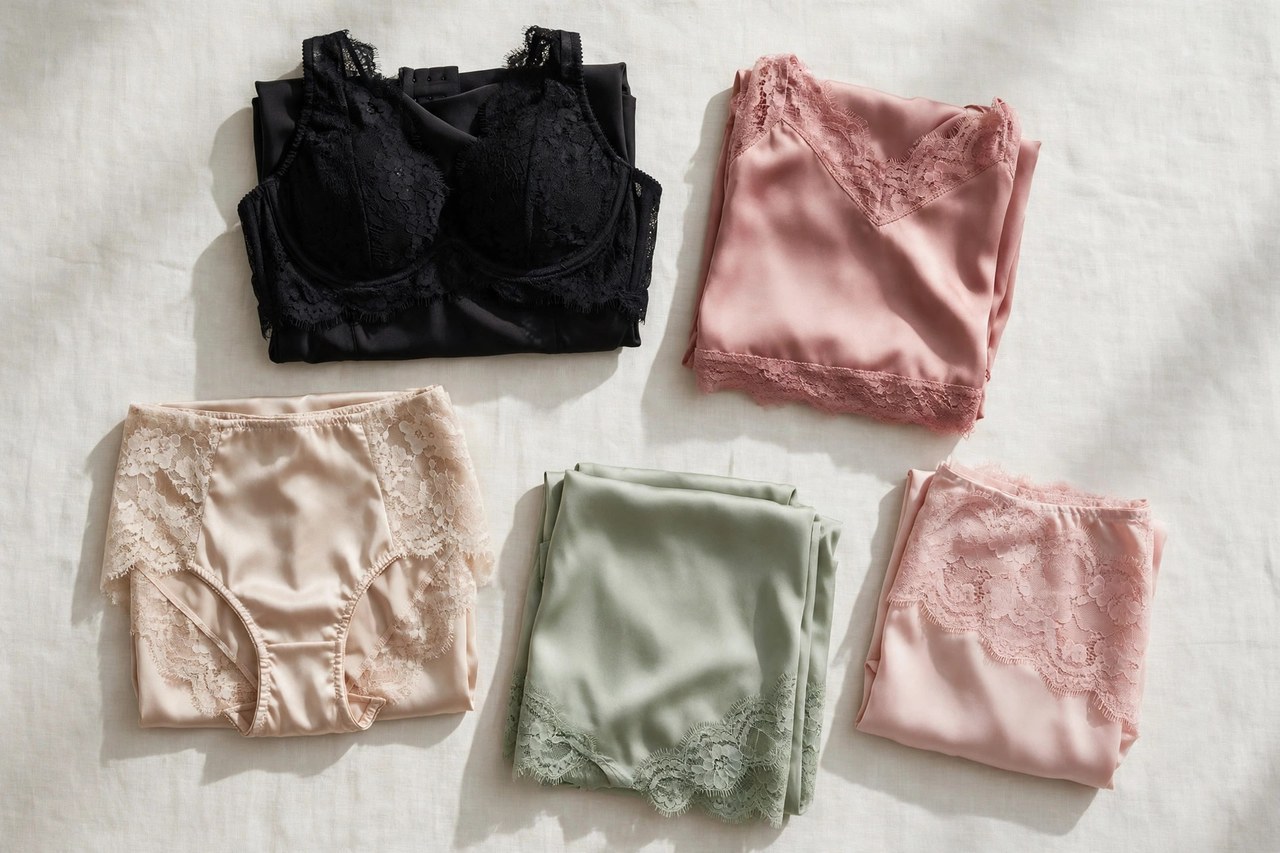
Plus size lingerie is best shopped as a construction and sizing exercise. In sizes from 14W and 1X through extended ranges, the garments that work are the ones built for the body they cover: wider adjustable straps that do not slip, bands and waistbands with genuine elastic recovery, cups and bodices patterned for a fuller bust, and seams placed to lie smooth rather than dig. Ranges designed from a plus block, rather than enlarged from a small sample, get those details right far more consistently.
This guide stays with the product throughout — sizing systems, support features, fabric choices, garment types and care — in neutral buying terms. Measure first, read the size chart for the specific garment type, and judge adjustability, because adjustable pieces forgive the most sizing variation between brands.
Sizing Systems: Bands, Cups and Body Sizes
Lingerie uses two sizing systems that often appear on the same rail. Structured pieces such as bras and bodice garments use band and cup sizing, where the number is the ribcage measurement and the letter reflects bust difference; plus ranges extend bands well beyond standard charts and pair them with a full cup range. Soft pieces such as camisoles, slips and robes use body sizing — 1X, 2X, 3X or 14W to 32W — which maps to bust, waist and hip measurements on the brand chart.
The two systems do not convert neatly, so always measure bust at the fullest point, waist at the natural crease and hips at the fullest point, and match all three to the chart rather than ordering a familiar letter. In plus sizes the gap between waist and hip or bust measurements is often larger than a graded chart assumes, and garments with stretch, wrap ties or adjustable straps bridge that gap best. If your measurements fall between sizes on a structured garment, the larger size with adjustments tightened usually fits better than a smaller size at full strain.
Support and Construction Features
Support in plus lingerie comes from engineering, not stiffness. Wider straps — at least half an inch on structured pieces — distribute weight and stay on the shoulder, and fully adjustable sliders let you balance both sides. Underband elastic should be wide and firm, hook closures should offer three adjustment columns, and side panels or boning on bodice styles should be flexible enough to follow the waist rather than poke when seated. Seamed cups shape through construction, while molded cups give a smooth finish under clothing.
Check finishing details that decide comfort over hours: plush-backed elastic that feels soft against skin, seam allowances that lie flat, lace with stretch woven in so edges give rather than cut, and gusset and lining fabrics in breathable cotton on close-fitting garments. On slips and camisoles, look for bust darts, princess seams or an empire seam placed to sit at the correct point, and adjustable straps even on soft pieces — fixed straps are the most common cause of a bodice sitting too low or riding too high.
Garment Types and Fabrics
The core garment types each do a different job. Slips provide a smooth layer under dresses and are sized by bust and length. Camisoles work as sleep tops, layering pieces or lounge wear. Bodice and bustier-style garments add structure and shaping through boning and paneling. Matching sets and robes are covered in the pajama and robe guides in this section. Choosing by function first — layering, sleep, support or shaping — narrows fabric and construction choices quickly.
Fabrics divide into woven and knit families. Satin and charmeuse in polyester or silk are smooth, fluid wovens with little give, so sizing must be exact at bust and hip. Stretch lace and mesh knits forgive measurement differences and ventilate well, but vary widely in firmness. Cotton and modal jerseys are soft, breathable and the most forgiving for sleep pieces. Silk is luxurious and temperature regulating but needs gentle care and costs the most. Always check fiber content and stretch direction on the listing; a garment described only by a trade name tells you nothing about fit.
Fit Checks, Buying and Care
Fit-check a new garment at home by sitting, reaching and walking: straps should stay in place, bands should sit level, hems should not ride substantially, and no elastic edge should leave deep marks within a short wear. Structured pieces should feel supportive without restricting breathing. Keep tags on until those checks pass, and note which brands and sizes passed — plus lingerie sizing is brand specific enough that a personal size record saves money on every future order.
Care protects both fabric and elastic. Hand wash or use a mesh bag on a gentle cold cycle, choose mild detergent, and never tumble dry structured or elastic garments, because heat is the main cause of elastic failure. Reshape cups while damp, dry flat or on a line away from direct sun, and store folded rather than hung by straps, which stretch under the garment weight. Rotating pieces so elastic rests a day between wears extends the working life of every garment in the drawer considerably.
Related Women's Guides
More to Explore on Apparel Search
- Plus Size Clothing
- Plus Size Clothing Stores
- Shop for Plus Sizes
- Plus Size Underwear
- about lingerie
- Lingerie stores
- plus size
- fashion
- trendy
- stylish
- plus size fashion model
- plus size fashion definition
- Clothing Stores
- Fashion Designers
- Popular Brands
- Apparel
- Women's Clothing Stores
- Women's Clothing Wholesalers
- Women's Fashion
Looking for Women's Clothing Stores?
This guide helps you choose women's plus size lingerie. To browse where to buy, visit our women's clothing store directory, where you can find retailers that carry them.