Women's Plus Size Bras Guide
A product-focused guide to plus size bras — band and cup sizing at larger sizes, wide straps and bands, underwire and wireless construction, support features, fabrics and care, described in neutral buying terms.
Shop Women's Plus Size Bras Now
Shop Women's Plus Size Bras on Amazon Shop Women's Plus Size Bras on eBayThe Amazon and eBay links on this page are affiliate links. If you make a purchase through them, Apparel Search may earn a commission.
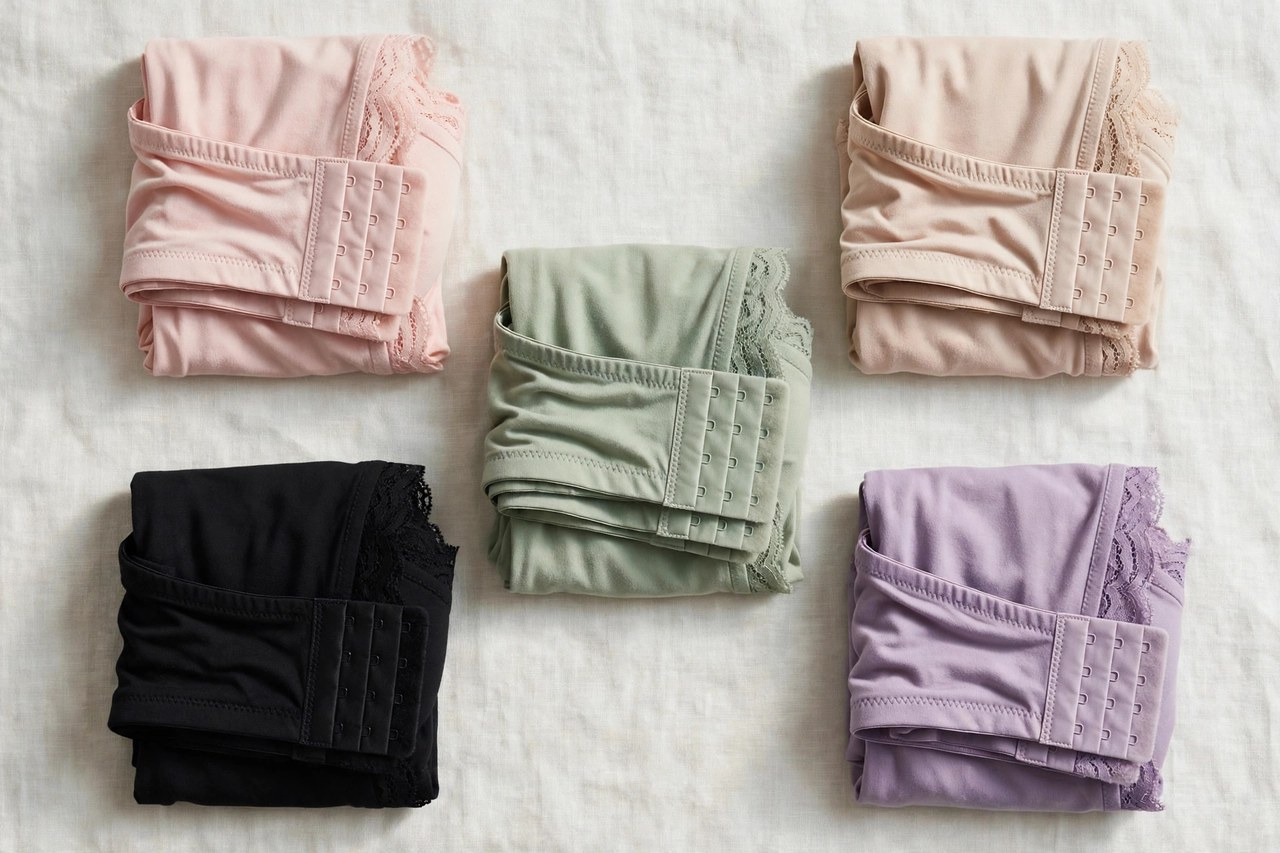
A plus size bra is sized and constructed for a larger band, a fuller cup volume, or both. In product terms, fit comes from the relationship between the band measurement around the ribcage and the cup volume, supported by wider bands, wider straps and stronger materials than smaller sizes typically use. This guide stays strictly with product information, sizing method, construction features, style types, fabrics and care, so you can compare products accurately and choose by specification rather than guesswork.
Correct sizing is the starting point for every style. Most support comes from the band, not the straps, so a band that fits firmly and level is the foundation, with the cups, center gore, wings and straps each doing a defined job. Plus size ranges commonly start around band 38 with cup volumes extending through many letters, and also include larger bands with moderate cups, because band size and cup volume vary independently. Measure first, then shop the styles that match the measurements.
Band and Cup Sizing at Plus Sizes
To size a bra, measure the ribcage snugly just under the bust for the band, and measure around the fullest point of the bust for the cup calculation. The difference between the two measurements determines the cup letter, with each inch of difference adding approximately one cup size, following the maker size chart because letter progressions differ between US, UK and European systems. At plus sizes, using the maker chart for the exact product is essential, since a cup letter on a larger band holds more volume than the same letter on a smaller band.
Sister sizing describes equivalent volumes across bands, for example a volume offered in neighboring band and cup combinations, but the products are not identical: changing the band changes strap placement, wing height, underwire length and cup spacing. For that reason, treat sister sizes as a fitting tool to test, not an automatic substitute. A new bra should fasten comfortably on the loosest hook, allowing the middle and tightest hooks to be used as the band elastic relaxes with wear. Remeasure after significant weight change, and check sizing when switching between brands or style types.
Construction: Bands, Cups, Straps and Wires
Plus size construction scales every load-bearing part. Bands are wider, often with three or four hook-and-eye closures, to distribute pressure and keep the band level. Side wings are taller and frequently include flexible side boning or reinforced fabric to keep the wing smooth and upright. Straps are wider, commonly padded or cushioned at the shoulder section, fully adjustable and set to match a broader frame, with hardware sized to hold adjustment under greater load without slipping or digging.
Cups are made as molded, cut-and-sewn, or unlined styles, with cut-and-sewn multi-part cups offering the most shaping and capacity at larger volumes. Underwires in plus sizes are longer and shaped for the larger cup and frame, and should follow the natural crease and end without pressing at the front or side. Wireless styles replace wire support with a firm band, sling construction inside the cup and stronger fabrics. The center gore, the panel between the cups, varies by style height; product descriptions list gore and wing heights in better specifications, which helps comparison.
Styles and Fabrics by Function
Everyday smooth-cup styles use molded cups for a smooth finish under clothing. Full-coverage styles raise the cup and wing height for maximum containment. Minimizer styles redistribute volume across a wider cup shape, described by makers in product terms. Sports bras are sold by impact level, using compression, encapsulation or combined constructions, with wide bands and straps as standard at plus sizes. Strapless and convertible styles rely entirely on band grip, often with silicone edging listed in the specification, and front-closure and longline styles extend the band for additional support surface.
Fabrics are chosen for strength and recovery: nylon and polyester microfibers for smooth cups, cotton blends for soft unlined styles, mesh for ventilation panels, and elastane content throughout bands and wings for stretch with recovery. Lace used at plus sizes is typically a stronger, wider-pattern lace backed or combined with stable fabrics where support is needed. Moisture-wicking fabrics appear in sports and everyday warm-weather styles. Care information on the label governs all of these, and following it preserves the elastic components that provide the support the product was designed to deliver.
Comparing Products, Fit Indicators and Care
Compare products by their published specifications: band and cup range, hook count, strap width and adjustability, underwire or wireless construction, cup construction type and fabric composition. Standard product fit indicators used by fitters are also useful checks: the band sits level and firm, the center gore position matches the style design, the cup fabric lies smooth without overflow or empty space, the underwire, where present, sits in its intended position, and the straps stay adjusted without carrying the primary load. If several indicators fail, a different size or construction type is the usual remedy.
Care protects function. Hand washing or a gentle machine cycle in a closed lingerie bag, mild detergent, reshaping molded cups while damp and air drying all preserve elastic and cup shape. Heat from tumble dryers degrades elastane fastest, so air drying is the maker recommendation for most products. Rotate between several bras so elastic rests between wears, store molded cups unstacked or nested without inverting them, and replace a bra when the band on the tightest hook no longer stays level or the elastic has visibly lost recovery. Specification-led buying makes replacement straightforward.
Related Women's Guides
More to Explore on Apparel Search
- Plus Size Lingerie
- Plus Size Clothing
- Plus Size Clothing Stores
- Shop for Plus Sizes
- bra
- sports bras
- bra glossary
- bra store
- fashion
- trendy
- stylish
- plus size fashion model
- plus size fashion definition
- Clothing Stores
- Fashion Designers
- Popular Brands
- Apparel
- Women's Clothing Stores
- Women's Clothing Wholesalers
- Women's Fashion
Looking for Women's Clothing Stores?
This guide helps you choose women's plus size bras. To browse where to buy, visit our women's clothing store directory, where you can find retailers that carry them.