Clothing Definitions / Bra Glossary
Bra Glossary: Bra Styles, Cups & Components, Defined
Welcome to the Bra Glossary. Here you can learn more about brassieres from our definitions — every bra style, cup construction and component, explained in plain product terms: how it is made, what it does, and how it fits.
Search Apparel Search
All 29 Terms, A–Z
Browse the Bra Glossary
How a Bra Is Put Together
Cups, Band and Components
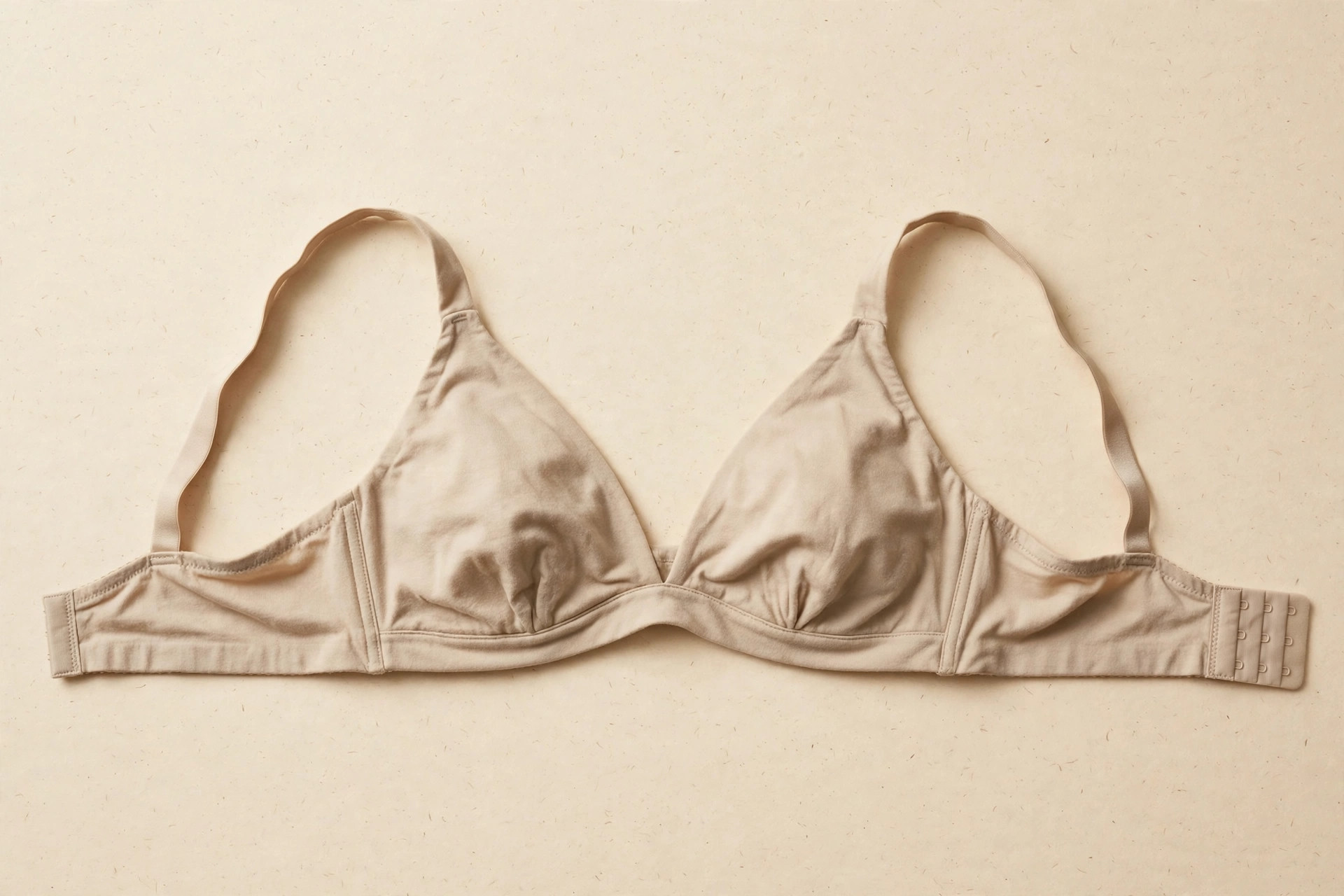
A bra is a small piece of engineering. The cups cover and support; the band — formed largely by the back wings — anchors the garment and provides most of its support; the center gore joins the cups at the front; the straps hold the cups in position; and the findings — rings, sliders and clasps — make the whole thing adjustable. Styles such as the balconette, demi cup, plunge and full cup are variations on how much of the bust the cup covers and where its edges sit.
For the garment as a whole, see the brassiere definition in Clothing Definitions, the Bra Guide in the Clothes Guide, and the bra cup page. Product research continues in Fashion Influence with the bras, lingerie and sports bras guides, and the blog's types of clothing overview. You may also want to learn more in the Underwear Glossary.
Read as a system, the parts explain most fit problems. Support comes mainly from the band, so a band that rides up points to the back wings and their elastic. Cups that spill or gap point to cup volume and shape. A center gore that will not lie flat points to cup size or gore height. Straps that slip or dig point to strap placement and adjustment, since straps position the cups rather than carrying the main support. Each entry in this glossary takes one of these parts in turn, so most fit questions can be traced to a single component.
Using This Glossary
How to Use the Bra Glossary
The 29 entries fall into three groups. Style entries — balconette, demi cup, plunge, full cup, bralette and others — describe a complete bra: its coverage, silhouette and intended wear. Cup construction entries — seamed, molded, contour, foam, lined and soft cups — describe how the cups are built, whatever the style. Component entries — underwire, center gore, back wings, straps and findings — describe the individual parts every bra is assembled from.
The groups combine in real products: a single bra might be a balconette style, with molded contour cups, a low center gore and three-row hook-and-eye findings. When a product description uses a term you do not know, find its entry here first, then read the entries for the parts it connects to — the cup entry, for example, leads naturally to the foam, lined and inner sling entries that describe what can be inside it.
Fit Basics
Bra Fit Basics: Band, Cup, Gore and Straps
Fitting starts with two measurements: around the ribcage directly under the bust, taken snugly, for the band size, and around the fullest part of the bust for the cup calculation — each step of difference between the two measurements corresponds to roughly one cup letter. A new bra should fasten on the loosest hook, so the tighter hooks remain available as the band's elastic relaxes with wear and washing.
Then check the parts in order. The band should sit level and stay in place when the arms are raised. The cups should contain the tissue without spilling at the edges or gaping at the top. On a structured underwire bra, the center gore should rest against the breastbone and the wire should sit on the ribcage, encircling the tissue. Straps are adjusted last — snug enough to stay in place, roughly a two-finger ease — because they position the cups rather than lift them. Sizes vary between brands, so treat the label as a starting point and the checks as the verdict.
Common Questions
Common Questions
What does the Bra Glossary cover?
Bra styles (such as balconette, demi cup, plunge and bralette), cup constructions (seamed, molded, contour, foam, lined and soft cups), and components (underwire, center gore, back wings, straps and findings) — each defined by its construction, fabrics and fit.
What is the difference between the Bra Glossary and the bra definition page?
This glossary defines each bra style and component on its own page. The brassiere definition page in Clothing Definitions defines the garment as a whole.
Where can I learn about maternity and nursing bras?
Both have their own glossary entries here: maternity bras are defined by comfort construction for pregnancy, and nursing bras by their opening cups and closures for feeding access.
What is the difference between a bra style and a cup construction?
A style describes the bra as a whole — its coverage and silhouette, such as balconette or plunge. A cup construction describes how the cups are built — seamed, molded, contour or foam. The two combine: one style can be made in several constructions.
Where should I start if a bra does not fit?
Start with the band, which provides most of the support: it should sit level and snug on the loosest hook when new. Then check the cups for spilling or gaping, the center gore for lying flat, and the straps last — each glossary entry covers one of these checks.
Making Bras
Bra Manufacturing Directories
For the factories and component suppliers behind these constructions, see the Apparel Search manufacturing directories.