Bra Glossary / Clothing Definitions
Maternity Bras: Bra Glossary Definition
Definition
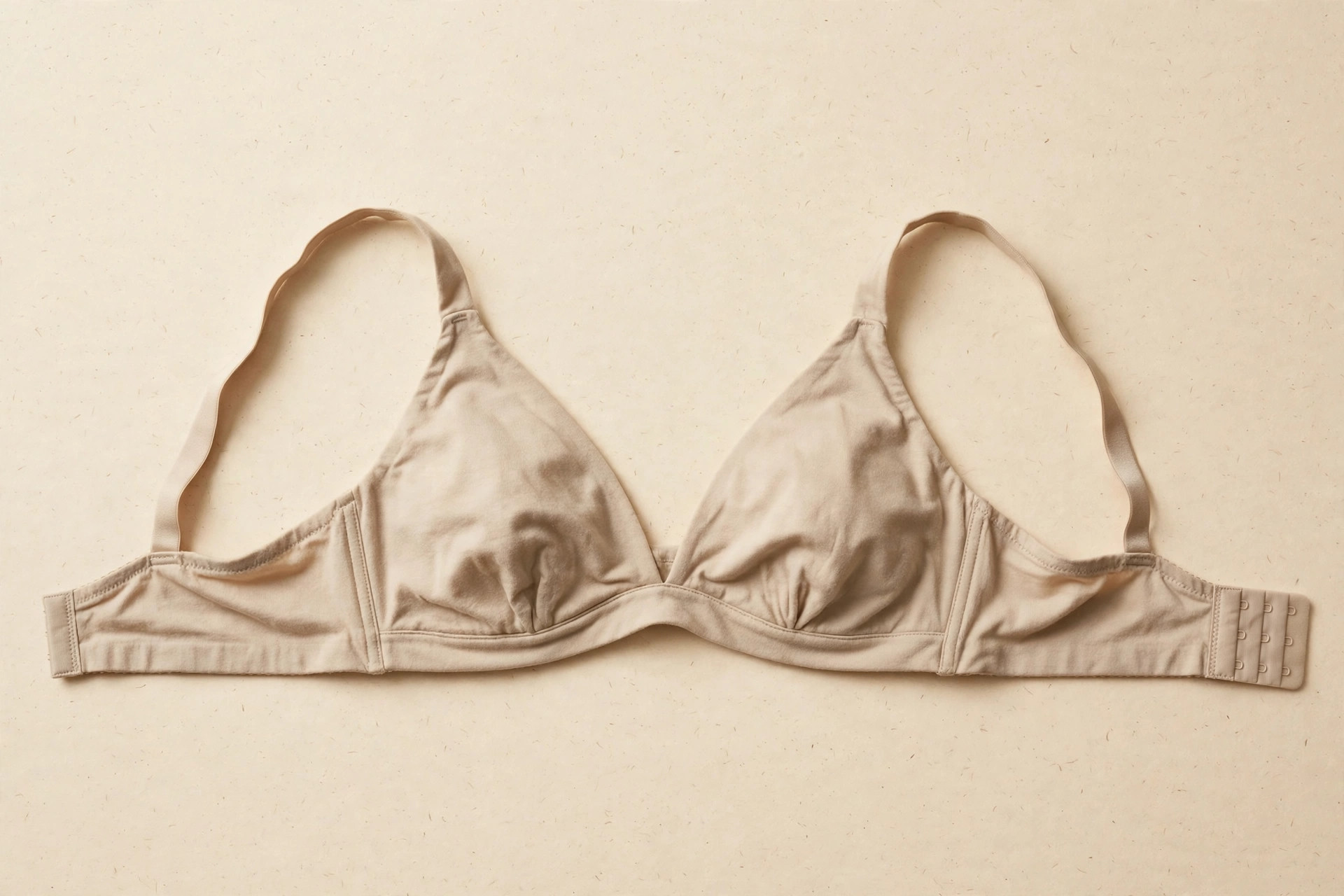
Maternity bras are typically made for comfort. They use breathable and soft fabrics. The goal is to prevent irritation.
Construction & Fit
How Maternity Bras Work in Practice
Construction follows that comfort goal: soft, breathable fabrics, wide and often cushioned straps, smooth cup fabrics without scratchy lace edges, and extra rows of hook-and-eye fastenings so the band can be let out as the ribcage expands during pregnancy. Many maternity styles are wire-free or use flexible wires, and cup fabrics include stretch so one bra adapts across changing sizes.
When maternity is over, the next stage is the nursing bra, which adds openable cups for feeding. The two are sometimes combined in one garment, but a maternity bra itself is defined by comfort and adaptability during pregnancy rather than by feeding access.
Sizing Through Pregnancy
When to Buy and How Maternity Sizing Works
Most wearers need a maternity bra when their regular bras start to feel tight — commonly during the first trimester, when cup size often increases, and again later as the ribcage expands. Maternity patterns build in room to grow in two directions. The band carries extra rows of hook-and-eye fastenings — four or six rows instead of the usual three — and fitting guidance reverses the normal rule: a new maternity bra is usually fitted on the tightest hooks, so the band can be let out row by row as the ribcage grows. Stretch or multi-part cups with a flexible top edge absorb cup growth between fittings, which is why maternity sizes are often sold in flexible ranges rather than a single rigid size.
A professional fitting at each stage is worthwhile because the changes are not only in size. Tissue becomes more sensitive, so seams, lace edges and underwire ends that were previously unnoticeable can irritate; many maternity styles move seams away from sensitive areas, line the cups in cotton-rich fabric, and either omit the wire or use a flexible wire or a shaped foam channel that moves with the body. Straps are wider and often cushioned, and strap adjusters slide over a longer range to match the changing fit.
Maternity vs. Nursing
Maternity and Nursing Bras: Where the Two Overlap
The distinction is timing and one mechanism. A maternity bra is worn during pregnancy and is engineered for comfort and growth; a nursing bra is worn after the birth and adds cups that open for feeding. In the market the two categories overlap heavily: many bras sold late in pregnancy are combination maternity-and-nursing styles with opening cups, bought in the final weeks so they serve both stages, and many product listings use the words together. The practical way to tell them apart is to look for the opening mechanism — clips, snaps or pull-aside cups mean the bra is built for nursing, whatever the label says.
Care and rotation matter more in this category than in everyday bras. Fabrics are chosen soft and breathable — cotton-rich knits, modal and smooth microfibers with high elastane content — and they are washed frequently, so owning several and rotating them extends elastic life. Wash cool, fasten the hooks, and air-dry; heat degrades the elastane that the flexible fit depends on. Finally, expect the size bought during pregnancy not to be the final word: cup size commonly changes again in the first weeks after birth, which is why stretch cups and generous hook rows, rather than a single perfect fit, are the real design brief of the category.
More to Explore
Related Bra & Clothing Guides
Common Questions
Common Questions
What defines a maternity bra?
Comfort during pregnancy: soft, breathable fabrics chosen to prevent irritation, with flexible sizing features such as extra band hooks and stretch cups.
What is the difference between a maternity bra and a nursing bra?
A maternity bra supports comfort and changing size during pregnancy. A nursing bra adds cups and closures that open for feeding the baby after the birth.
Are maternity bras underwired?
Many are wire-free or use flexible wires for comfort, but both constructions exist. Fit and comfort are the deciding factors.
When should you start wearing a maternity bra?
When a regular bra starts to feel tight or irritating — often in the first trimester as cup size increases, and again later in pregnancy as the ribcage expands. There is no fixed week; fit and comfort are the signal.
Can a maternity bra be used for nursing?
Only if it has opening cups. Many late-pregnancy styles are combination maternity-and-nursing bras with clips, snaps or pull-aside cups; a maternity bra without an opening mechanism is for pregnancy comfort only.
Making Bras
Bra Manufacturing Directories
For the factories and component suppliers behind these constructions, see the Apparel Search manufacturing directories.
Search Apparel Search