Bra Glossary / Clothing Definitions
Foam Cups: Bra Glossary Definition
Definition
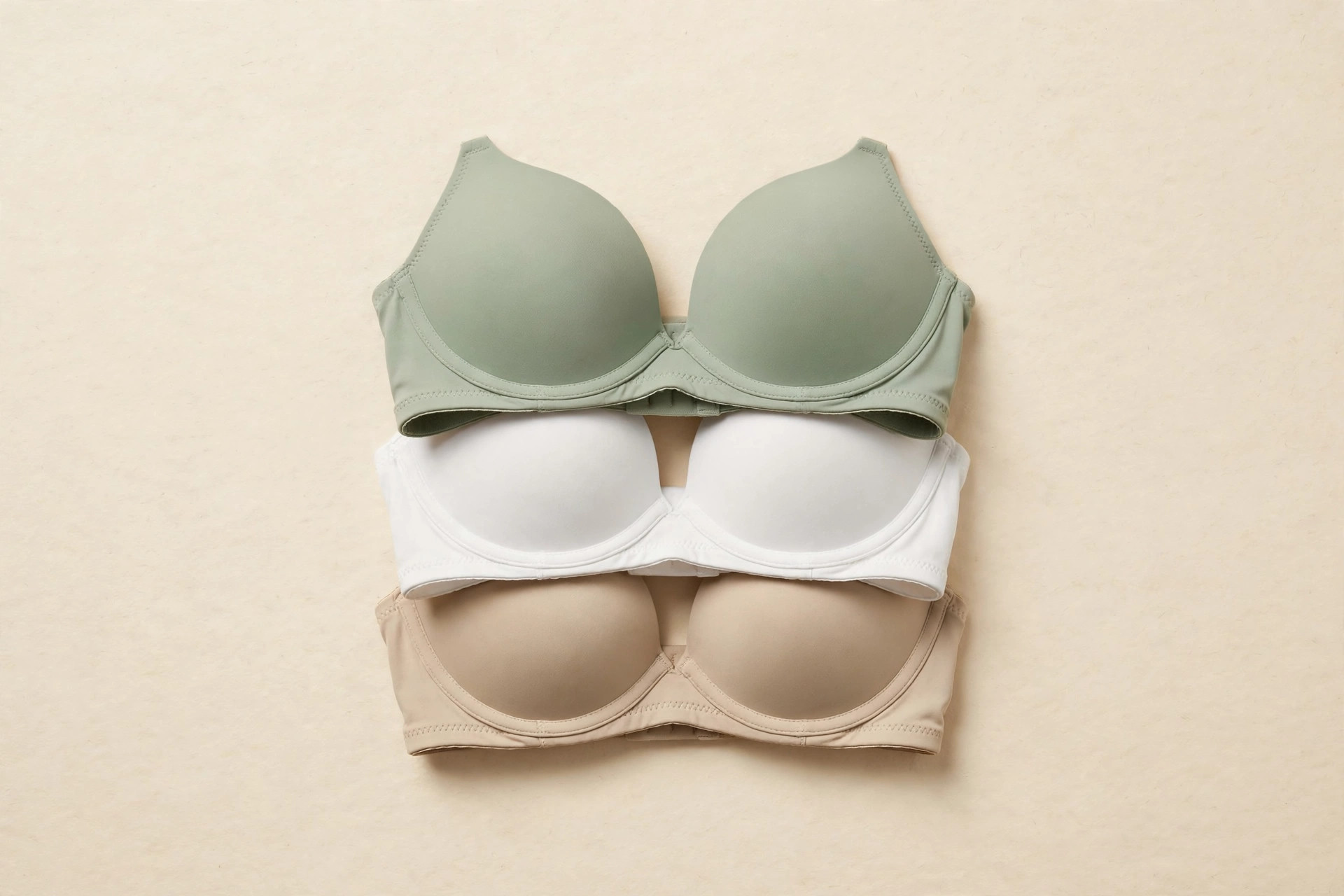
Foam cup bras use foam padding in the cups of the bra. The goal is to have padding that avoids bunching up during the washing process if you use machine washing. Foam holds up better than some other materials.
Construction & Fit
How Foam Cups Work in Practice
Foam is the padding material behind several cup styles in this glossary: it forms the molded layer of contour cups, the even lining of structured bras, and the shaped inserts of many padded and push-up cups. It is cut or molded to shape rather than stuffed, which is why it stays in place better than loose fiber-fill.
Foam is not perfect — it can crease if crushed in storage and will eventually soften with age and heat — but it should hold up better than some other types of padding materials. Gentle washing and air drying extend its life.
The foam used in bra cups is a flexible polyurethane foam made in thin sheets, typically only a few millimeters thick for cup use. In production the sheet is laminated to fabric on one or both sides, then either cut and sewn into seamed padded cups or heat-molded into one-piece cups. The lamination matters: the fabric faces protect the foam from abrasion and give the finished cup its smooth inner and outer surfaces.
Foam density is chosen by function. A soft, light foam gives the even, thin layer of a contour cup, while a firmer foam — often graduated, thicker at the base of the cup — is used where the cup must add lift or volume. Because the foam is a single shaped piece, it cannot shift or clump the way loose fill can, which keeps the cup's surface even through repeated wear and washing.
Foam Types
Foam Cup Variations and Related Materials
Even foam and graduated foam are the two main forms. Even foam has the same thickness across the cup and is used for shaping and coverage, as in contour cups. Graduated foam is thicker at the base or outer side and thinner at the top edge, so it adds lift and volume where it is thick and disappears smoothly where it is thin — the standard construction inside push-up cups.
Removable foam pads are a separate arrangement: loose foam inserts, sometimes called cookies, sit in pockets inside the cups of some bralettes and sports bras and can be taken out for washing or removed altogether. The main alternative padding materials are fiber-fill, the older loose filling that foam largely replaced because it shifts and bunches, and spacer fabric, a knitted three-dimensional material that cushions like foam but breathes better. Gel and air inserts exist as specialty padding, but foam remains the industry standard.
Fit & Care
Fitting and Caring for Foam Cups
A molded foam cup holds a fixed shape, so fit is a matching exercise: the cup's molded curve must suit the wearer. An edge that stands away while the rest of the cup feels tight is the classic sign of a shape mismatch rather than a simple size error, and a seamed or unlined cup may fit better. Foam also adds a small amount of volume of its own, which is why a foam style can feel different from an unlined style in the same labeled size.
Foam care is mostly heat discipline. Wash cool or warm on a gentle cycle with the hooks fastened, reshape molded cups while they are damp, and air dry — dryer heat breaks polyurethane foam down. Age shows in foam before it shows anywhere else on the bra: yellowing, loss of spring, and eventually a brittle, crumbly texture mean the foam has oxidized and the cup is at the end of its life. In storage and travel, keep foam cups uncrushed, or stuff them lightly to hold their shape.
More to Explore
Related Bra & Clothing Guides
Common Questions
Common Questions
What is a foam cup?
A cup padded with foam. The foam is cut or molded to the cup shape, so it stays smooth instead of bunching up.
Why use foam instead of fiber-fill?
Foam holds its shape through the washing process better than loose padding materials, which can shift and bunch. It is the standard material for molded and contour cups.
How should foam cup bras be cared for?
Wash gently, air dry away from high heat, and store the cups uncrushed — folding a molded foam cup into itself can leave a permanent crease.
What are removable foam pads?
Some bralettes and sports bras have pockets in the cups holding loose foam inserts, sometimes called cookies. They can be taken out for washing or removed entirely if the wearer prefers an unpadded cup.
How can you tell foam in a bra has worn out?
Aging foam yellows, loses its spring, and eventually turns brittle or crumbly. Cups that stay creased, feel flat or crackle when flexed are showing foam that has reached the end of its life.
Making Bras
Bra Manufacturing Directories
For the factories and component suppliers behind these constructions, see the Apparel Search manufacturing directories.
Search Apparel Search