Bra Glossary / Clothing Definitions
Full Cup Bra: Bra Glossary Definition
Definition
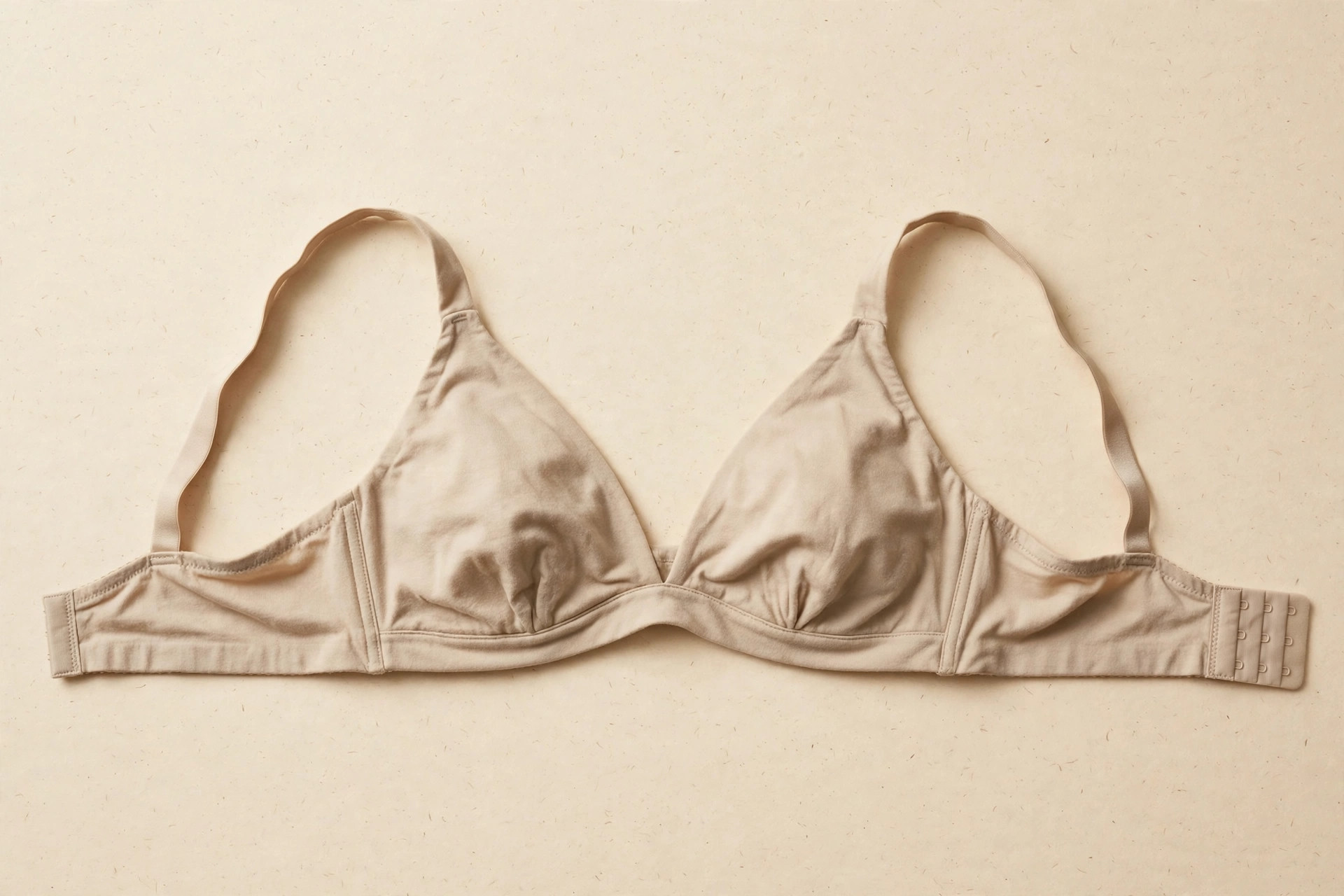
The full cup bra is designed so that fabric covers the majority of the breasts. This type of bra provides good support and is aimed at assisting with the comfort of wearers with naturally large cup sizes. In addition to providing more coverage, full cup bras are designed to provide more support than bras such as demi cup bras.
Construction & Fit
How Full Cup Bra Work in Practice
Because the cup encloses more of the breast, a full cup is less likely to cause a crease or line along the top of the breast where a lower cup edge can cut in. They are not guaranteed to prevent creases, but they should help.
Full cup bras are typically built with wider straps, a higher center gore and stronger wing fabrics than low-coverage styles, and are made in both underwire and wire-free versions, seamed or with molded cups.
Construction in Detail
How a Full Cup Is Built to Support
A full cup earns its support from several pattern features working together. The cup itself is taller than a demi or balconette cup, enclosing the breast well above the bust point, and in seamed versions it is usually cut in three or four pieces so the seams can direct tissue forward and up rather than letting it spread to the sides. Many full cup designs add a side support panel — an extra, firmer section at the outer cup that pushes tissue in from the underarm and improves the forward shape. The center gore is correspondingly tall, which keeps the cups separated and anchored, and the underwire channel is fully enclosed so the wire cannot work through the fabric.
The rest of the frame is scaled up to match. Wings are cut deeper and are often made from firm powernet so the band stays level instead of riding up, straps are wider than on low-coverage styles and are frequently padded or set closer together at the back to keep them on the shoulder, and hook-and-eye closures commonly run to three rows in larger sizes. None of these features is unique to the full cup, but the combination — tall cup, tall gore, deep wings, wide straps — is what the term describes in practice.
Choosing & Fitting
Choosing, Fitting and Caring for a Full Cup Bra
Fit is judged at three points. The band should sit firm and level, because the band — not the straps — carries most of the support load. The gore of an underwired full cup should generally rest close to the chest wall between the breasts; a gore floating well away usually signals a cup that is too small or a shape mismatch. The top edge of the cup should lie smoothly: cutting in means the cup volume is too small, while standing away empty means it is too large or the cup shape is too projected for the wearer. Sister sizing — moving to a larger band with a smaller cup letter, or the reverse — keeps the same approximate cup volume when the band fit is the only problem.
The honest trade-off of the style is neckline range. A tall cup edge and tall gore can show under low, wide or scoop necklines, where a demi or plunge is the better tool; the full cup is at its best under everyday and higher necklines where its coverage is invisible. For care, rotate between several bras so the elastics can recover between wearings, wash cool with the hooks fastened to protect the fabric, and air-dry — dryer heat is the fastest way to weaken the powernet and strap elastic the support depends on.
More to Explore
Related Bra & Clothing Guides
Common Questions
Common Questions
How much coverage does a full cup bra give?
The fabric covers the majority of the breast — substantially more than a demi or balconette cup.
Who are full cup bras designed for?
They provide good support and comfort and are a common choice for larger cup sizes, though they are made across the size range.
Do full cup bras prevent a line across the top of the breast?
They typically do not cause a crease or line along the top of the breast, because the cup edge sits higher. It is not guaranteed, but the fuller coverage helps.
Can a full cup bra be worn under low necklines?
Often not invisibly. The tall cup edge and higher center gore that give the style its coverage can show under low, wide or scoop necklines, where a demi, balconette or plunge style is usually the better choice.
How should the center gore of a full cup bra fit?
On an underwired full cup the gore should generally rest close to the chest wall between the breasts. A gore that floats well away from the body usually means the cups are too small or the cup shape does not match the wearer.
Making Bras
Bra Manufacturing Directories
For the factories and component suppliers behind these constructions, see the Apparel Search manufacturing directories.
Search Apparel Search