Bra Glossary / Clothing Definitions
Soft Cup Bra: Bra Glossary Definition
Definition
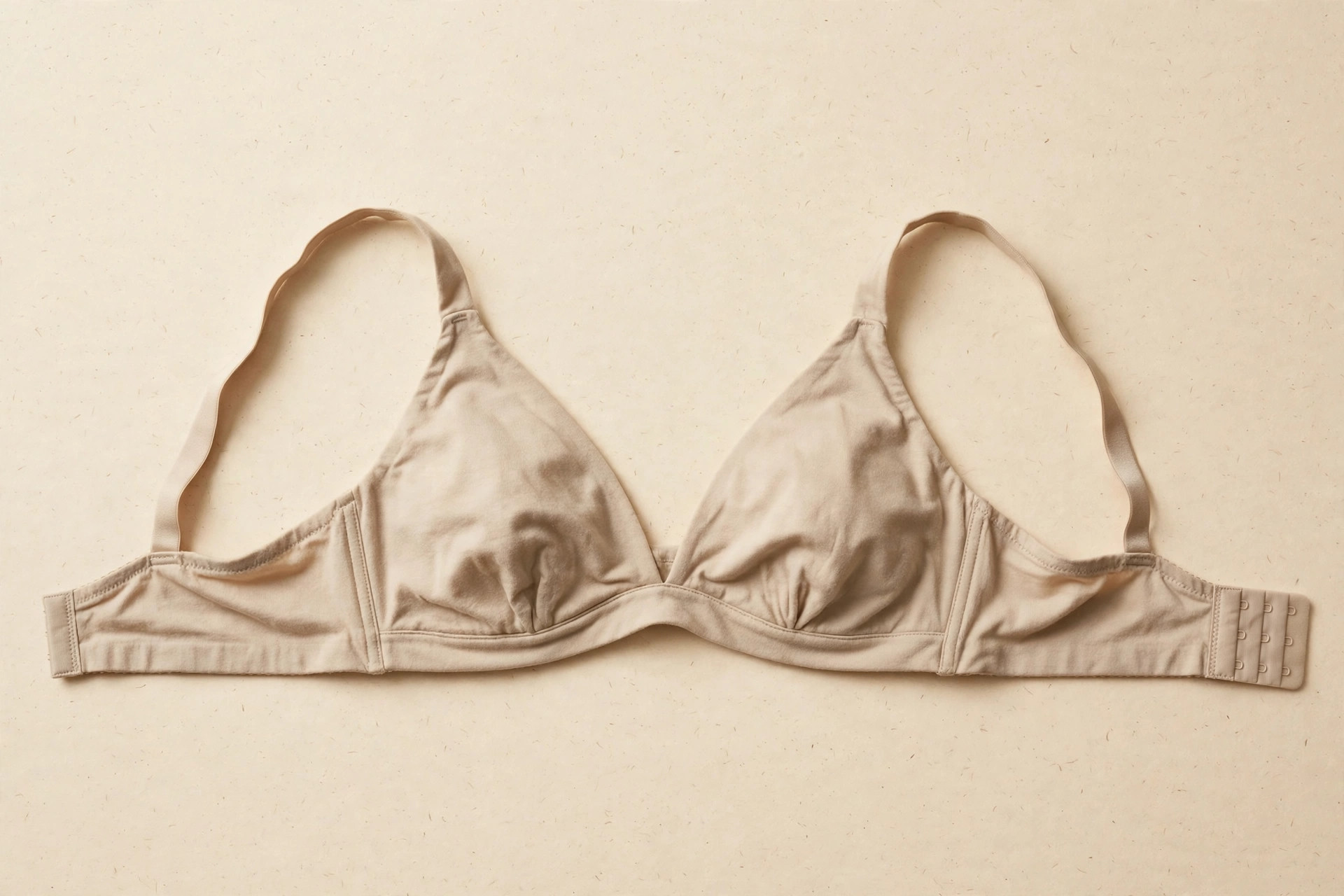
A soft cup bra is a bra with cups and no underwire or padding. Due to the lack of underwire, the soft cup bra is comfortable to wear. It is most popular with A and B cup sized wearers. Wearers with larger cup sizes would enjoy the comfort, but would probably not receive enough support.
Construction & Fit
How Soft Cup Bra Work in Practice
Without wires, support comes from the band, the cup seaming and the straps. Many soft cup bras use seamed cups — two or three fabric sections — because the seams do the shaping work a wire would otherwise help with; others use a simple molded or stretch cup for a lighter feel.
Soft cup is the construction behind the bralette, and wire-free bras generally. Fit depends heavily on the band: with no wire to anchor the cup, a firm, well-sized band and correctly adjusted straps carry the support.
Without a wire, every other part of the pattern has to work harder. The band of a soft cup bra is typically a little wider and firmer than the band of a comparable wired style, because the band — not the straps — provides most of the support in any bra, and in a wire-free design it must do so without the wire's help in holding the cups in shape. The cups themselves are shaped by seams, darts or molding, and the center gore and side wings are often cut taller to keep the bust contained and forward.
Soft cup is a construction term, not a support promise. The category includes lightly structured everyday bras with hook closures and full seamed cups, simple stretch pull-on styles, and sleep bras that are little more than a soft band and two fabric layers. Reading a product description for its closure, cup construction and fabric firmness tells more about how a given soft cup bra will perform than the label alone.
Construction
How Soft Cup Bras Create Shape and Support
Seamed soft cups use the same panel engineering as seamed wired cups: two, three or four cut pieces joined so the fabric itself forms a shaped cup, often in firm, low-stretch fabric that holds the bust in the patterned shape. Molded soft cups are heat-shaped from foam or spacer fabric for a smooth outline. Stretch soft cups rely on elastic knit tension and a wide underband, trading shaping for flexibility — the style most often used in comfort, sleep and post-surgery bras, where avoiding pressure points matters more than lift.
Fabrics range from cotton and cotton-elastane knits for breathability, through smooth microfiber for a clean line under clothing, to lace over a firm lining where appearance and structure are combined. Straps on fuller-support soft cup styles are usually wider and set closer to the center of the cup, which helps keep the cup's upper edge in place without a wire frame holding it.
Fit & Comparison
Soft Cup, Bralette or Wire? Choosing and Fitting
A bralette and a soft cup bra overlap but are not the same thing. Bralette names a style: usually pull-on or lightly closed, fashion-led, with stretch cups and light support, often designed to be partly seen. Soft cup names a construction — no underwire — and includes fully engineered band-and-cup bras sold in band and cup sizes with hook closures and substantial support. A bralette is almost always a soft cup; a soft cup bra is often not a bralette at all.
Against an underwire bra, the soft cup trades some lift, separation and definition for comfort and flexibility: without the wire frame the bust sits in a more natural, less separated shape, and the cups fold flat for travel and washing. Fitting still starts with the band — firm, level, and on the loosest hook when new — then checks that the cup fabric contains the bust without spilling at the top or sides and without empty wrinkling. Because there is no wire to sit on the ribcage as a fit reference, a soft cup that feels unsupportive is most often simply a band size too large. Machine washing on a gentle cycle in a lingerie bag suits most soft cup styles, and air drying protects the band elastic that does the supporting.
More to Explore
Related Bra & Clothing Guides
Common Questions
Common Questions
What is a soft cup bra?
A bra with no underwire and no padding in the cups, shaped by its fabric and seams rather than by wires or molding.
Why are soft cup bras considered comfortable?
With no underwire, there is nothing rigid to dig in, so the bra flexes with the body. The trade-off is less structured support.
Who wears soft cup bras?
They are most popular with A and B cup sizes. Larger cup sizes get the comfort but would probably not receive enough support from a basic soft cup design.
Can a soft cup bra give real support without a wire?
Yes, within limits. A firm wide band, seamed cups in low-stretch fabric and well-placed straps can support well, including in larger cup sizes, though the shape is less lifted and separated than a wired bra gives.
What is the difference between a soft cup bra and a bralette?
Soft cup describes construction — a bra with no underwire — and includes structured bras sold in band and cup sizes. A bralette is a lighter, fashion-led style, usually pull-on with stretch cups and light support.
Making Bras
Bra Manufacturing Directories
For the factories and component suppliers behind these constructions, see the Apparel Search manufacturing directories.
Search Apparel Search