Apparel Glossary / Underwear
Underwear Glossary
Welcome to the Underwear Glossary. In this section, you can learn more about underwear from our definitions — each style defined by its cut, coverage, and construction.
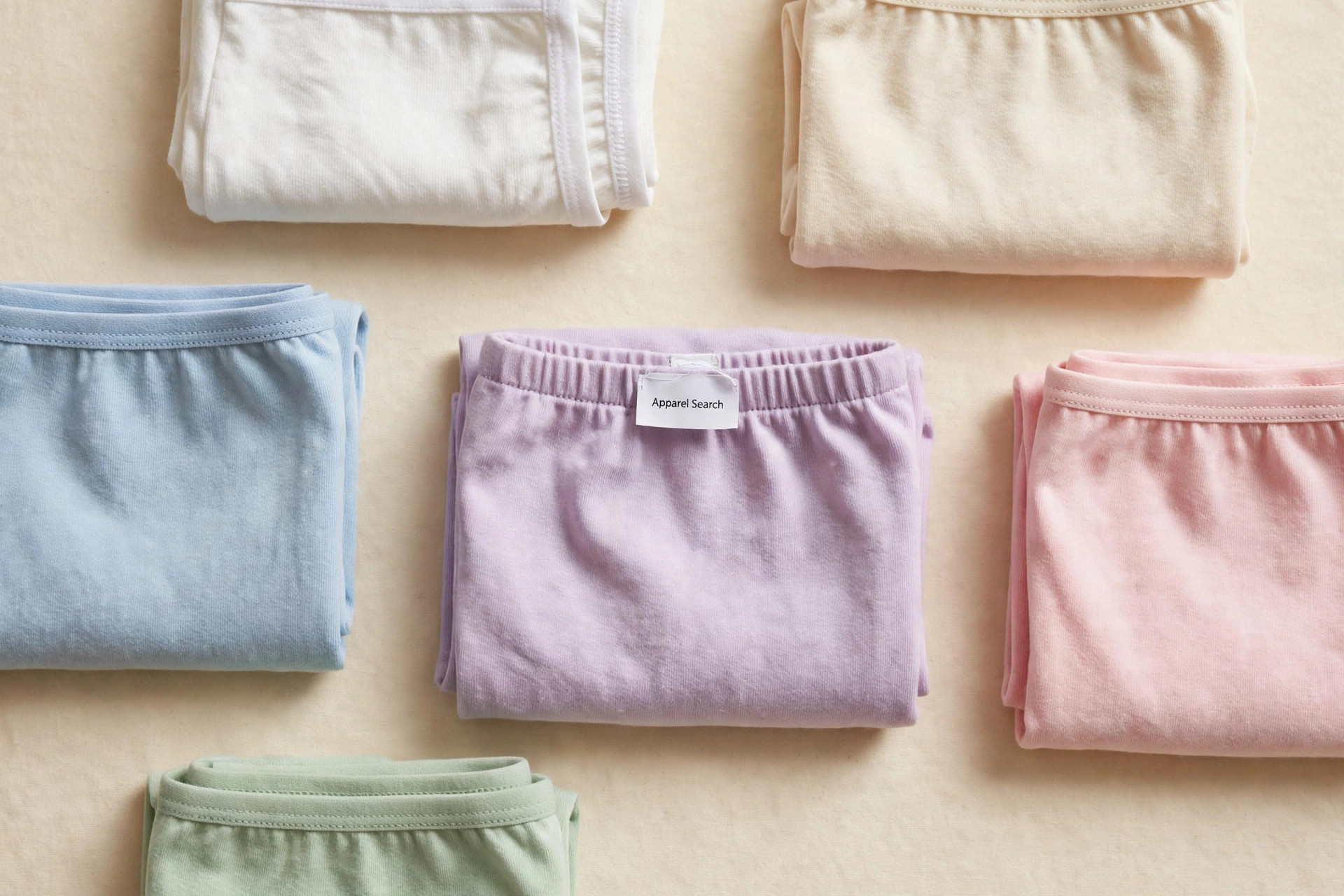
Search Apparel Search
The Definitions
Underwear Terms, Defined
- Bikini Brief: A panty that is cut to cover most of the seat but is very narrow on the sides, providing a high leg opening.
- Boxer Briefs: Boxer briefs are a combination of boxer shorts and briefs.
- Boxer Shorts: Boxer shorts are loose fitting underwear for men & women.
- Boy Short / Boy Shorts: A boy short provides more coverage than other styles of briefs. The bottom of the leg opening in the back falls at or under the seat where it naturally creases, which helps eliminate most visible panty lines. Boy shorts fit close to the body and are a good option under pants, and they are also on occasion referenced as hipsters.
- Brazilian Brief: A brief style with minimal rear coverage — somewhere in between a thong brief and a traditional brief. The back fabric is V-shaped and lies on top of the seat, not between the cheeks.
- Brief / Briefs: The classic brief fits close to the body and provides moderate to full rear coverage, cut higher on the leg than a boy short but not as narrow as a bikini brief. A women's brief is a traditional-rise silhouette that sits at the waist with a low leg line and full rear coverage.
- French Briefs / French Cut Panties: A moderate to full coverage silhouette that sits at the waistline with a high-cut leg, offering full front and back coverage with high-cut leg openings. The French cut style rises to the natural waistline.
- Granny Panties: The type of underwear your grandmother may be wearing.
- G-String: A g-string has less back-side fabric than a thong, and far less fabric coverage than a traditional brief: the back of the garment is a narrow strip of fabric, often as thin as a piece of string. The back or front is on occasion decorated by trim such as a bow, and the style comes in solid colors and novelty prints.
- Lingerie: Lingerie is women's undergarments.
- Panties: Panties refers to various types of underwear worn by women.
- Peekaboo Panty / Crotchless Underwear: Peekaboo underwear is another way of saying crotchless underwear: a panty with a split front, so that little or no fabric is covering the crotch area. Boy shorts, briefs, and thongs can all be made into peekaboo styles.
- String Bikini: A string bikini is similar to a bikini brief, but the string bikini has only thin straps at the sides.
- Tap Pants: According to Wikipedia, “Tap pants are a form of lingerie worn mostly by women. They are also known by the names of French knickers, side-cut shorts, and dance shorts. As the name implies, they are a type of shorts, in that they cover the pelvic area and the upper part of the upper legs. Tap pants look much like track shorts, allow freedom of movement, and can be worn as an outer garment over other types of underwear (e.g., g-strings). However, most wearers may wear them as innerwear or leisurewear with nothing underneath. From a distance, one could mistakenly identify tap pants as a half slip.” Tap pants are loose shorts that graze the body as you move. They are often manufactured from very delicate fabrics like lace and silk. They go well under a skirt or dress.
- Thong / Thongs: Viewed from the front, a thong typically resembles a bikini bottom, but at the back the material is reduced to a minimum: a thin waistband and a thin strip of material connecting the middle of the waistband with the bottom front of the garment. A thong is occasionally referenced as a T-back. The g-string typically has less fabric in the back.
Style Comparison
The Cuts Compared: Rise, Leg and Coverage
Underwear styles differ in three separate features: where the waistband sits (the rise), how the leg opening is cut, and how much of the seat the back covers. The table separates them.
| Style | Rise | Leg opening | Back coverage |
|---|---|---|---|
| Bikini Brief | Hip | High | Most of the seat |
| Boy Shorts | Hip | Short fitted leg | Full, ending below the crease |
| Brazilian Briefs | Hip to waist | Standard to high | V-shaped panel, minimal |
| Briefs | Waist | Low leg line | Moderate to full |
| French Briefs | Waist | High-cut | Full |
| G-String | Hip | High | String-width strip |
| Peekaboo Panty | By base style | By base style | Split front; follows base style |
| String Bikini | Hip | High, straps at sides | Most of the seat |
| Tap Pants | Waist | Loose short leg | Full, loose fit |
| Thongs | Hip to waist | High | Thin strip |
Two entries are defined by something other than coverage: the peekaboo panty by its split-front construction, and tap pants by their loose, short-like fit.
Choosing & Care
Choosing Underwear: Fit, Fabric and Care
Start with waist and hip measurements, compared against the maker's size chart — brands grade cuts differently, so the same labeled size fits differently across brands. Panel styles such as briefs and boy shorts are sized mainly by hip; minimal styles such as thongs and g-strings depend more on waistband tension and strip length; loose styles such as tap pants are sized by waist and should stay loose.
Fabric decides both feel and care. Cotton blends are the everyday standard and machine wash easily; modal is softer and smoother; microfiber and nylon blends sit flattest under clothing; lace and silk versions are the most delicate. Heat degrades elastane: use gentle cycles, mesh bags for delicate styles, and dry away from high heat. The care label for the specific garment is the final word.
Keep Exploring
More Underwear Resources
When you are finished learning about underwear, you may also want to check out the glossary for bras, learn about other types of clothing on the Apparel Search blog, or read about underwear in the Fashion Influence product guide.
More to Explore
More to Explore
Common Questions
Common Questions
What is the difference between a thong and a g-string?
They are two different styles of garment, though the terms are sometimes used interchangeably. A thong's back is a thin strip of material set in a waistband; a g-string typically has even less fabric in the back, reduced to a string-width strip.
Which underwear styles help avoid panty lines?
Styles with minimal back coverage, such as thongs, remove the back-panel edges that show through clothing. Boy shorts help in a different way: the short leg sits flat and its back leg opening falls at or under the seat's natural crease, eliminating most visible lines.
What is the difference between a bikini brief and a string bikini?
A bikini brief is narrow at the sides but keeps a fabric panel there, with a high leg opening. A string bikini replaces the side panel with thin straps only.
What is the difference between a brief and a bikini brief?
A brief sits at the natural waist with a wide side panel, a low leg line, and moderate to full rear coverage. A bikini brief sits lower, narrows the side panel, and cuts the leg opening high, covering most of the seat.
How should underwear be laundered?
Sort by fabric: cotton tolerates machine washing with like colors; lace, silk, and high-elastane styles last longest in a mesh bag on a gentle cycle, dried away from high heat, which degrades elastic. Always follow the care label.