Women's Plus Size Shapewear Guide
Plus size shapewear is sized for curves in 14W and up, with graded compression panels, longer torsos and wider waistbands that smooth a garment's line without rolling or digging.
Shop Women's Plus Size Shapewear Now
Shop Women's Plus Size Shapewear on Amazon Shop Women's Plus Size Shapewear on eBayThe Amazon and eBay links on this page are affiliate links. If you make a purchase through them, Apparel Search may earn a commission.
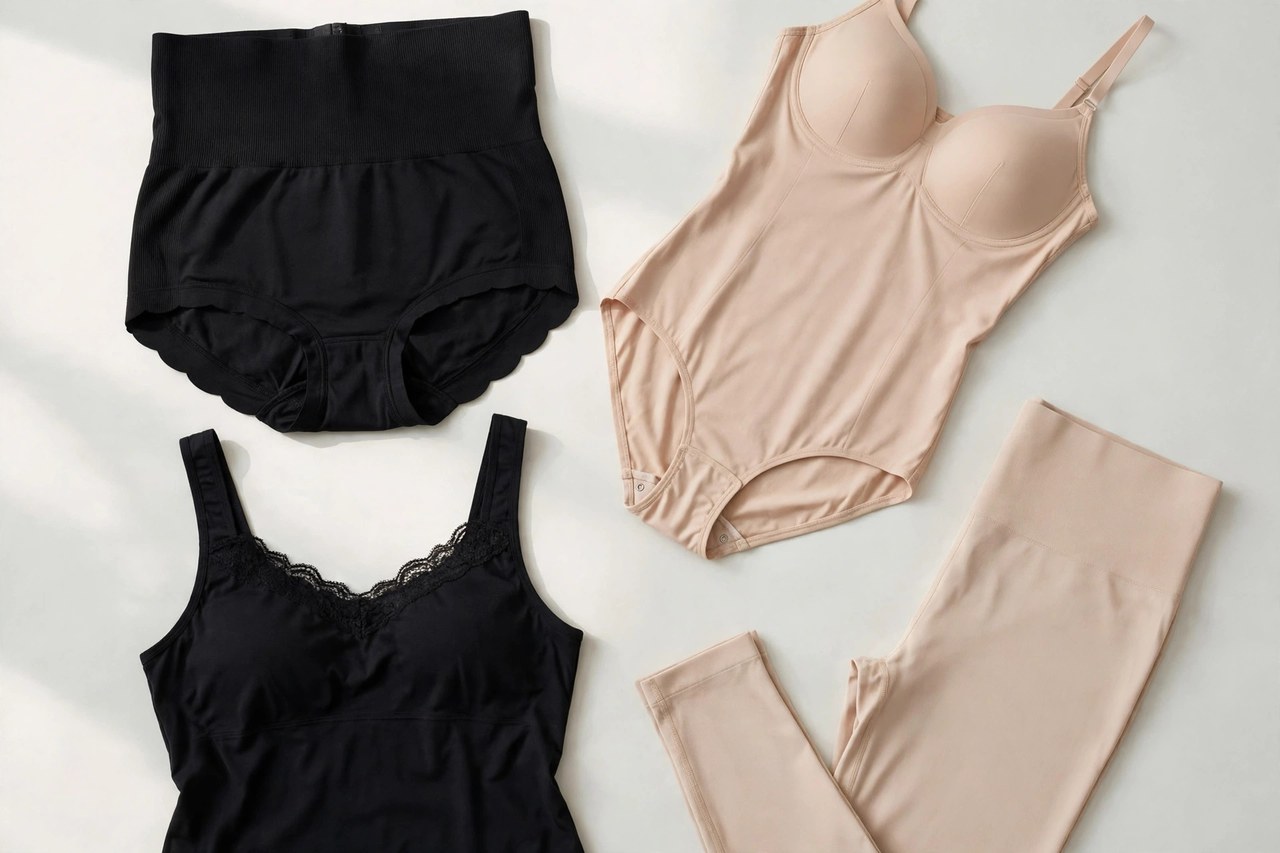
Plus size shapewear is foundation clothing built on a plus pattern, not a straight-size piece simply made larger. Grading for sizes 14W, 1X and beyond changes where panels sit, how long the torso runs, how wide a waistband is cut and how much stretch the fabric needs to recover after a full day. A piece graded properly distributes pressure across the waist, abdomen, hips and thighs in proportion to curve measurements rather than concentrating it at the smallest point.
This guide stays with the product itself: compression levels, the main garment types, panel and seam construction, fabric blends and sizing by hip and waist measurement. It also covers practical fitting checks such as sitting, bending and checking leg openings, plus care that preserves elastic recovery. The right piece is chosen for a specific outfit and a specific area, worn in the correct size, and it should feel firm and secure rather than punishing.
Compression Levels: Light, Medium and Firm
Manufacturers describe compression as light, medium or firm, and the terms refer to how much a panel reshapes the silhouette under clothing. Light control smooths small lines from underwear edges and is usually built into camisoles and briefs for everyday wear. Medium control uses a second panel layer over the abdomen or seat. Firm control adds bonded panels and higher elastane content for formal dresses, and it demands the most accurate sizing of the three.
More compression is not automatically better. A firm garment in too small a size displaces volume upward or downward, creates new lines at its edges and rolls at the waistband, defeating its purpose. On a plus frame the margin matters more, because a waistband under greater tension rolls more readily. Match the level to the outfit: light for knit dresses and work clothes, medium for structured day dresses, firm reserved for occasions and shorter wearing times.
Bodysuits, Shorts, Briefs and Camisoles
Bodysuits smooth continuously from bust to hip and eliminate a waistband line entirely; plus versions add torso length so the garment does not pull downward, plus adjustable straps and a gusset closure sized for practical use. Mid-thigh shorts smooth the waist, hips and thighs together and prevent the hem of a brief from cutting across the thigh; leg bands should be wide, flat and silicone-free or silicone-lined depending on preference.
High-waist briefs are the simplest entry piece, covering the abdomen to above the natural waist with a wide, stay-put band. Smoothing camisoles target the torso and back and layer under blouses and knit tops, with longer plus lengths that stay tucked. Slips combine smoothing with a dress lining function. Each style solves a different outfit problem, so most wardrobes need two or three types at moderate compression rather than one extreme piece asked to do everything.
Panels, Seams and Fabric Construction
Construction decides comfort more than the compression label does. Look for targeted panels that add a second layer only where smoothing is wanted, bonded or flat seams that do not print through a dress, and mesh or lighter fabric at the sides and seat where flexibility matters. A wide waistband, roughly two inches or more, with interior grip strips resists rolling on a curved waist far better than a narrow elastic edge, which folds at the first sit-down.
Fabrics are usually nylon blended with elastane, often between twenty and forty percent elastane in firm styles. Higher elastane gives stronger shaping but needs better recovery, meaning the garment returns to shape after stretching instead of bagging by evening. Cotton-lined gussets improve wearability, and laser-cut edges reduce visible lines under thin fabrics. Check that leg openings stretch flat against the thigh without a tight band, and that straps, hooks and closures are scaled and sturdily attached for plus sizing.
Sizing, Fitting and Care
Size shapewear from your current waist and hip measurements against the brand chart, not from your dress size and never by sizing down for extra effect. Plus charts differ: a 1X at one brand may equal an 18W at another, and hip measurement usually decides shorts and bodysuits. Try the garment on with the actual outfit, sit, climb a step and raise your arms; edges should stay placed, breathing should stay easy and nothing should need repositioning after movement.
Put firm pieces on by gathering and easing them up gradually rather than pulling from the straps, which strains seams. Wash cold on a gentle cycle in a mesh bag or hand wash, and always air dry, because dryer heat is the fastest way to destroy elastane recovery. Rotate pieces so elastic rests between wearings. Stored flat and washed gently, a well-made plus shapewear garment keeps its compression and smooth edges through many wearings and washes.
Related Women's Guides
More to Explore on Apparel Search
Looking for Women's Clothing Stores?
This guide helps you choose women's plus size shapewear. To browse where to buy, visit our women's clothing store directory, where you can find retailers that carry them.