Women's Plus Size Leggings Guide
Plus size leggings from 14W to 5X live or die by waistband construction and knit recovery — wide contoured bands, firm stretch and inseams that end at the ankle, not in a pool.
Shop Women's Plus Size Leggings Now
Shop Women's Plus Size Leggings on Amazon Shop Women's Plus Size Leggings on eBayThe Amazon and eBay links on this page are affiliate links. If you make a purchase through them, Apparel Search may earn a commission.
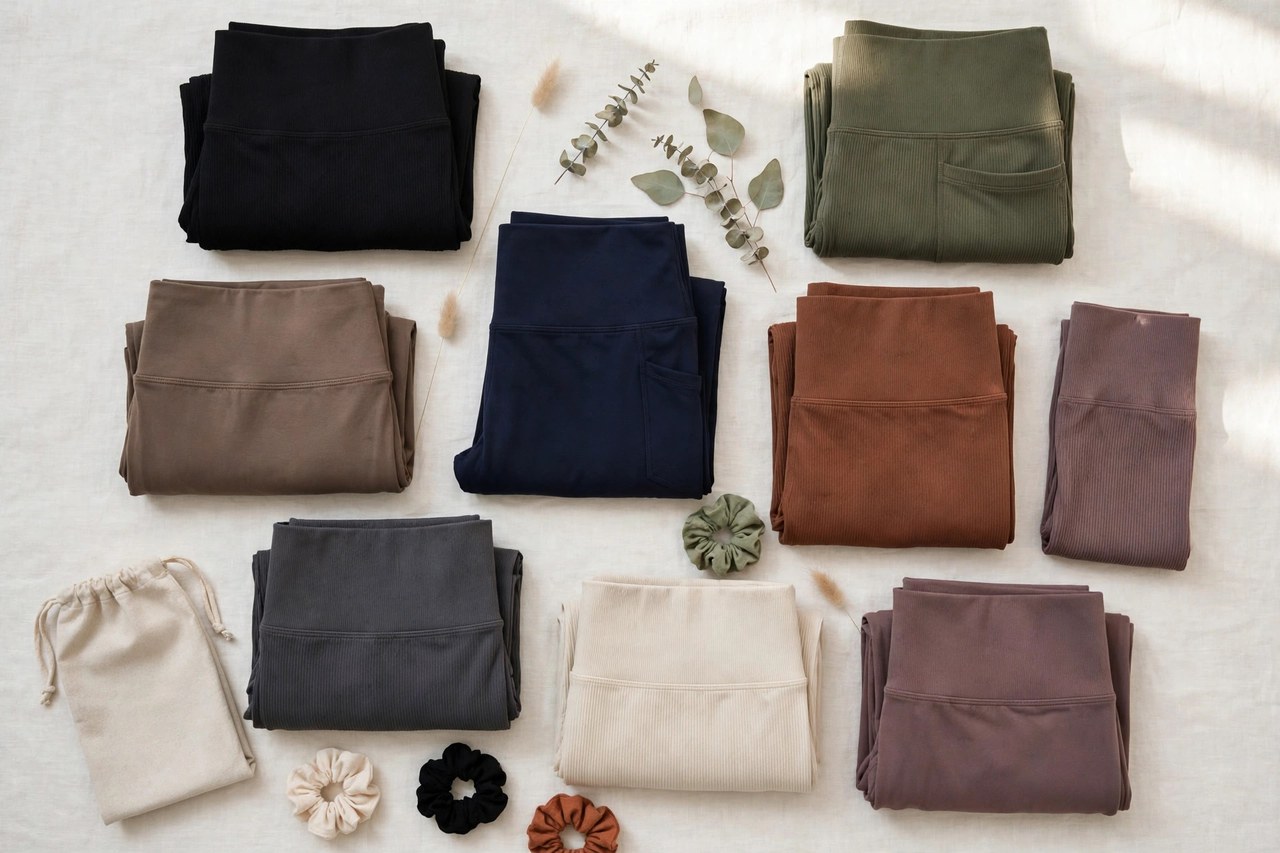
Leggings are a knit, not a trouser, and in plus sizes that distinction decides everything. A plus size legging in 1X to 5X must stretch over hips, thighs and calves, recover instantly so knees and seat do not bag, and hold at the waist without a drawstring digging in. The best plus ranges engineer the knit and the waistband for that job instead of grading up a small pattern, which is why a cheap legging can feel fine standing and fail completely the first time you sit, bend or climb stairs.
This guide is specifically about the knit legging — everyday, athletic and fashion styles — rather than pants in general. It explains waistband constructions that stay up on a curved waist-to-hip ratio, how to judge stretch and recovery, what squat-proof really means in fabric terms, and how inseam and rise work together in extended sizes. A good plus legging should disappear in wear: no tugging, no rolling, no adjusting through the day.
Waistbands: The Whole Fit in Four Inches
The waistband does the holding, so judge it first. A wide band of about four to five inches, cut on a contour or with a higher back than front, follows the natural rise of the back waist and resists the roll-down that plagues straight bands on a fuller tummy. Seamed bands with encased elastic only at the very top edge balance hold with comfort, while fully elasticized wide bands can fold in half when you sit if the elastic is narrow or weak inside.
High-rise plus leggings should reach the natural waist and stay there through a sit, a squat and a forward bend — test all three before removing tags. A V-shaped front waistband can sit more comfortably below a fuller midsection, while a straight high band suits an hourglass waist. Avoid thin elastic-only waistbands in plus sizes altogether: they cut in, create a sharp line under tops, and migrate downward with every step because there is not enough surface to grip the waist.
Stretch, Recovery and Squat-Proof Knits
Most plus leggings blend nylon or polyester with 15 to 30 percent elastane. The percentage matters less than recovery — how completely the knit snaps back after stretching. Test it by stretching a section across the thigh firmly for ten seconds and releasing: a good knit returns to shape with no lingering ripple. Poor recovery shows first as bagging at the knee and a seat that sags by afternoon, and no waistband can compensate for a knit that has given up.
Squat-proof means the fabric stays opaque at full stretch over the seat and hips. Darker, denser knits with interlock construction pass most reliably; lighter colors and thin jersey knits are the usual failures, especially in larger sizes where the same fabric is stretched further. Hold the fabric stretched over your hand against light in the store, or order from retailers with clear opacity testing. Brushed and fleece-lined plus leggings add winter warmth but stretch less, so consider sizing up within your usual range for lined styles.
Rise, Inseam and Calf Fit in Extended Sizes
Plus leggings come in full length, 7/8 and capri cuts, and the right inseam depends on both your height and where the hem is meant to land. A full-length plus legging should end at the ankle bone with minimal stacking; heavy pooling at the ankle signals a rise or inseam mismatch that will also drag the crotch seam low. Many plus lines now offer short, regular and long inseams within each size, which matters because plus and tall, or plus and petite, are independent dimensions.
Rise and calf need equal attention. The front rise should sit smooth without pulling down at the center, and the back rise needs enough length to stay up when sitting — a common plus pattern correction is adding back rise without adding front. At the calf, the knit should contact the leg evenly without a tight band at the widest point, which can leave marks and restrict the stretch above it. Seams should be flatlocked or placed at the back of the leg on athletic styles to reduce inner-thigh friction, a real wear point in plus fits.
Styling Beyond the Gym and Care
Everyday plus leggings in ponte-weight or dense knit pair with tunics, long shirts and sweater dresses that cover the seat, keeping the look intentional rather than athletic. Leather-look and coated leggings dress up for evenings but have less stretch, so check the seated fit carefully. For workouts, choose the firmest compression you can breathe and move in comfortably. In every case, a legging is not a substitute for a woven pant at formal occasions — its knit nature is the point, and also the limit.
Wash plus leggings cold, inside out, and skip fabric softener, which coats elastane and weakens recovery over time. Air drying is the single best habit for legging life, because tumble heat degrades stretch fibers fastest at the waistband and knee. Rotate at least two or three pairs if you wear leggings daily, giving each knit a rest day to recover fully. Replace a pair when the waistband stays stretched after washing or the seat sheers at normal stretch — both signal the elastane has finished its work.
Related Women's Guides
More to Explore on Apparel Search
- Plus Size Clothing
- Plus Size Clothing Stores
- Shop for Plus Sizes
- Women's leggings
- fashion leggings
- Women's Cutout Leggings
- plus size
- fashion
- trendy
- stylish
- plus size fashion model
- plus size fashion definition
- Plus Size Intimates
- Plus Size Bras
- Plus Size Underwear
- Plus Size Intimate Apparel
- Clothing Stores
- Fashion Designers
- Popular Brands
- Apparel
- Women's Clothing Stores
- Women's Clothing Wholesalers
- Women's Fashion
Looking for Women's Clothing Stores?
This guide helps you choose women's plus size leggings. To browse where to buy, visit our women's clothing store directory, where you can find retailers that carry them.