Women's Plus Size Jeans Guide
Everyday plus size jeans in 14W to 32W: leg shapes, rises that stay put, waistbands that do not gap, washes for every day and stretch denim judged by its recovery.
Shop Women's Plus Size Jeans Now
Shop Women's Plus Size Jeans on Amazon Shop Women's Plus Size Jeans on eBayThe Amazon and eBay links on this page are affiliate links. If you make a purchase through them, Apparel Search may earn a commission.
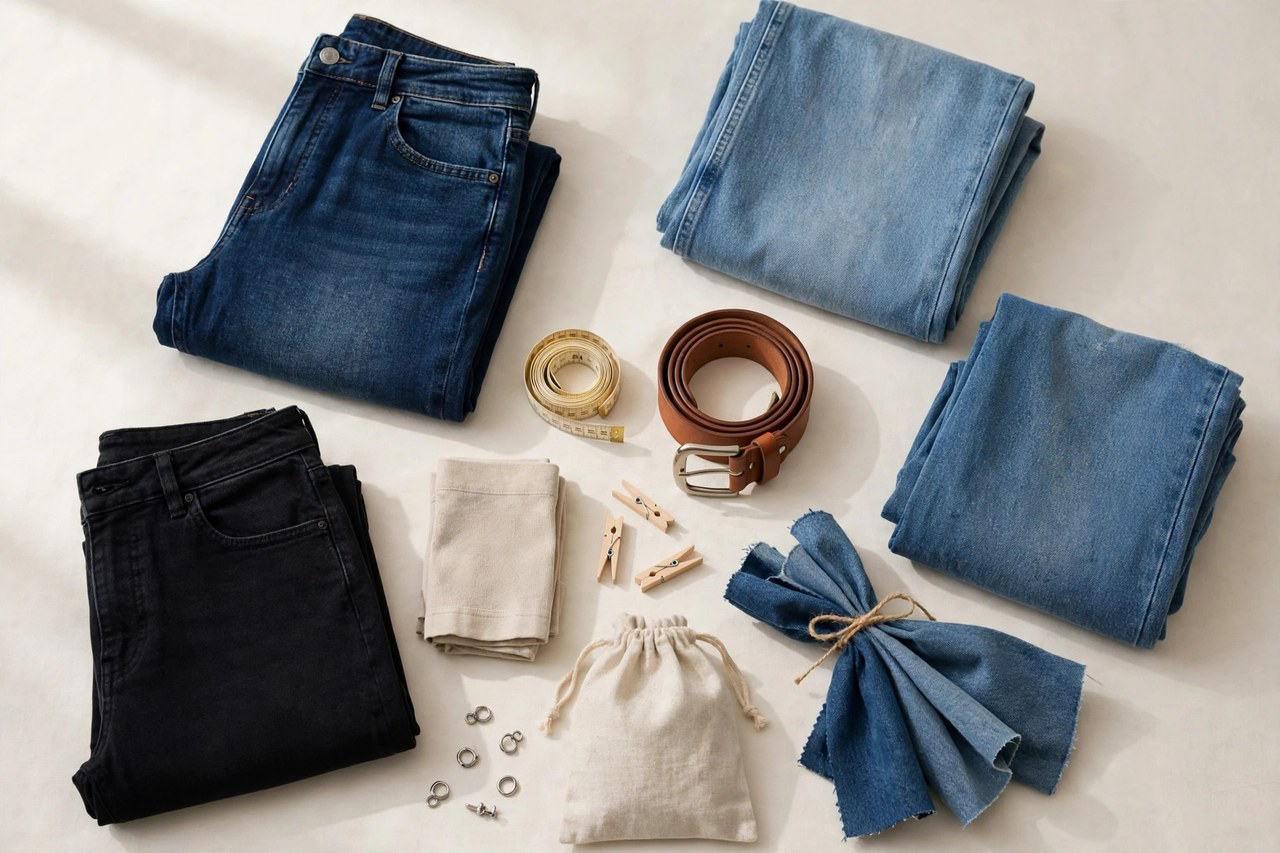
Jeans are the most-worn bottom in most plus size wardrobes and the category where fit engineering matters most, because denim shows everything: a waistband that gaps, a rise that slides, a thigh that is cut too straight for the hip above it. This guide covers everyday plus size jeans in 14W to 32W and 1X to 5X — the five-pocket styles in skinny, straight, bootcut, flare and wide-leg shapes — with the designer and premium end of the market covered in its own guide elsewhere in this section. Here the focus is the jeans you live in weekly.
The good news is that plus denim is one of the most improved categories in fashion. Dedicated plus patterns now grade the waist-to-hip ratio honestly, contour the waistband, place the back yoke and pockets for a fuller seat, and use stretch denim whose recovery is tested. The sections below explain the leg shapes, the rise decisions, the washes and the stretch math, so you can identify which of the dozens of styles on a rail is actually cut for your proportions before the fitting room confirms it.
Leg Shapes and How They Behave on Curves
Skinny and legging jeans follow the leg closely and depend entirely on stretch and recovery; in plus cutting they need extra thigh and calf room graded in, not just a wider waist, or they pull down as you walk. Straight-leg jeans fall from the hip in one line and are the most forgiving everyday shape, balancing a fuller hip and thigh without clinging to the calf.
Wide-leg and relaxed jeans carry volume through the whole leg; their plus versions work when the hip and waist are genuinely fitted and the fabric has enough body to fall rather than collapse, because volume over curves needs shape at the top to read as a style. Boyfriend and tapered styles sit between, relaxed at the hip and narrower at the ankle.
Rises and the Contoured Waistband
Rise — the distance from crotch seam to waistband — is the defining plus jeans decision. High rise, around 10.5 to 12 inches in front on plus patterns, reaches the natural waist, supports the tummy and stays in place through sitting; it is the current default for good reason. Mid rise, roughly 9 to 10 inches, sits below the waist and suits shorter torsos and anyone who finds a high rise reaches their ribs.
The waistband itself should be contoured — cut higher at the back, shaped to the curve between waist and hip — because the classic plus jeans failure is a waist that gaps at the back while the hip fits. A contoured band, sometimes with discreet elastic inserts, closes that gap without a belt. Other construction to seek: a longer back rise than front, which every seated body needs; reinforced belt loops; and a zip and button that lie flat.
Washes, Color and Everyday Styling Range
Wash is the jeans wardrobe's range control. Dark indigo and black read dressiest, pair with blazers and heeled boots, and are the jeans most plus shoppers should own first, because an even dark wash also gives the smoothest line through hip and thigh. Medium washes are the everyday middle, and light washes and faded styles read most casual, with fading and whiskering drawing the eye to wherever they are placed — on plus patterns, that placement should be centered and subtle at the front thigh, not sprayed across the hip at its widest.
Distressing follows the same placement logic: rips and abrasion at the knee and thigh belong on casual pairs, and heavily broken-in styles shorten a leg visually. Colored denim — white, ecru, olive, burgundy — rotates seasonally and follows identical fit rules, with white and pale washes demanding a heavier denim weight to stay opaque and smooth over curves.
Stretch, Recovery and Making Jeans Last
Stretch content is printed on every denim label and worth reading as a specification. One percent elastane gives comfort stretch — a little ease that mostly holds shape. Two percent and above, often blended with polyester for strength, gives stretch fits that mold closely and depend on recovery quality. The test is recovery: quality stretch denim returns to size after a day's wear and a wash, while poor recovery bags at the knee and seat and slides at the waist by afternoon, whatever the percentage claims. Cotton-rich blends with modern elastane generally recover best and feel most like denim rather than knit.
Buy jeans slightly firmer than perfect in the waist and hip if the fabric is stretch, never in the length or the rise. Break the habit of the dryer: wash inside out, cool, and line-dry or tumble low, because heat is the enemy of elastane and the main reason jeans die young. Wash less often, spot-clean between, and rotate pairs so recovery fibers rest. Keep your winning specification written down — brand, style name, size, rise and inseam — because jeans are reordered by spec more successfully than any other garment, and a discontinued favorite is much easier to replace when its numbers survive it.
Related Women's Guides
More to Explore on Apparel Search
- Plus Size Clothing
- Plus Size Clothing Stores
- Shop for Plus Sizes
- Blue Jeans
- Women's jeans
- Boyfriend Jeans
- Jean Shorts
- skinny jeans
- plus size
- Ripped jeans
- history of ripped jeans
- jean jackets
- fashion
- trendy
- stylish
- plus size fashion model
- plus size fashion definition
- Clothing Stores
- Fashion Designers
- Popular Brands
- Apparel
- Women's Clothing Stores
- Women's Clothing Wholesalers
- Women's Fashion
Looking for Women's Clothing Stores?
This guide helps you choose women's plus size jeans. To browse where to buy, visit our women's clothing store directory, where you can find retailers that carry them.