Women's Plus Size Denim Guide
Plus size denim is a fabric story as much as a fit story — weights, washes and stretch blends in jeans, jackets, skirts and shirts cut for curves in 14W and up.
Shop Women's Plus Size Denim Now
Shop Women's Plus Size Denim on Amazon Shop Women's Plus Size Denim on eBayThe Amazon and eBay links on this page are affiliate links. If you make a purchase through them, Apparel Search may earn a commission.
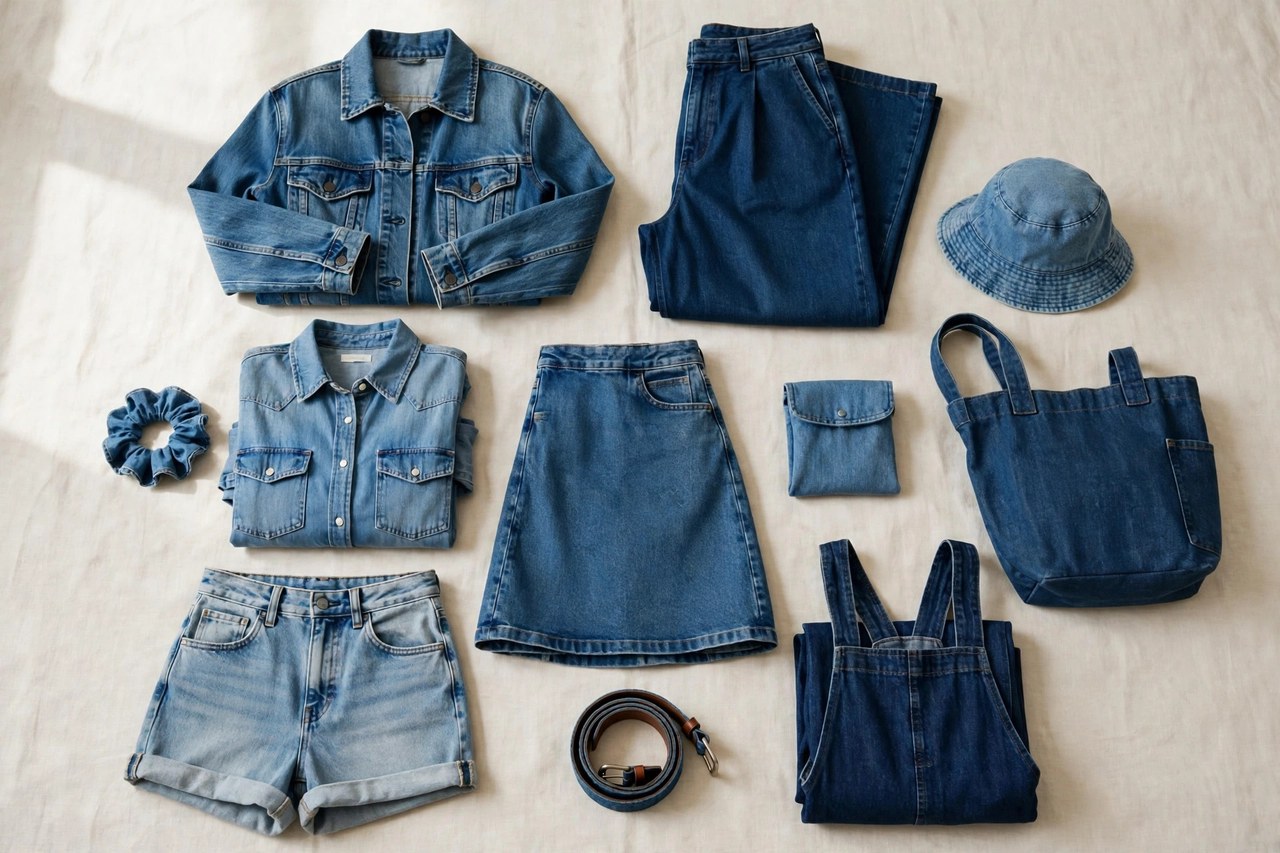
Denim is a fabric before it is a garment: a sturdy cotton twill, woven with indigo-dyed warp threads and white weft, that softens, fades and molds to the wearer like no other cloth. Plus size denim spans jeans, jackets, skirts, shirts, shorts and dresses in sizes 14W through 5X and beyond, and at plus scale the fabric's behavior matters even more than usual, because curves ask more of stretch, recovery and seam strength than straighter bodies do.
This is the umbrella denim guide, focused on the cloth itself: weights, blends, washes and finishes, and how they behave across the plus denim wardrobe. The jeans guide goes deep on jean fits and rises, and the designer jeans guide covers the premium end of the market. Read this page first when a pair feels mysteriously wrong, because the answer is often in the fiber label, not the size tag: the wrong denim will fail a good pattern, and the right denim will redeem an ordinary one.
Denim Weights, Weaves and Blends
Denim weight is measured in ounces per yard and shapes everything. Light denim under about 10 ounces makes shirts, dresses and summer jeans that drape and breathe. Mid-weight denim, roughly 10 to 13 ounces, is the jeans workhorse, balancing structure, durability and comfort for most plus wearers. Heavy denim above 13 ounces molds slowly, lasts longest and resists bagging, but breaks in stiff and warm. At plus sizes, very light denim in fitted jeans can feel flimsy and show strain early at inner thigh and seat.
Blends decide stretch behavior. One hundred percent cotton, called rigid denim, softens and shapes to the body over weeks, gives the most authentic fade, and needs a snug start since it relaxes with wear. Comfort stretch adds one to two percent elastane for give without changing the look. Power stretch, with higher elastane and polyester, hugs and smooths but can feel synthetic and lose recovery if poorly made. Cotton-polyester blends increase strength and color retention. Choose the blend for the garment's job: structure for trousers and jackets, recovery for skinny and legging fits.
Washes, Finishes and Fading on Curves
Wash is denim's color treatment, from dark rinse and raw indigo through mid-stone, light vintage fades and black and colored denim. Dark, even washes are the most versatile and polished, appropriate for smart-casual and work settings, and they fade gradually at your own stress points. Lighter washes read casual and summery. Whiskering, hand-sanding and fading patterns are applied where a body creases and wears the cloth, and at plus sizes those patterns must be placed for plus anatomy: fading centered on a fuller thigh and whiskers at a real plus hip crease, not copied from a smaller sample.
Check finish placement in the mirror before buying. Center-thigh fading can slim, while fading that drifts to the outer thigh or patches at the wrong height looks accidental. Distressing needs restraint and reinforcement at plus stress points, since rips at the knee and thigh will grow under real strain. Black denim fades toward grey and needs cool washing to hold its depth, and white and ecru denim demand a substantial weight to stay opaque over curves. A clean, dark, well-placed wash is the safest first plus denim investment in any category.
Denim Beyond Jeans: Jackets, Skirts, Shirts and Shorts
The plus denim jacket is a wardrobe anchor when it is cut with bicep room, front buttons that close without strain, and enough length to meet a high-rise waistband. Denim skirts in pencil, A-line and button-front styles need the same rise and waistband intelligence as jeans, plus kick pleats or stretch for stride. Denim shirts and shirtdresses work best in lighter chambray and tencel-denim blends that drape rather than armor the body, with snaps or buttons spaced to resist bust gaping.
Plus denim shorts and capris concentrate all the jeans fit questions into less cloth: rise, thigh room and a hem that does not dig or ride. Across every denim category, the plus non-negotiables repeat: a curved or contoured waistband, reinforced stress points, pockets sized and placed for a fuller hip, and hardware, zips, rivets and buttons, rated for the strain plus wear actually applies.
Fit, Care and Making Denim Last
Fit denim by its end-of-day behavior, not its first minute. Rigid denim should start snug at the waist and seat and will relax about half a size. Stretch denim should start smooth, not tourniquet tight, because over-stretching elastane kills recovery and shortens the garment's life. The inner thigh is the plus denim wear frontier: heavier weights, quality weave and rotating between pairs instead of daily wear all extend life, and a tailor can reinforce or darn early wear before it becomes a tear.
Wash denim less often than habit suggests, inside out, cool, with dark colors together, and skip the dryer or use low heat to protect elastane and length. Spot clean, air between wearings, and fold rather than hang heavy jeans to avoid waistband distortion. When a beloved pair dies at the thigh, its fabric still serves as patches for the next pair. Denim rewards this modest care with years of service and a fade pattern that is literally your own.
Related Women's Guides
More to Explore on Apparel Search
- Plus Size Clothing
- Plus Size Clothing Stores
- Shop for Plus Sizes
- Plus Size Designer Jeans
- Jean Jackets
- Jean Shorts
- Daisy Dukes
- Denim Skirts
- plus size
- fashion
- trendy
- stylish
- plus size fashion model
- plus size fashion definition
- Clothing Stores
- Fashion Designers
- Popular Brands
- Apparel
- Women's Clothing Stores
- Women's Clothing Wholesalers
- Women's Fashion
Looking for Women's Clothing Stores?
This guide helps you choose women's plus size denim. To browse where to buy, visit our women's clothing store directory, where you can find retailers that carry them.