Women's Plus Size Designer Jeans Guide
Premium plus size jeans promise better denim, better grading and longer life — this guide shows how to judge whether a designer pair earns its price on your body.
Shop Women's Plus Size Designer Jeans Now
Shop Women's Plus Size Designer Jeans on Amazon Shop Women's Plus Size Designer Jeans on eBayThe Amazon and eBay links on this page are affiliate links. If you make a purchase through them, Apparel Search may earn a commission.
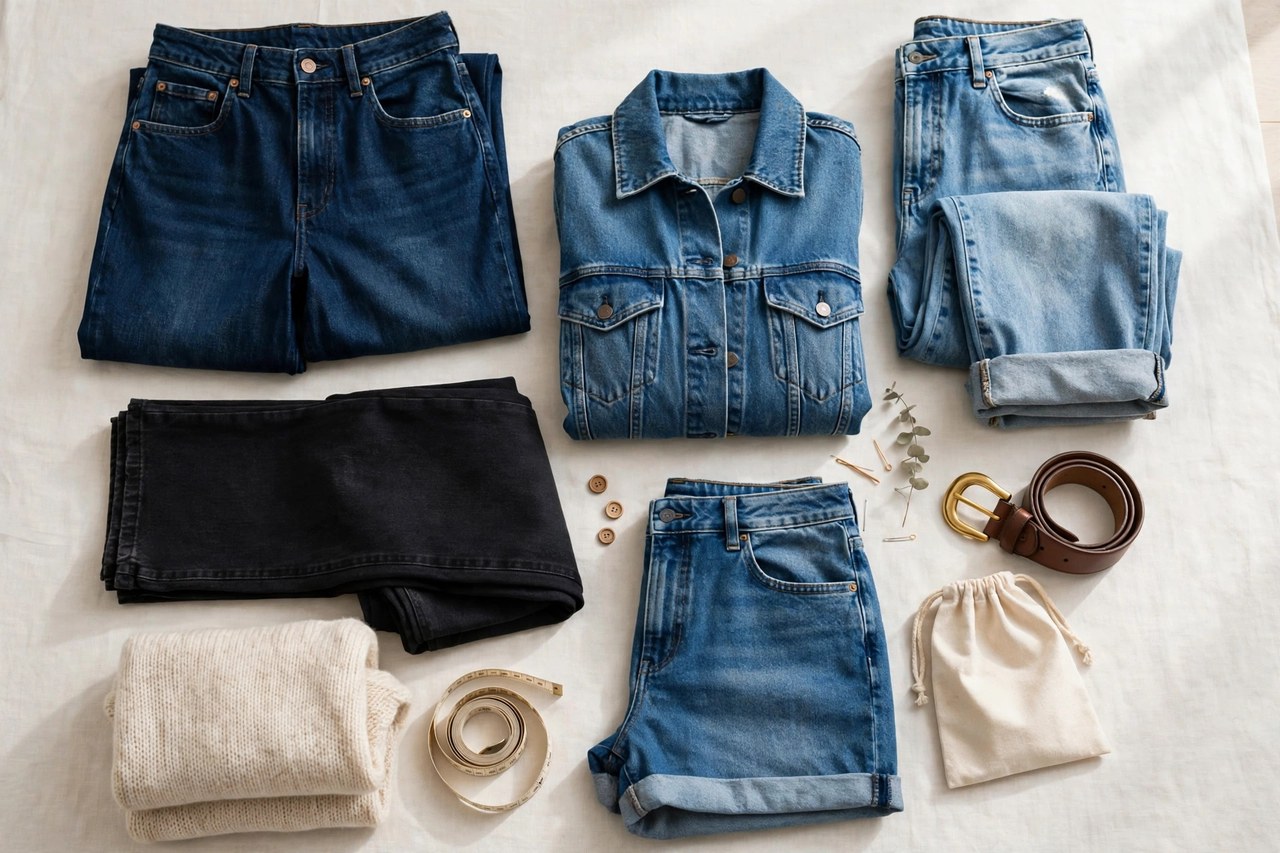
Designer jeans occupy the premium shelf of the plus denim market, priced on claims of superior cloth, superior construction and superior fit. For plus size shoppers those claims deserve testing rather than faith, because a premium label graded carelessly is just an expensive disappointment, while a genuinely well-made plus jean, cut on a real plus block in denim with honest recovery, can outlast three cheap pairs and look better in every one of those extra years.
This guide is the premium companion to the general denim guide. It explains what designer pricing is supposed to buy in cloth, stitching and grading, how to run the fitting-room tests that expose a straight grade in disguise, and how cost per wear, resale and care change the value calculation. The goal is neither reverence nor cynicism: it is a repeatable method for deciding, pair by pair, whether the premium is in the jeans or only on the label.
What Premium Denim Should Deliver
Start with the cloth. Premium jeans typically use heavier, tighter-woven denim, often 11 to 13.5 ounces, with long-staple cotton, cleaner dyeing and stretch blends engineered for recovery rather than mere give. The hand feel is denser and smoother, fades develop with more character, and the fabric resists the early inner-thigh wear that kills cheap plus jeans. Stretch, where used, should be modest and stable: the jean should end the day the same size it began, with knees and seat returning to shape overnight.
Construction is the second deliverable. Expect dense, even stitching, chain-stitched hems, reinforced rivets and bar tacks at every stress point, quality zips that run under load, a shaped or contoured waistband that sits close at the back, and pocket bags in sturdy cloth placed for a fuller hip. Interior finishing tells the truth about a factory: clean seams and no raw, fraying edges inside predict how the outside will age. If a premium pair is finished like a budget pair inside, the price is paying for marketing, not making.
Plus Grading: The Test That Matters Most
The decisive question is whether the jean was graded for plus proportions or enlarged from a smaller pattern. A true plus designer jean adds front rise length and shape for a fuller stomach, curves the waistband, positions back pockets on the seat rather than the thigh, places fading and whiskering at plus anatomy, and gives the thigh room without ballooning the ankle. Design houses that fit plus sizes on plus fit models, and say so, pass this test far more often than those that simply added sizes to an existing chart.
Run the fitting-room examination. Sit, bend, climb a step and walk briskly: the waistband should stay placed without a belt doing structural work, the zip should not strain, and the back yoke should not pull down. Check the mirror from the side for a smooth front, and from behind for pockets that frame rather than shrink the seat. Wear the pair around the house for an hour before removing tags when returns allow; a premium jean that bags at the knee in an hour will not improve with ownership, whatever the label promises.
Fits, Washes and Building a Premium Rotation
Designer lines usually excel in a core set of fits: a straight leg that skims, a skinny or slim with real recovery, a bootcut balanced for plus proportions, and increasingly a wide leg with a controlled hem width. Choose the fit by your wardrobe's center of gravity rather than the season's loudest trend, because the premium case rests on years of wear. High and mid rises dominate plus designer ranges for good reason, supporting the midsection and lengthening the leg, with the rise measured and stated by serious brands.
Wash strategy at premium prices should be conservative first: a dark rinse or deep indigo pair is the hardest-working, longest-lived and most versatile purchase, followed by a true black. Fashion washes, heavy fading and distressing date faster and wear out sooner at their weakened points, so buy them second, on sale, or not at all. Two premium pairs in rotation, worn alternately so the fibers rest, will outlast and out-look four budget pairs churned in sequence, which is the entire economic argument in one wardrobe decision.
Cost Per Wear, Authentication and Care
Do the arithmetic honestly. A premium pair worn twice a week for three years costs well under a dollar a wear; a cheap pair replaced every four months for fit failure costs more and looks worse throughout. When buying second-hand premium denim, verify authenticity through stitching quality, hardware engraving, interior labels and seller protections, and judge condition at the inner thigh, waistband elastic and hem, the three places plus wear shows first.
Care protects the investment. Wash inside out, cool and infrequently, hang or lay flat to dry, and keep premium stretch denim out of high dryer heat that degrades elastane. Mend early thigh wear with professional darning before it tears, and have hems done with original-hem methods if the look matters to you. Bought on evidence rather than aura, with grading verified in motion and cloth judged in the hand, designer jeans become what their price claims: the most reliable trousers a plus wardrobe owns.
Related Women's Guides
More to Explore on Apparel Search
- Plus Size Designer Collections
- Plus Size Clothing
- Plus Size Clothing Stores
- Shop for Plus Sizes
- Women's designer jeans
- Raw Denim
- Selvage Denim
- Blue Jeans
- Vintage Jeans
- fashion brands
- eponymous brands
- uxury fashion brands
- emerging fashion designer
- plus size
- fashion
- trendy
- stylish
- plus size fashion model
- plus size fashion definition
- Popular Brands
- Clothing Stores
- Fashion Designers
- Apparel
- Women's Clothing Stores
- Women's Clothing Wholesalers
- Women's Fashion
Looking for Women's Clothing Stores?
This guide helps you choose women's plus size designer jeans. To browse where to buy, visit our women's clothing store directory, where you can find retailers that carry them.