Fashion Terms — the Apparel Search fashion terminology directory
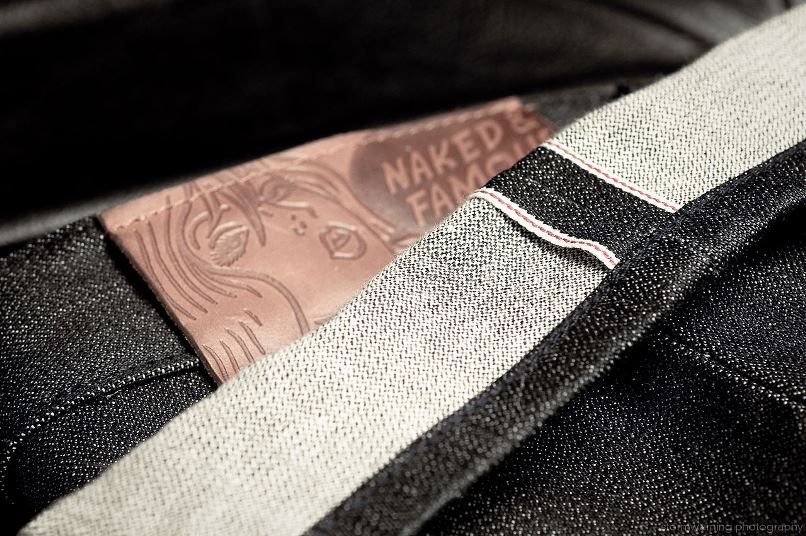
Selvage denim — from “self edge” — is denim woven on traditional shuttle looms, giving it a crisply finished, fray-resistant edge that shows when jeans are cuffed. The continuous-thread weaving method passes one cross-yarn (the weft) back and forth through the vertical warp, so the fabric edge will not fray, ravel or curl. Traditional looms were largely replaced by larger, faster looms during the mass-market jeans demand of the 1940s. Much selvage denim is also raw denim, and it is identified by the distinct seam, typically white with a colored thread, on the outseam of cuffed jeans.
Woven on traditional shuttle looms, selvedge denim has a crisply finished, fray-resistant edge that you can see when you cuff the jeans. A lot of selvedge is also raw denim, a favorite among denim lovers because it becomes unique with wear.
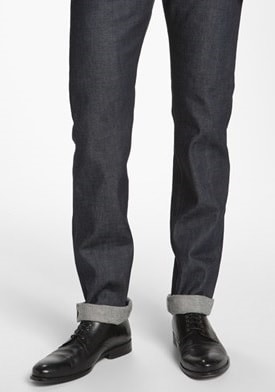
The "self edge" of selvedge denim comes from a continuous-thread weaving method of traditional American denim looms. These traditional looms were replaced by larger, faster looms during times of soaring mass-market demand for jeans in the 1940’s, but their craftsmanship was left unmatched. You can identify selvedge denim by the distinct seam, typically white and a colored thread, on the outside seam of a pair of cuffed jeans.
Selvage is the edge of a fabric as it comes from the loom. Selvages are woven or knit so that they will not fray, ravel, or curl. Selvage denim refers to a unique type of selvage that is made by means of using one continuous cross-yarn (the weft), which is passed back and forth through the vertical warp beams.
Are you looking for the perfect pair of denim jeans to add to your wardrobe?
You may want to also learn about ripped jeans.
The selvage is a by-product of how a shuttle loom works. On a traditional loom, a shuttle carries one continuous weft thread back and forth across the warp, turning at each side and binding the edge as it goes. Because the thread never gets cut at the edge, the sides of the fabric come off the loom already finished — dense, clean and resistant to fraying. Modern looms built for speed weave much wider fabric much faster, but the weft is cut at each pass, leaving an edge that must be overlocked in the garment to keep it from unraveling. Selvage denim trades that speed for the finished edge and the character of the older cloth.
That trade is also why selvage production stayed small. When demand for jeans soared in the 1940s, the industry moved to the larger, faster looms and the traditional looms fell out of mainstream use, leaving their craftsmanship unmatched but scarce. The fabric a shuttle loom produces is narrower, so jeans made from it are cut to use the finished edge itself as the outseam finish — which is precisely why the edge is visible at all: turn up the cuff and the white edge with its colored thread is the fabric's own border, not an added trim.
For denim lovers, the appeal combines that visible proof of construction with how the fabric ages. Because much selvage denim is sold raw — unwashed after dyeing — it fades and softens according to the wearer's own body and daily activities, becoming unique with wear. Read raw denim for the finish side of that story and ripped jeans for the distressed end of the denim family; selvage is the weaving side, and the three terms are often confused precisely because one pair of jeans can be all three at once.
Selvage — also spelled selvedge — is the edge of a fabric as it comes off the loom, woven or knit so it will not fray, ravel or curl. The word comes from “self edge”: the fabric finishes its own edge during weaving.
Cuff the jeans: selvage denim shows a distinct finished edge on the outseam, typically white with a colored thread running through it, instead of the overlocked, fray-prone edge of denim woven on modern projectile looms.
No. Selvage describes how the fabric was woven — on a traditional shuttle loom with a self-finished edge. Raw describes the finish — denim not washed after dyeing. A lot of selvage denim is also raw, so the two often coincide, but a pair can be one without the other.