Women's Plus Size Pants Guide
Plus size pants in 14W to 5X are the umbrella bottom — this guide covers rises, contoured waistbands and leg shapes across trousers, casual and dress styles for curvier hips and waists.
Shop Women's Plus Size Pants Now
Shop Women's Plus Size Pants on Amazon Shop Women's Plus Size Pants on eBayThe Amazon and eBay links on this page are affiliate links. If you make a purchase through them, Apparel Search may earn a commission.
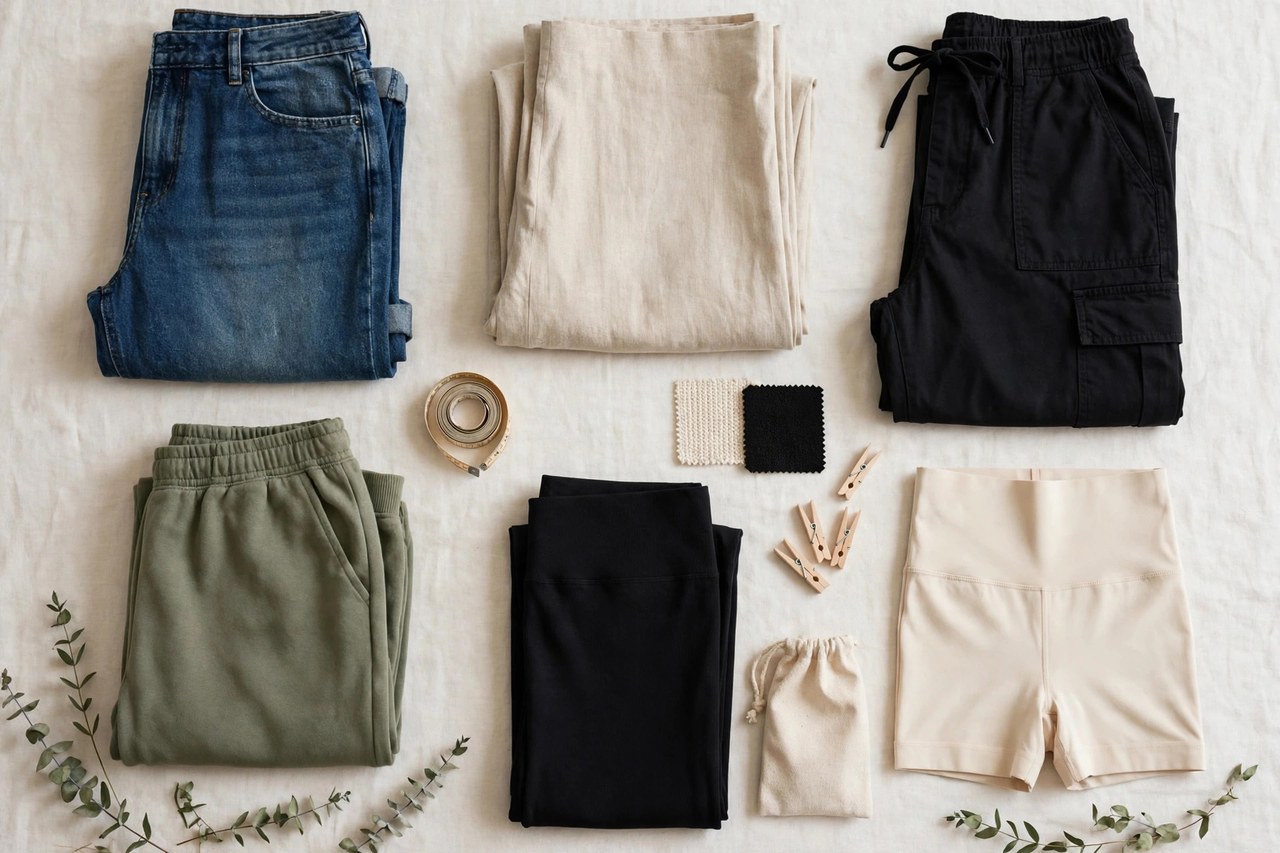
Pants is the umbrella category for woven and structured knit bottoms — trousers, chinos, dress pants, casual pants and wide-leg styles — and in plus sizes from 14W to 5X it is the most technically demanding fit in the wardrobe. A plus pant must accommodate the difference between waist and hip, sit level front to back, allow sitting and stride, and hang in a clean line from waist to hem. When all four happen at once, pants look expensive at almost any price, which is why this foundation category rewards careful buying.
This guide covers the whole pants family at the level of fit architecture: rise choices, waistband construction, leg shapes and how they balance plus proportions, pocket and fly details, and fabric selection. For the knit-specific world of tights-like bottoms, the leggings guide in this section goes deeper; here the subject is the structured pant you can wear to work, dinner and everywhere trousers are expected.
Rise and the Waist-to-Hip Problem
Rise is the distance from crotch seam to waistband, and it must be matched to both your torso and your waist-to-hip difference. High-rise plus pants, sitting at the natural waist, give the most secure hold and leg lengthening, but need enough front rise shaping to sit smoothly over the tummy rather than pressing into it. Mid-rise styles sit just below the waist and suit shorter torsos. Low rises are rare in modern plus ranges because they offer the least hold on a curved waist and gap most at the back.
The classic plus pants problem — fitting the hip, gaping at the back waist — comes from a waist-to-hip difference larger than a straight pattern allows. Solutions are built into better plus pants: a contoured waistband shaped higher at the back and cut on a curve, elastic inserts at the back or side waist, and a higher back rise than front rise. Judge any pant by the back waistband seated: if it stands away, a curvy-fit line often fixes it.
Waistbands, Closures and Pockets
Flat-front waistbands with hook, button or internal elastic give the smoothest line under tops. Pull-on pants in ponte and structured knits use wide elastic or knit waistbands that must be firm enough to hold the pant at the waist through sitting — test by sitting and standing several times and checking whether the waistband has migrated. Drawstring waists suit casual pants only, because the gathered front adds bulk under tucked and fitted tops. Belt loops, when present, should be wide enough for a real belt and bar-tacked, since plus pants ask more of them.
Pockets change fit visually and physically. Slash pockets that gape open signal insufficient hip ease; welt and hidden side-seam pockets lie flattest on fuller hips. Front pocket bags should be anchored into the fly or waistband so they do not pull the front out of line. Back pockets should center on each cheek, sized in proportion — pockets that are too small or placed too high or wide apart exaggerate rather than flatter. If a style has no back pockets, the yoke seam placement does the shaping work instead, so check its line in a three-way mirror.
Leg Shapes and Plus Proportions
Straight legs fall evenly from hip to hem and are the most versatile plus shape, working with nearly every shoe and top length. Tapered and slim legs narrow to the ankle and balance longer or fuller tops, but need enough calf room to avoid pulling the knee forward. Wide-leg and palazzo pants carry volume that must start from a fitted waist and hip to read as intentional; in fluid fabrics they move beautifully, in stiff fabrics they can overwhelm, and their hem should clear the floor by a clear margin with the intended shoe.
Bootcut and flare legs balance fuller hips by widening below the knee, a classic plus proportion strategy, provided the knee break sits at your actual knee — a reason to prefer brands offering short, regular and long inseams in plus sizes. Cropped and ankle pants end at the slimmest point of the leg and pair well with fitted tops, but a crop that lands at the widest calf point shortens the leg line.
Fabrics, Fit Checks and Care
Ponte, twill with one to two percent elastane, crepe and suiting blends anchor the plus pants wardrobe. Ponte gives knit comfort with trouser polish and enough body to smooth, twill gives casual structure, and lined wool or crepe dress pants give the cleanest formal line. Very thin fabrics show every pocket outline; hold a hand behind the fabric in store light as a test. Wrinkle behavior matters too — linen and pure cotton crease honestly, blends forgive a long seated day.
Run the full check in store: waistband level and closed without force, sit and cross legs comfortably, stride without the hem catching or the crotch pulling, pockets lying flat, and no horizontal stress creases at the front hip, which signal you need ease or a curvier cut. Care for pants by fabric — most twill and ponte wash cold and hang dry to protect elastane and creases, while lined dress pants may need pressing or cleaning. Two or three perfectly fitted plus pants outperform a drawer of near misses.
Related Women's Guides
More to Explore on Apparel Search
Looking for Women's Clothing Stores?
This guide helps you choose women's plus size pants. To browse where to buy, visit our women's clothing store directory, where you can find retailers that carry them.