Women's Plus Size Dress Pants Guide
Plus size dress pants are tailored trousers cut for curves — contoured waistbands, smooth fronts and leg shapes that work from office to evening in 14W and up.
Shop Women's Plus Size Dress Pants Now
Shop Women's Plus Size Dress Pants on Amazon Shop Women's Plus Size Dress Pants on eBayThe Amazon and eBay links on this page are affiliate links. If you make a purchase through them, Apparel Search may earn a commission.
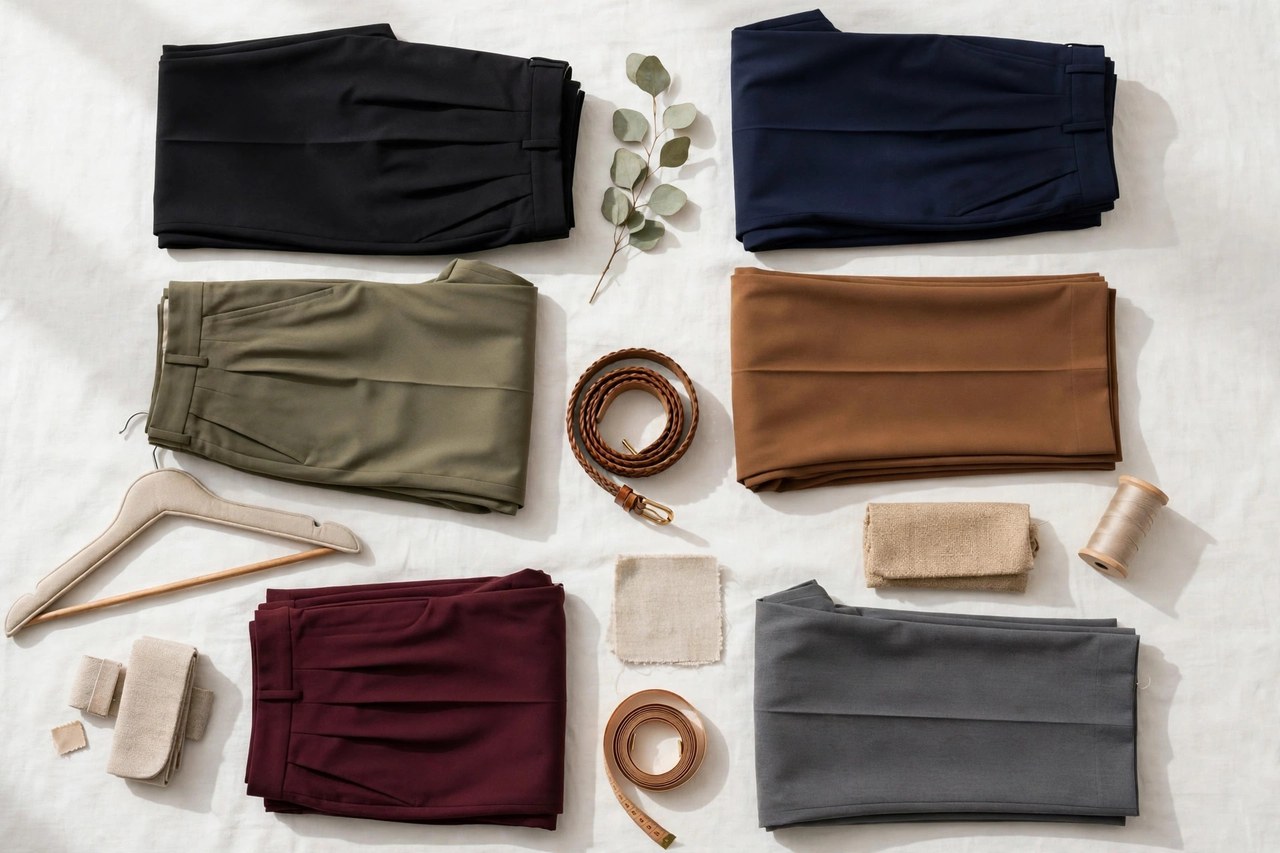
Dress pants are the tailored end of the plus trouser family: smooth-front, creased or cleanly pressed pants in suiting, crepe, ponte and refined twill, made for offices, occasions and any setting where jeans are too casual. In plus sizes 14W through 5X, a dress pant succeeds or fails at construction points casual pants can fudge: a waistband that stays level and closed, a front that lies smooth over the stomach, pockets that do not flare, and a leg that falls in an unbroken line from hip to hem.
This guide covers plus dress pants specifically: waistband engineering, leg shapes and how they balance a curvy figure, the fabrics that hold a tailored line through a working day, and the seated, standing and walking checks professional wear demands. It sits between the general pants guide and the suits and workwear guides; read it when the purchase is a trouser that must look composed at 9 a.m. and still look composed, and feel bearable, at the end of a long seated day.
Waistbands, Fronts and Closure Engineering
The plus dress pant waistband does the hardest work in tailored clothing. A contoured or curved waistband, cut higher at the back and shaped to the waist-to-hip difference, closes the back gap that straight waistbands leave on curvy bodies. Inside, a firm facing, a proper hook-and-bar or button closure with an interior button for strain, and sometimes a discreet elastic inset at the back or sides keep the band level without digging. Extended tab closures distribute pull across the front, which is why better tailored pants fasten so much more smoothly.
The front should lie flat by design, not by compression. That comes from a rise shaped for a fuller stomach, darts or a shaped yoke where needed, and pocket construction that does not add bulk: on-seam or slanted pockets with bags tacked to the fly so they cannot flare open when you sit. Pull-on tailored styles with wide, firm elastic backs and flat fronts have improved enormously and suit many plus professionals, provided the elastic is strong enough to hold the front smooth all day rather than migrating by noon.
Leg Shapes: Straight, Wide, Tapered and Bootcut
Straight-leg dress pants fall from the hip in one clean width and suit nearly every plus figure and workplace; they are the default recommendation and the easiest to hem and pair. Wide-leg and palazzo trousers add drama and airflow, balanced best with a fitted or tucked top and a fabric that drapes rather than billows; at plus sizes the hem width should be generous but controlled, and length precise, since pooling wide fabric shortens the leg visually and trips literally.
Tapered and slim tailored pants narrow toward the ankle for a modern line, needing enough thigh and calf room to keep the taper elegant rather than tight; ankle and cropped tailored lengths show footwear and suit warm offices, with the hem ending at the ankle bone, not mid-calf. Bootcut dress pants balance a fuller hip and pair with heeled shoes, their slight flare restoring proportion. Whichever shape you choose, the crease, if the style has one, should hang vertically from the hip through the center of the knee; a wandering crease signals a twist in the cut or the wrong size.
Fabrics That Hold a Tailored Line
Suiting wool and wool blends are the classic dress pant fabrics: breathable, crease-resistant, draping cleanly and aging slowly, with a touch of elastane in modern versions for seated comfort. Polyester and viscose crepe offer fluid drape, easy care and a dressier hand at lower cost, suiting wide legs and evening trousers. Ponte, a dense double knit, gives pull-on comfort with a tailored face and enough body to smooth the line, provided its weight is substantial; thin ponte reads as leggings and fails the office test.
Across fabrics, judge recovery by sitting for five minutes in the fitting room and standing to check the knee and seat: good tailored cloth releases its wrinkles; tired cloth keeps yours. Lined dress pants fall more smoothly over the hip and extend wear between cleans, while unlined styles in quality cloth suit summer. A mid-weight, resilient fabric in black, navy or charcoal remains the hardest-working purchase in this entire category.
Fit Checks for Work and Care
Run the professional fit routine. Standing: waistband level and closed without strain, front smooth, pockets flat, crease vertical, hem breaking correctly on your work shoes. Seated at desk height for a full minute: no waistband bite, no pocket flare, no front strain, and room to cross your legs. Walking: no pulling at the front rise, no fabric catching behind the knee. Check the back view for a waistband that stays up and a seat that is smooth without being tight; tailored pants should describe the body, not compress it.
Hem dress pants to the shoe wardrobe you actually wear, since a centimeter changes the break entirely. Care follows fabric: wool and lined trousers want rest days between wears, airing and occasional professional cleaning; ponte and crepe tolerate gentle home washing. Press along the crease, store hung by the waistband on clamp or bar hangers, and your best plus dress pants will hold their line, and your working mornings together, for years.
Related Women's Guides
More to Explore on Apparel Search
Looking for Women's Clothing Stores?
This guide helps you choose women's plus size dress pants. To browse where to buy, visit our women's clothing store directory, where you can find retailers that carry them.