Ripped Jeans
Fashion Influence — how style shapes, and is shaped by, the people who wear it
Ripped jeans carry tears that once signaled a worn-out pair and now signal a deliberate style, popularized in the late 1980s heavy metal era and the grunge era that followed. This guide explains the difference between ripped, distressed and used jeans, the environmental side of wearing clothes longer, and the option of cutting a ruined pair down into jean shorts. It is expanded below with placement and care notes.
Ripped Jeans
Are you tight on funds at the moment, or are you wearing ripped jeans because you want to? Either way is cool.

Just because my jeans are tattered and torn does not mean that I am wearing them out of necessity. Believe it or not, this year I can actually afford a new pair of pants. In the old days, wearing a pair of ripped jeans indicated that the wearer could not afford a new pair of jeans (or their mother had not yet had enough time to patch them). In the latter half of the 1990’s, wearing ripped jeans became a purposeful style and not necessarily a sign of a person’s financial situation.
This style became popular in the late 1980s during the hard rock/heavy metal era and in the 1990s and 2000s during the grunge era, being worn by grunge artists such as Kurt Cobain and others. Ripped denim was also part of the punk fashion movement.
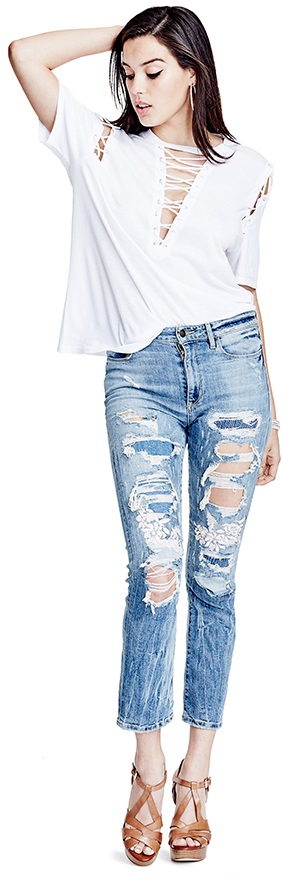
The word rip means to cut or tear apart. This can occur by accident or it can be done on purpose. Ripped jeans are jeans with rips, often on the knees, but can be in various locations. Worn and ripped jeans are also referred to as distressed. However, distressed jeans do not necessarily have to have complete rips.
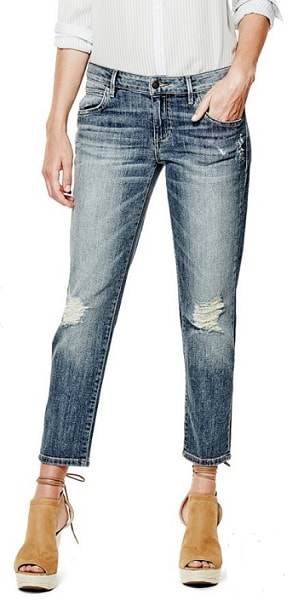
Ripped jeans may arise naturally as a result of wear and tear, but jeans are also deliberately distressed by suppliers during the manufacturing process. They should not be confused with used jeans. Just because they have rips it does not necessarily mean that they are previously worn.

When wearing ripped jeans or other products beyond their normal replacement date, one reduces the number of jeans purchased and thereby actually helps the environment.
If you are unhappy with the rips in your jeans, you may want to cut the legs off entirely and turn them into jean shorts.
Here are some interesting links to help you further research this subject:
History of Ripped Jeans (Apparel Search Terms)
Ripped Jeans Blog Posts (Fashion Blog)
What are ripped jeans? (WiseGeek)
Everything You Need to Know about Ripped Jeans (GQ)
How to rip your own jeans (WikiHow) – just in case you could not figure out how to do it yourself.

Do you want where pants with small tares or completely blown out knees? Blue, skinny, plus size, and slim styles all work well as ripped jeans. Pick your style, grab some scissors and go for it. Have fun. If you cut around the knees too far, you can always wear them as shorts.
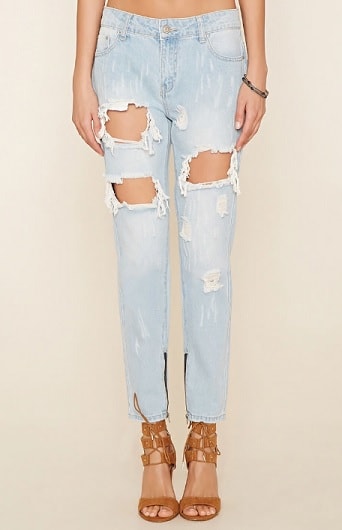
High cost designer jeans often have rips and other special finishes added at the time of manufacturing. Learn more about designer jeans and why they can be more expensive than some of the regular brands.
Links of possible interest: Levi’s, Lucky Brand, Guess?
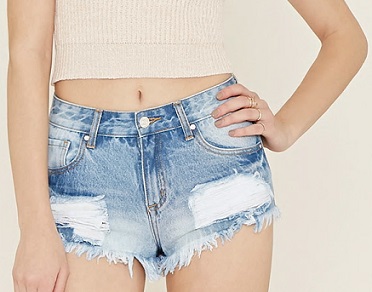
If you are not a fan of ripped jeans, you may be a fan of a ripped stomach in jeans.
Learn more about ripped jeans in our fashion terms section.
Your fabulous ripped denim pants may be your favorite, but are they the absolute best pair of jeans on the planet?
Fashion Products Fashion Products M-R Fashion Products R
Return to the Influence
Fashion home page.
Placement, Fit and Making a Pair Last
Where a rip sits decides how the jeans wear afterwards. Knee rips are the classic placement because the knee is where denim fails first in ordinary wear, so a manufactured rip there reads as natural. Thigh and pocket-area distressing stays smaller and more stable, while large blown-out openings below the knee or across the seat weaken the garment's structure and keep growing with every wash and wear. Skinny and slim fits hold a rip's edges close to the leg, which slows that growth; looser fits let the opening flex and fray faster, which is sometimes the point and sometimes the end of the jeans.
Homemade rips follow the same logic. Mark the placement while wearing the jeans rather than flat on a table, cut horizontally and pull the vertical threads out to leave the horizontal ones as the familiar white ladder, and stop short of the side seams so the leg keeps its structure. Washing inside out on a gentle cycle, and air drying, preserves both manufactured and homemade distressing longest, and a pair whose knees have gone too far still has the second life named in the guide above: cut the legs off and hem or fray them into jean shorts.
Common Questions
What is the difference between ripped and distressed jeans?
Ripped jeans have complete rips or tears, often on the knees but in various locations. Distressed jeans carry worn and distressed finishes that do not necessarily include complete rips. Neither is the same as used jeans: deliberately distressed jeans are manufactured that way and need not have been worn before.
When did ripped jeans become a deliberate style?
The style became popular in the late 1980s during the hard rock and heavy metal era, and in the 1990s and 2000s during the grunge era, worn by grunge artists such as Kurt Cobain. Ripped denim was also part of the punk fashion movement.
How are ripped jeans produced?
They arise naturally as a result of wear and tear, and they are also deliberately distressed by suppliers during the manufacturing process. High cost designer jeans often have rips and other special finishes added at the time of manufacturing.