Women's Jeans Guide
Sturdy denim trousers that became the foundation of the modern wardrobe: how jeans are cut, what the rises and legs mean, and how stretch changed the fit for good.
Shop Women's Jeans Now
Shop Women's Jeans on Amazon Shop Women's Jeans on eBayThe Amazon and eBay links on this page are affiliate links. If you make a purchase through them, Apparel Search may earn a commission.
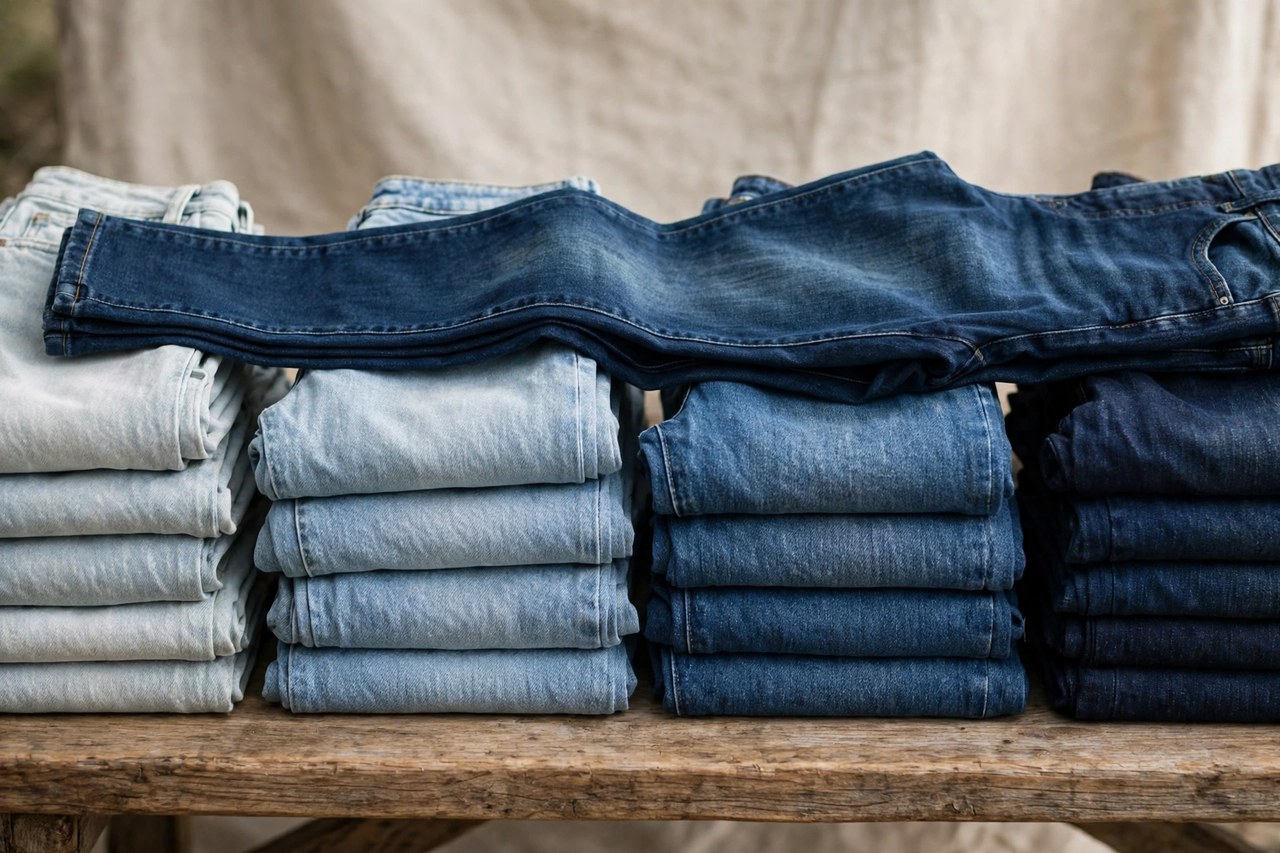
Jeans are a necessity for every women's wardrobe: sturdy trousers made of denim or other cotton fabric — most commonly denim or dungaree — and the default casual wear for informal events and activities. No other garment crosses as many boundaries. The same category covers a weekend gardening pair and the dark, tailored jeans worn to dinner, and the difference between them is fit, wash and weight rather than kind.
This is the umbrella guide to women's jeans: the fits, the rises, the fabric and the care. Style-specific pages — designer jeans, skinny jeans, flare jeans, 5-pocket jeans, flannel-lined jeans, ankle-zip jeans and jeans by color — are linked from this page, along with the shorts that started as cut-off jeans.
A Short History of Blue Jeans
The term “blue jeans” was in use long before anyone patented a pair — applied to trousers, overalls and coats made from blue-colored denim work cloth. The garment we now mean by jeans was invented by Jacob W. Davis in partnership with Levi Strauss & Co. in 1871, and patented by Davis and Levi Strauss on May 20, 1873. Their innovation was the copper rivet at stress points, which kept pockets from tearing away from work trousers — and turned a workwear staple into a durable-goods icon.
Women's jeans have their own chapter in that story, told in our Levi's history of women's jeans (linked below). The through-line is simple: jeans spent a century being re-cut — from workwear to rebel uniform to designer staple — while the five-pocket, riveted pattern underneath stayed recognizably the same.
Fits, Rises and Legs
Fit is the first decision. Skinny jeans follow the leg to the ankle; straight jeans hold one width from knee to hem; flare and bootcut legs widen below the knee to balance hips and sit over boots; wide-leg and relaxed fits give the denim room to move. Rise is the second decision: high-rise sits at or above the natural waist, mid-rise just below it, and low-rise on the hip. Rise changes the whole proportion of an outfit — and what length of top works with it — more than any other single measurement.
Then read the details: the classic 5-pocket construction (two front, two back, one coin pocket) is the template most jeans follow; ankle zips, cropped hems and released hems are variations on the leg opening; and details like flannel lining turn a summer fabric into a winter one. When in doubt, try two sizes — denim relaxes with wear, and the right pair is usually the snugger one in the fitting room.
Denim Weight, Stretch and Wash
Denim is weighed in ounces per square yard. Lightweight denim (under about 10 oz) drapes and breathes; mid-weight (11–13 oz) is the classic jean; heavyweight denim holds a crease, fades dramatically and takes seasons to break in. One change reshaped the modern market: stretch. A small percentage of elastane mixed into the cotton transformed stiff workwear cloth into jeans that move, recover and fit closely without a break-in period — if you have not tried stretch denim, you do not know what you are missing.
Wash is color with a biography. Raw and dark washes read dressiest and fade on your own legs; stonewash and distressed finishes arrive pre-faded. And color itself matters when you are building outfits — our color guides cover black, blue, brown, green, orange, pink, purple, red, tan, white and yellow jeans, each with pairing advice, and all are linked below.
For the fabric science behind those weights and washes, including weave types, selvedge and raw denim, and how denim shrinks and fades, see the Denim Fabric Guide.
Washing and Care
Denim lasts longest washed least and washed cold. Turn jeans inside out, use a gentle cycle and a small amount of detergent, and skip the tumble dryer where you can — heat is what breaks down both cotton and the elastane in stretch denim. Dark jeans keep their color far longer washed this way; raw-denim devotees go further and wash rarely and briefly, letting the fades map their own wear. Hang by the waistband, smooth the legs, and let them dry fully before wearing: damp denim stretches out at the knees.
Related Women's Guides
Photos

More to Explore on Apparel Search
- Women's Designer Jeans
- Women's Cotton Jeans
- Women's 5-Pocket Jeans
- Women's Flannel Lined Jeans
- Women's Flare Jeans
- Women's Skinny Jeans
- Women's Ankle Zip Jeans
- Women's Jeans Stores
- black jeans
- brown jeans
- green jeans
- orange jeans
- pink jeans
- purple jeans
- red jeans
- tan jeans
- white jeans
- Fashion Designer Directory
- Levis History of Women's Jeans
- Blue Jeans
- mom jeans
- blog posts about jeans
Looking for Women's Clothing Stores?
This guide helps you choose women's jeans. To browse where to buy, visit our women's clothing store directory, where you can find retailers that carry them.