Women's Black Jeans Guide
Skinny, straight, wide-leg and washed black denim — how black jeans differ from blue, how to style them day to night, and how to stop the fade.
Shop Women's Black Jeans Now
Shop Women's Black Jeans on Amazon Shop Women's Black Jeans on eBayThe Amazon and eBay links on this page are affiliate links. If you make a purchase through them, Apparel Search may earn a commission.
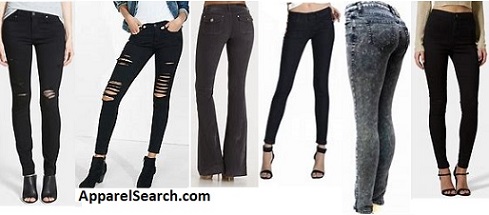
Black Jeans: The Dressiest Denim You Own
Black jeans occupy the useful middle ground between blue denim and tailored trousers. They keep the comfort, pockets, and durability of jeans while reading polished enough for smart-casual offices, dinners, and travel days when one pair of pants has to do everything. A black jean does not announce itself the way indigo does, so the rest of the outfit gets to decide the mood.
They are also a unifier. Black jeans match black boots, black blazers, and black knits for a monochrome column, yet they take color on top — a red sweater, a cream blouse, a plaid shirt — without the western or workwear echoes blue jeans carry. For many women, black is the first jean color bought and the last one retired.
True Black, Washed Black, and Faded Finishes
True black jeans are dyed to stay dark, often with sulfur dyes and stay-black technology that resists wash fade. They are the pair to choose for dressier wear. Washed black (sometimes called vintage black or charcoal wash) is deliberately softened to a dark gray-black with lighter seams and fading at the thigh — relaxed, rock-leaning, and better with tees and sneakers than blazers.
Between them sit mid-wash blacks with gentle fading. Check the inner leg or hem allowance to see the original dye depth when judging a washed pair. Also note the stitching: tonal black stitching keeps the jean sleek and dressy, while contrast tobacco stitching pushes it casual, imitating blue-jean construction.
Finding Your Fit in Black Denim
Skinny and slim black jeans are the classic evening and boots pairing, and black’s shadowing effect makes them the most forgiving of the skinny family. Straight-leg black jeans have taken over as the everyday default — clean with loafers, sneakers, and ankle boots alike. Wide-leg and relaxed black jeans read fashion-forward and balance fitted tops.
High rises dominate black denim because they lengthen the leg line that black already streamlines; mid-rise remains a comfort choice. Stretch content around one to two percent gives shape retention without the leggings look. Because dye lots vary, try black jeans with the shoes you plan to wear — a hem that grazes a black boot in the store keeps the column unbroken at home.
Styling Black Jeans Day to Night
Daytime black jeans thrive on contrast textures: a white sneaker, a chunky cream knit, a tan belt. The all-black version — black jeans, black tee, black boots — is a city uniform that a single silver necklace or red lip lifts instantly. A black blazer over black jeans and a silk camisole is a proven dinner formula that reads as a soft suit.
Avoid the accidental uniform effect of mismatched blacks: if your top and jeans are noticeably different blacks under daylight, insert a separator — a belt, a tucked contrasting layer, or a scarf — so the difference looks chosen. Gray and washed-black jeans pair more forgivingly with true black tops, since the contrast is obviously intentional.
Denim Weights and Details That Matter
Midweight denim (11–13 oz) in black holds its shape through a day and across seasons; lightweight black denim suits summer but fades and bags faster. Rigid, no-stretch black jeans break in like raw denim and develop personal fading at wallet and phone lines — some women love that record of wear, others want the stay-black promise instead.
Hardware color quietly sets the tone: matte black buttons and rivets keep the jean minimalist, while silver hardware adds a classic jeans signal and gold warms the look. Distressing in black — ripped knees, frayed hems — reads edgier than the same treatment in blue, because the contrast of skin against black is sharper. Choose destruction levels for the rooms you actually enter.
The Anti-Fade Laundry Routine
Black jeans fade from the wash more than from wear. Turn them inside out, wash cold with a dark-colors detergent, and zip and button them first to protect both the dye and the drum. Wash black jeans only with other darks, and skip the wash entirely when a night of airing on a hanger will refresh them — denim does not need laundering after every wear.
Never tumble dry on heat: air dry inside out, out of direct sun, and the black stays true far longer. Some women add a cup of white vinegar or a dye-fixing rinse on the first wash to set loose color. When a beloved pair finally softens to charcoal, re-dyeing with a home fabric dye made for cotton can restore it — or promote it to your washed-black rotation and replace the true black pair.
More to Explore
More Women's Black Clothing
Looking for Women's Clothing Stores?
This guide helps you choose black jeans in a fit and wash that match how you dress. To browse where to buy, visit our women's clothing store directory, where you can find retailers that carry them.