Women's Plus Size Hosiery Guide
A product-focused guide to plus size hosiery: tights, stockings and socks in queen and extended sizes, with denier, fabric, waistband and sizing explained in plain buying terms.
Shop Women's Plus Size Hosiery Now
Shop Women's Plus Size Hosiery on Amazon Shop Women's Plus Size Hosiery on eBayThe Amazon and eBay links on this page are affiliate links. If you make a purchase through them, Apparel Search may earn a commission.
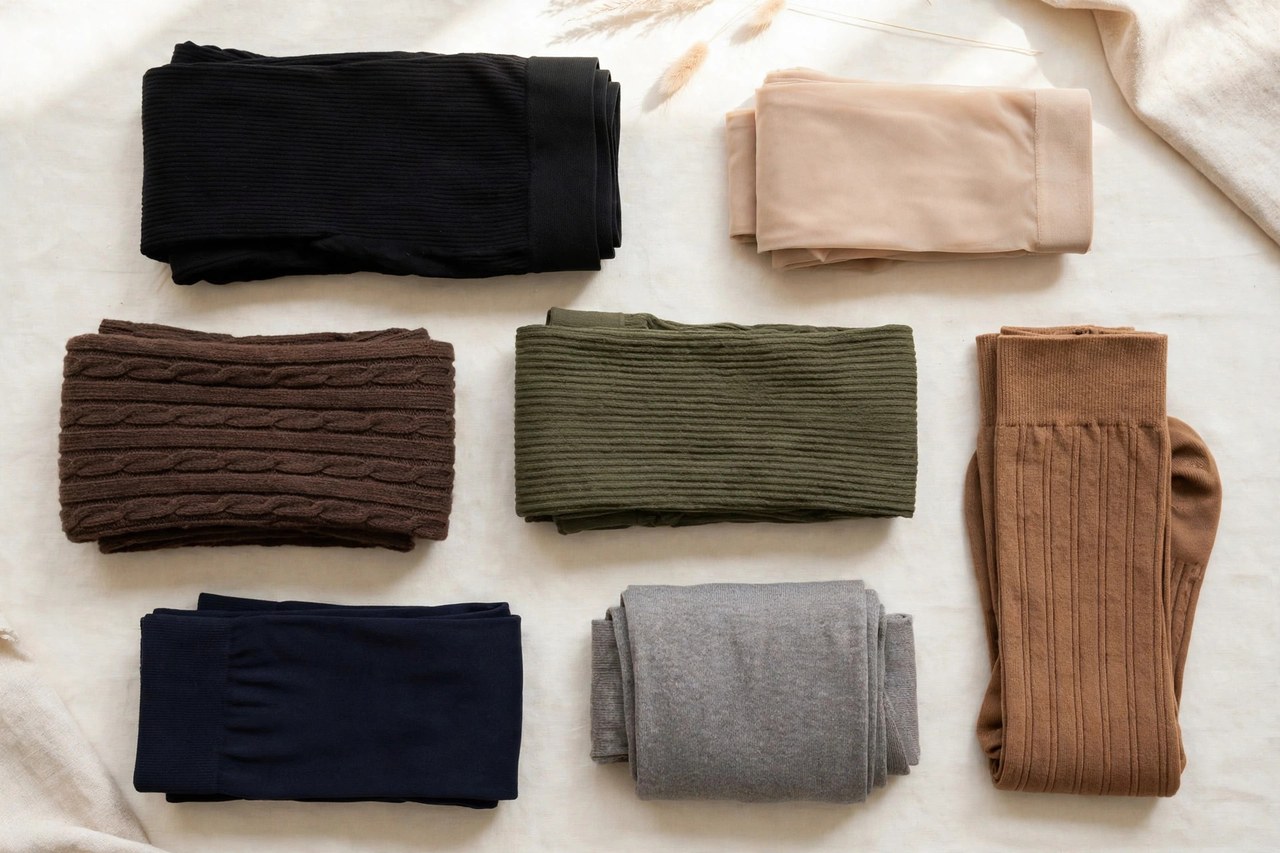
Hosiery is the collective term for tights, stockings, knee-highs and socks, and plus size hosiery is engineered for fuller legs and hips with longer length, more width through the thigh and hip, and waistbands designed to stay in place. This guide treats hosiery strictly as a product: how it is sized, what its technical terms mean, and how its construction differs between a standard size stretched beyond its chart and a genuine queen or extended size patterned for the body it will be worn on. Those two products may share a color name and little else.
Fit failure in hosiery is usually a sizing-system failure. Packages chart by height and weight or by hip measurement, and plus shoppers are often pushed to the edge of a standard chart where the garment technically reaches but has no ease left — so it slides, twists or tears early. The sections below explain queen sizing, denier and opacity, the main hosiery types, and the fabric and waistband construction to compare, so you can buy by specification rather than by trial and error across brands.
Queen Sizing and Reading the Chart
Plus hosiery is usually labeled queen size, often split into bands such as 1X/2X and 3X/4X, or sized by hip and height ranges on an extended chart. The honest way to use any chart is to find both of your coordinates — height and either weight or hip measurement — and choose the size whose range contains both comfortably, not at its boundary.
Length is the hidden variable. A plus pattern adds length in the leg and in the brief portion as well as width, because a fuller hip uses more of the garment's total length; a standard size pulled up to fit the hip borrows that length from the leg, which is why the crotch sits low and the waistband will not stay at the waist. When a brand publishes garment measurements — waistband width, brief depth, leg length — compare them between its standard and queen versions; a true plus pattern shows increases in all three, not width alone.
Denier, Opacity and Finish
Denier is the technical measure of yarn weight, and in hosiery it is the shopper's shorthand for opacity. Low deniers, roughly 5 to 20, knit sheer and fine, suited to formal and warm-weather wear but the most fragile. Mid deniers around 30 to 50 give semi-opaque coverage. High deniers, 60 and above, knit opaque, warmer and more durable, and are the standard for everyday tights in cooler months. Denier describes the yarn, not the quality: a well-made 15 denier outlasts a poor 40, but within one brand, higher denier almost always means a longer-wearing product.
Finish and shade complete the specification. Matte finishes read most like bare leg or a smooth fabric layer; satin and gloss finishes catch light and are chosen deliberately for evening wear. Color naming is inconsistent between brands, so nude shades should be matched in daylight where possible, and black opaques vary from true black to charcoal by denier and dye.
Types: Tights, Stockings, Knee-Highs and Socks
Tights are the full garment, foot to waistband, and the plus versions to seek have a shaped brief, a reinforced or cotton gusset sized in proportion, and a leg knitted with extra thigh circumference so the fabric distributes evenly instead of gathering its stretch at the knee. Stockings end at the thigh and are worn with a suspender belt or made as hold-ups with silicone bands; in plus sizes the band must be wide and the thigh measurement honest, since a hold-up band fitted to its size range grips, while one stretched past it rolls.
Knee-highs and trouser socks in plus and wide-calf versions add circumference at the calf and a band that holds without marking, the same wide-calf logic as boots applied at sock scale. Anklets and shoe liners vary less, though extended sizes help fuller ankles. Support and compression hosiery is its own product class with graduated pressure levels stated in mmHg and its own sizing by ankle and calf measurement; buy it by those measurements and its stated class, not by dress size, and follow the maker's fitting instructions exactly, because its function depends on precise fit.
Fabrics, Waistbands and Care
Most hosiery is knitted from nylon blended with elastane — sold under names such as Lycra or spandex — and the elastane percentage predicts recovery: higher percentages hold shape and position longer through a day. Microfiber yarns knit softer, more opaque and warmer at the same denier. Cotton-rich blends appear in socks and casual tights, trading sheerness for breathability.
Care decides lifespan more than price does. Wash hosiery in a mesh bag on a gentle cycle or by hand, keep it away from tumble heat, which degrades elastane, and store it untangled so snags are spotted before wearing. Put tights on by gathering each leg and easing it up evenly rather than pulling from the waistband — the technique matters most in extended sizes, where the fabric has further to distribute.
Related Women's Guides
More to Explore on Apparel Search
- Plus Size Clothing
- Plus Size Clothing Stores
- Shop for Plus Sizes
- Women's hosiery
- plus size
- plus size intimate apparel
- fashion
- trendy
- stylish
- plus size fashion model
- plus size fashion definition
- Clothing Stores
- Fashion Designers
- Popular Brands
- Apparel
- Women's Clothing Stores
- Women's Clothing Wholesalers
- Women's Fashion
Looking for Women's Clothing Stores?
This guide helps you choose women's plus size hosiery. To browse where to buy, visit our women's clothing store directory, where you can find retailers that carry them.