Women's Plus Size Socks Guide
Plus size socks are made for wider calves and ankles, with stretch cuffs that hold without binding, roomier feet and lengths from no-show to knee-high that actually reach the knee.
Shop Women's Plus Size Socks Now
Shop Women's Plus Size Socks on Amazon Shop Women's Plus Size Socks on eBayThe Amazon and eBay links on this page are affiliate links. If you make a purchase through them, Apparel Search may earn a commission.
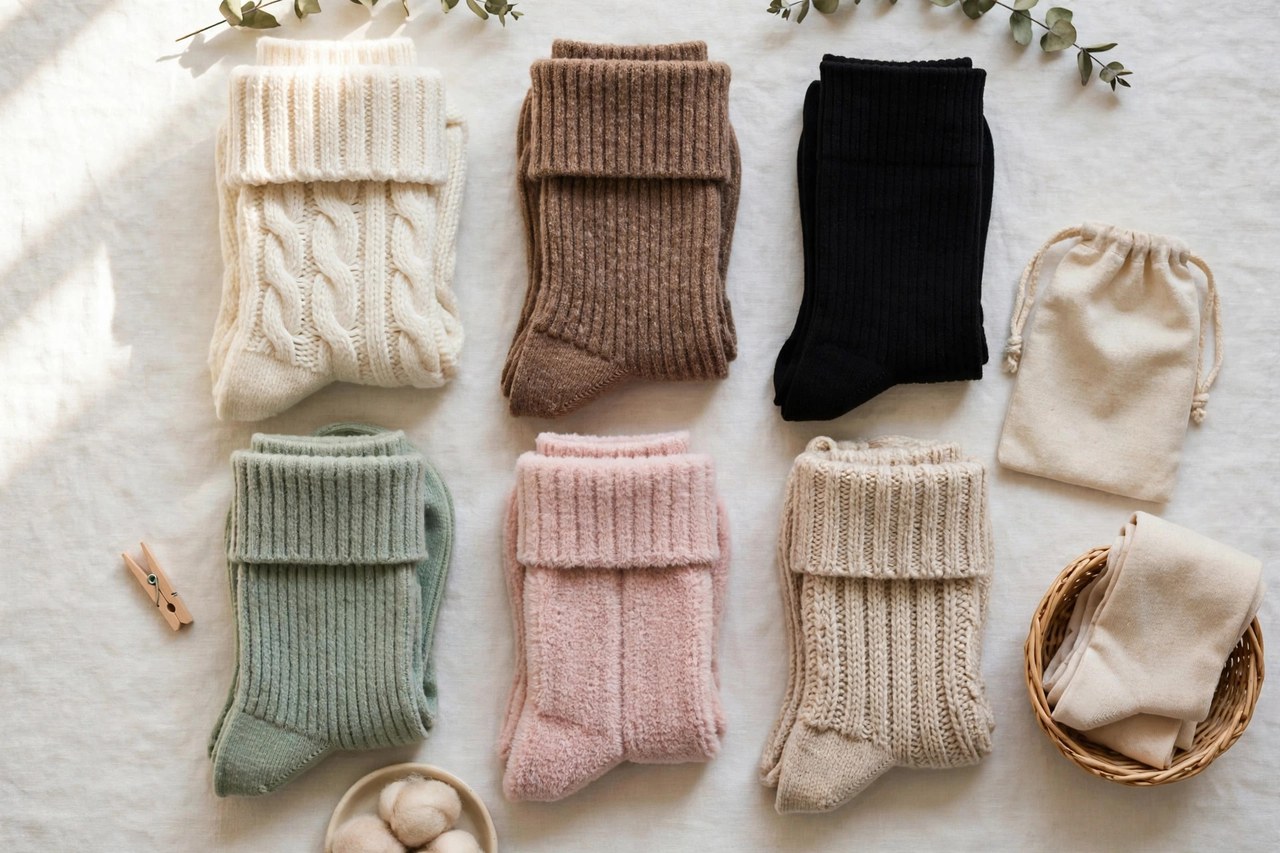
Socks are sold as if legs came in one circumference, and plus size wearers learn otherwise at the cuff. A standard sock stretched over a wider calf either binds hard enough to leave a deep ring by evening or gives up and slides into the shoe, while a knee-high stops at mid-calf because its length and stretch were budgeted for a narrower leg. Plus size socks, often labeled wide calf or made for extended sizes, add circumference, cuff stretch and sometimes length where they are actually needed.
This guide explains how plus sock sizing works, since it follows calf and shoe size rather than dress size, the cuff and heel construction that lets a sock stay up without squeezing, the lengths and styles from invisible liners to true knee-highs, and the fiber blends for everyday, athletic and cold-weather wear. Socks are a small purchase with an outsized effect on daily comfort, especially paired with the wide-width shoes covered in the companion footwear guides.
Calf Circumference, Cuff Stretch and Heel Fit
The key measurement is calf circumference at its widest point. Standard women's socks comfortably fit calves up to roughly fourteen or fifteen inches; wide-calf and plus socks are knitted with more stitches and higher-stretch yarns to fit calves of sixteen inches and well beyond, with the exact range usually printed on the package. Measure in the evening and buy for the larger leg. A sock that must be hauled to full stretch to get on will bind however soft its fiber is.
The cuff should hold by distributed grip, not by a tight elastic band. Better plus designs use a wide, ribbed or comfort-top cuff that spreads pressure over an inch or more of leg and includes enough elastane to stay up during walking. The heel pocket also scales: a properly shaped, deeper heel cup keeps the sock aligned so the toe seam stays across the toes instead of rotating underfoot, a small misery in shoes worn all day. Check that the foot length matches your shoe size range, because a wide-calf sock in too short a foot pulls down from both ends.
Lengths and Styles: Liners to Knee-Highs
No-show and ankle socks mainly need a heel that grips and a cuff that does not dig into a fuller ankle; silicone heel strips help inside low shoes. Crew socks are the everyday default, and in plus widths the crew cuff sits comfortably at mid-calf without the ring. Knee-high socks show the biggest plus difference: extra length plus calf stretch means the cuff genuinely reaches below the knee and stays there under trousers and boots, rather than migrating down by midday.
Over-the-knee and boot socks add cushioning and height for tall boots and cold weather, with boot styles often padded at the shin and sole. Compression-style and diabetic-friendly socks sold for general comfort use non-binding tops and smooth toe seams; anyone buying socks for a medical purpose should follow their clinician's specification, but for everyday wear the non-binding comfort top is simply good design on a wider leg. Dress socks in finer knits complete the range for work shoes and loafers.
Fibers: Cotton, Wool, Synthetics and Blends
Pure cotton feels pleasant and breathes, but it holds moisture and loses shape, so everyday socks are usually cotton blended with nylon and elastane for durability and stretch recovery. Merino wool blends regulate temperature in both directions, resist odor and cushion naturally, making them the premium choice for winter socks, walking socks and anyone whose feet run hot in synthetics. Acrylic offers wool-like warmth at lower cost with less breathability, and bamboo-derived viscose knits feel notably soft and suit sensitive skin.
Athletic plus socks add zoned cushioning at heel and ball, arch bands for support and moisture-wicking synthetic or wool yarns, all of which matter more when feet carry more load. Whatever the fiber, the toe seam should be flat or hand-linked smooth, especially in closed shoes worn for long shifts. Thickness is a fit variable too: a heavily cushioned sock takes up shoe volume, so pair winter socks with the boots you will actually wear rather than discovering the combination on the first cold morning.
Buying, Rotation and Care
Buy socks by calf measurement and shoe size together, try one pair through a full day before stocking up on a new brand, and test the cuff honestly by walking, sitting and climbing stairs. A good plus sock leaves at most a faint impression at day's end, stays up without adjustment and does not need to be pulled on with effort. Keep a note of the brands whose wide fits prove true, because labeling in this category is even less standardized than in the rest of clothing.
Care preserves stretch: wash cool or warm, avoid high dryer heat that tires elastane, and turn socks inside out to reduce pilling on cushioned soles. Rotate several pairs so cuffs recover between wearings and retire socks when the cuff slackens or the heel thins, since both failures arrive together. A drawer of socks genuinely built for your calves quietly fixes the last daily clothing annoyance most plus shoppers stop noticing only once it is gone.
Related Women's Guides
More to Explore on Apparel Search
Looking for Women's Clothing Stores?
This guide helps you choose women's plus size socks. To browse where to buy, visit our women's clothing store directory, where you can find retailers that carry them.