Women's Hosiery Guide
Pantyhose, tights, stockings, hold-ups and knee-highs decoded: what denier actually measures, how sheer-to-opaque really runs, sizing by height and hip, and care that stops the ladder at one wear.
Shop Women's Hosiery Now
Shop Women's Hosiery on Amazon Shop Women's Hosiery on eBayThe Amazon and eBay links on this page are affiliate links. If you make a purchase through them, Apparel Search may earn a commission.
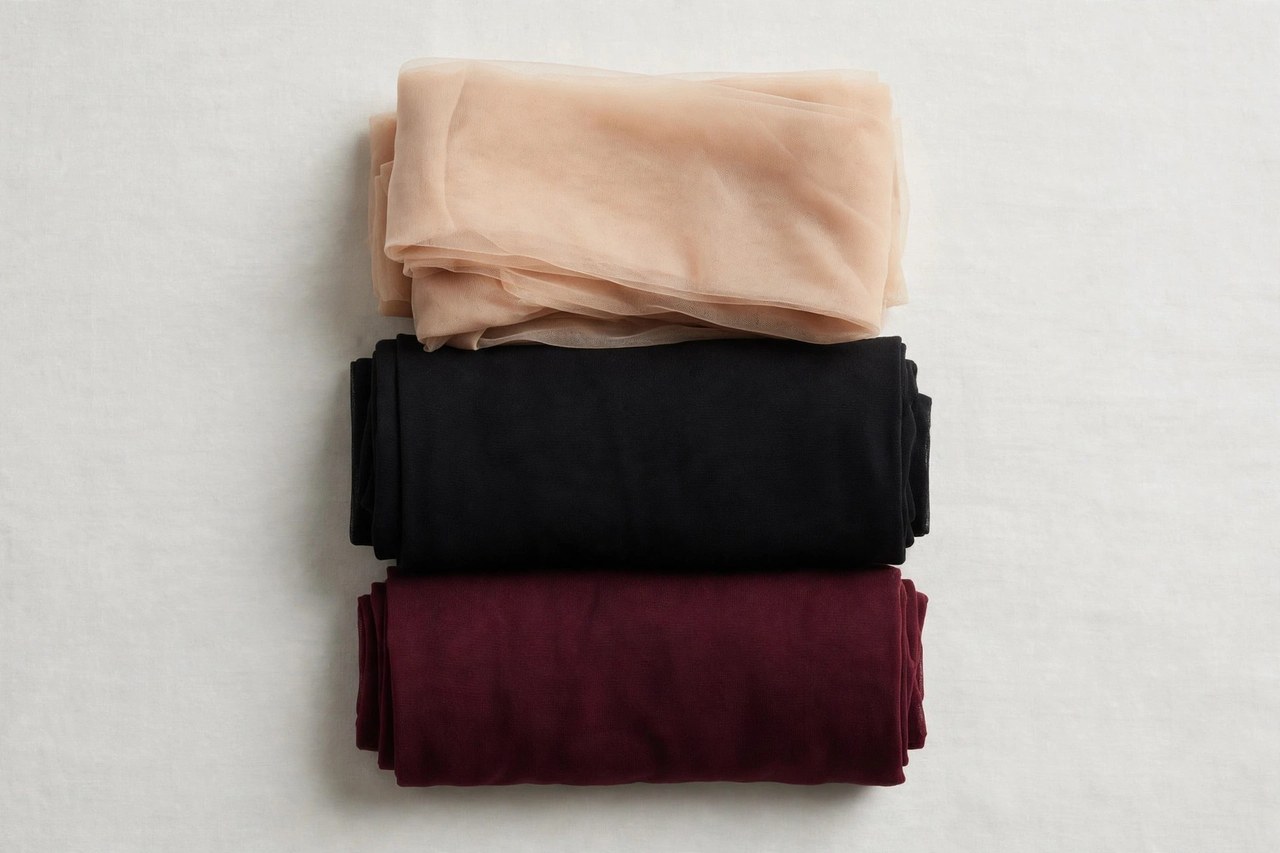
Hosiery is the collective name for garments worn directly on the feet and legs — essentially stockings, socks and tights collectively, known generically as hose and sold, historically, by a hosier. The modern drawer is wider than the classic trio: pantyhose, hold-ups, knee-highs, leggings and legwarmers all sit under the same heading, sorted by how much leg they cover and how they stay up.
This is a product guide, kept to the garments themselves: the main styles and how they differ, the denier number printed on every packet and what it genuinely predicts, sizing, and the washing and handling that decide whether a pair lasts a season or a single evening.
The Main Styles, Sorted by Coverage
Pantyhose (American English; also called tights in American usage, while British English reserves tights for the opaque end) run from waist to toe in one garment. Tights proper are their heavier, opaque relatives. Stockings end at the thigh and traditionally need a suspender — garter — belt, while hold-ups, called stay-ups in British English, grip the thigh with silicone bands and need nothing else. The vocabulary alone explains half the confusion in the hosiery aisle.
Below the knee sit knee-highs and pop socks, plus ordinary socks in every length from trainer liner to over-the-knee. Around the category's edges sit bodystockings, one-piece body-and-leg garments; compression or support stockings, graduated hosiery made for circulation and long days on the feet; toe socks; and legwarmers, the footless layer worn over or instead of hose.
Denier, Explained Properly
Denier is a measure of yarn weight — technically the mass in grams of 9,000 metres of the fibre — and on a hosiery packet it functions as a reliable scale of sheerness. Low denier means a finer yarn and a sheerer garment; high denier means a heavier yarn and an opaque one. It describes the yarn, not a guarantee of strength, which is why a well-made 15-denier pair can outlast a poor 40.
In practice the scale runs like this. Under 15 denier is ultra-sheer, the barely-there finish for evening and formal wear, and the most fragile. 15 to 30 is classic sheer day hosiery. 30 to 50 is semi-opaque, the businesslike middle. Over 50 to 60 and up is opaque tights territory, warmer, hardier and the winter default. Choose denier by the look and the season first, then buy the best-made version of that number you can.
Sizing: Height, Hip and the Long Day
Hosiery sizing is a two-axis problem, which is why packets carry a grid of height against weight or hip measurement. Match both axes honestly: a pair long enough but too narrow ladders at the stress points; a pair wide enough but too short pulls down all day and wears at the toe. If you fall between squares on the grid, size up — hosiery forgives a little length and never forgives a shortage of either dimension.
Construction options refine the fit. Control-top pantyhose build a firmer brief section; sheer-to-waist styles keep one fabric throughout for short hemlines and split skirts; reinforced toes and heels extend wear where shoes rub; sandal-toe versions keep the toe nearly invisible in open shoes. Cotton gussets, flat seams and shaped, knitted-in heels all mark the better-made end of any style.
Colour and Material
Colour is where hosiery earns its keep as fashion rather than underpinning. Hosiery is usefully sorted by colour — black, tan and nude shades do everyday duty, while coloured and fashion hosiery — the blues, reds, pinks, purples, greens and whites of the colour pages — turns a plain dress into an outfit. Match sheer shades a touch deeper than your bare leg for a natural effect, and treat truly opaque colour as a deliberate statement, styled like a garment.
Materials divide by job. Nylon with elastane (Lycra) is the standard for sheer hose, giving stretch and recovery. Cotton hosiery breathes and suits sensitive skin and cooler days; silk hosiery is the traditional luxury, soft and temperature-balancing but delicate and priced accordingly; wool and microfibre tights own the winter end. Whatever the fibre, elastane content is the ingredient that keeps the garment a garment rather than a tube.
Care: Washing, Ladders and Storage
Most hosiery dies in the wash or on the way into it. Hand-wash cool or machine-wash in a mesh laundry bag on a gentle cycle, never with hooks, zips or rough fabrics, and dry away from direct heat, which ages elastane quickly. Put pantyhose on with smooth hands — many wearers use cotton hosiery gloves for sheer pairs — gathering the leg down to the toe and easing it up rather than pulling from the waistband.
A small snag becomes a ladder (a run) under tension, so catch snags early; a dab of clear nail polish at a small hole is the traditional emergency stop, buying one more wear rather than a repair. Store hosiery loosely folded or rolled, away from jewellery and drawer hardware. Handled gently, even sheer hosiery should give many wears.
More Legwear & H Guides
Photos

More to Explore on Apparel Search
- Women's Cotton Hosiery
- Women's Silk Hosiery
- Women's Socks
- Women's Leggings
- Hosiery Factory
- Hosiery Definition
- Black Hosiery
- Blue Hosiery
- Brown Hosiery
- Green Hosiery
- Orange Hosiery
- Pink Hosiery
- Purple Hosiery
- Red Hosiery
- Tan Hosiery
- White Hosiery
- Yellow Hosiery
- Women's Clothing Stores
- Women's Clothing Wholesalers
- Women's Fashion
- Fashion Designer Directory
- Fleece-Lined Tights
- Fishnet Tights
- Patterned Tights
- Colored Tights
- Lace Tights
- Compression Stockings by Grade
Looking for Women's Clothing Stores?
This guide helps you choose women's hosiery, pantyhose, tights and stockings. To browse where to buy, visit our women's clothing store directory, where you can find retailers that carry them.