Women's Shapewear Guide
Shapewear is a tight-fitting foundation garment intended to smooth and shape the silhouette under clothing — sold in light, medium and firm control levels.
Shop Women's Shapewear Now
Shop Women's Shapewear on Amazon Shop Women's Shapewear on eBayThe Amazon and eBay links on this page are affiliate links. If you make a purchase through them, Apparel Search may earn a commission.
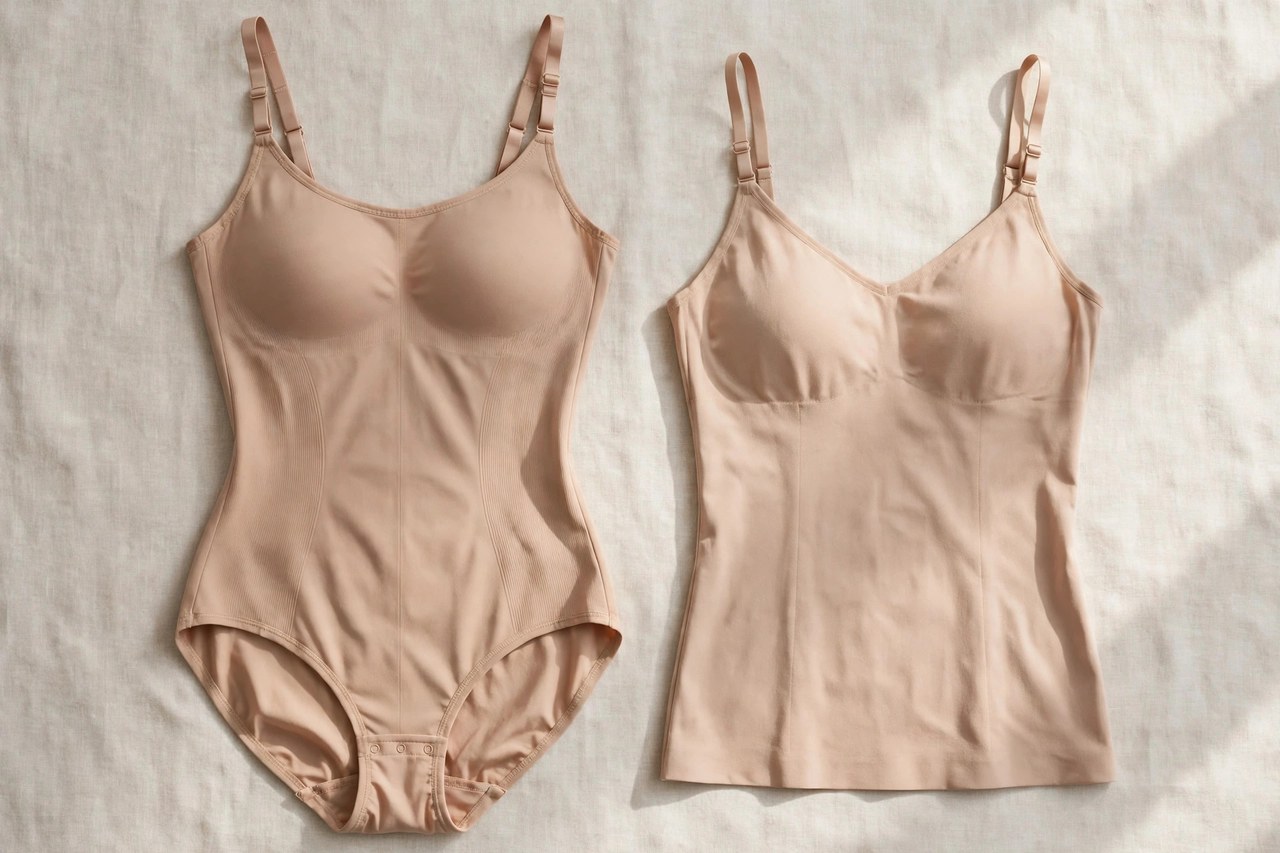
In summary, shapewear is women's tight-fitting underwear intended to control and shape the figure. It is a foundation garment that helps create a smooth silhouette under clothing, especially under form-fitting fabrics, and it can be worn under a casual dress, work clothes, or jeans and a t-shirt. This guide covers it as a product category only: control levels, garment types, fabrics, and the sizing rules that decide whether a piece can be worn comfortably for its intended duration.
Two points are worth stating at the front. Shapewear should be tight enough to support you, but loose enough that you can move freely, and it is not a weight-loss tool — it changes the silhouette while it is worn, and a healthy diet and physical activity are separate matters. Buy it as clothing engineering, with a size chart and a time limit, and it will do its stated job predictably.
Control Levels: Light, Medium and Firm
Light control gives a bit of extra smoothing with minimal constriction; bodysuits and tanks are good light-control choices and suit form-fitting fabrics and everyday wear. Medium control is crafted for all-day wear and comfort while giving more support, and is commonly found in control camisoles, leggings and briefs. Firm control gives the strongest shaping and is best worn for shorter periods, for special moments such as weddings or a night out, rather than for a full working day.
Choose the lowest level that solves your actual problem — a visible seam line, a fabric that clings, a waistband that needs smoothing. Escalating to firm control for a light problem buys discomfort without additional visible benefit, and it shortens how long the garment can be worn. Makers grade these levels differently, so compare the stated level with the fabric's elastane percentage and panel construction, not with the marketing name alone, which varies from brand to brand without any shared standard.
Garment Types and What Each Covers
The category includes shaping briefs and panties, thigh slimmers and shapers, shaping leggings, shaping tights and pantyhose, bodysuits and body shapers, camisoles and control tanks, slips, waist cinchers and torsettes. Each covers a different zone: briefs address waist and hip, thigh shapers extend coverage to mid-thigh and prevent edge lines there, camisoles and bodysuits smooth the torso, slips serve under dresses, and cinchers concentrate on the waist alone. Match the garment's coverage to the outfit's cling zone, and no further.
Edges decide whether shapewear is invisible. Look for laser-cut or bonded edges under thin fabrics, silicone grippers where a leg band or waistband must stay placed, and flat seams throughout. A garment that smooths one zone while creating a hard line at its edge has moved the problem rather than solved it. Under a specific dress, test the exact combination at home, in daylight, seated and standing — the pairing, not the shapewear alone, is what will actually be seen.
Sizing: The Rule That Matters Most
Size shapewear by your current measurements against the maker's chart, and do not size down to increase control. A too-small garment rolls at the waist, digs at the leg, redistributes rather than smooths, and becomes unwearable long before its intended duration ends. Control comes from the garment's engineered panels and fabric weight at your correct size; the size below mostly adds pressure without adding shaping, because the panels are no longer positioned where they were designed to sit on the body.
Between sizes, follow the chart's instruction for that specific style — bodysuits size partly by torso length, briefs by waist and hip, camisoles by bust. Note return policies before ordering for an event, and try the piece for a realistic period at home, with the actual outfit, well before the day. Brands including Spanx and Maidenform, publish their own charts; treat every brand's chart as separate, because there is no cross-brand shapewear size standard to rely on.
Fabrics, Wear and Care
Most shapewear is nylon or polyester blended with a substantial elastane content, sometimes with cotton-lined gussets and mesh ventilation panels in areas that need airflow. Higher elastane and firmer woven panels give stronger control and warmer wear; mesh and lighter knits give breathability at light and medium levels. For long events in warm weather, that trade-off matters as much as the control level — choose the construction you can keep on for the whole occasion, because a garment removed at hour two shapes nothing at hour three.
Wash shapewear gently, cool, and air-dry flat or on a line; dryer heat is the main cause of lost elasticity. Rotate pieces if you wear them often, giving elastane a day to recover between wears, and store them flat rather than tightly balled. Replace a piece when its bands roll despite correct sizing or its panels no longer recover after washing. Properly sized and simply cared for, shapewear is a durable foundation garment — chosen by level, type and measurement, it stays a tool, never an ordeal.
Related Women's Guides
More to Explore on Apparel Search
Looking for Women's Clothing Stores?
This guide helps you choose women's shapewear. To browse where to buy, visit our women's clothing store directory, where you can find retailers that carry them.