Women's Corset Guide
Steel bones, careful lacing, and centuries of engineering — understanding the garment before you ever tighten a lace.
Shop Women's Corsets Now
Shop Women's Corsets on Amazon Shop Women's Corsets on eBayThe Amazon and eBay links on this page are affiliate links. If you make a purchase through them, Apparel Search may earn a commission.
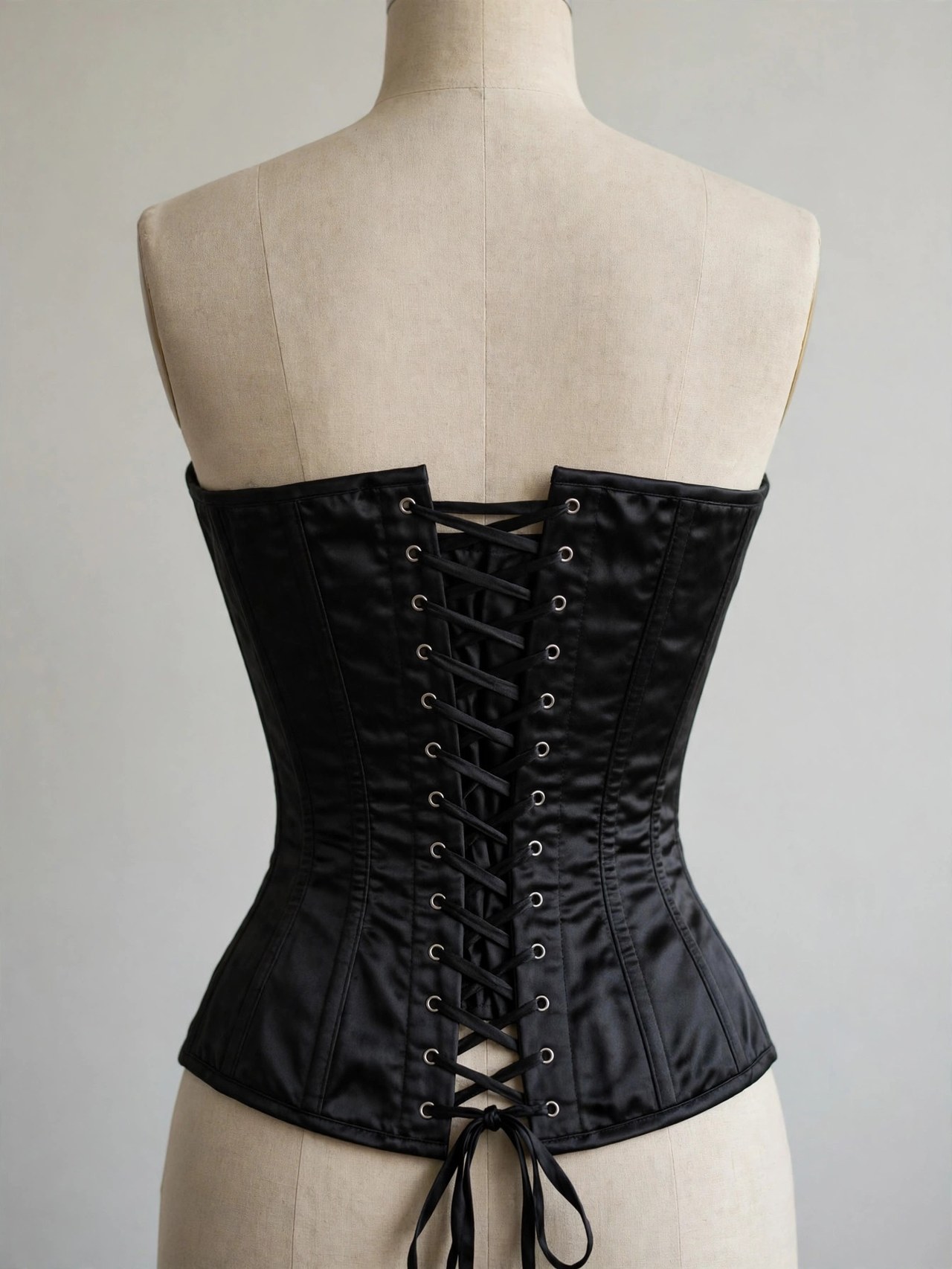
A corset is a structured garment that shapes the torso using stiffened panels, a front closure, and lacing at the back that lets the wearer adjust its fit precisely. Unlike a stretchy shaping garment, a true corset is made from strong, low-stretch fabric in several panels, reinforced with boning that holds its shape against the body. Worn today as fashion, historical dress, back support for some wearers, and by a smaller number of people for waist training, it rewards understanding. The difference between a corset that feels like tailored armor and one that feels like a costume is construction: panel count, boning material, waist tape, and honest sizing. This guide explains those elements plainly, including where fashion corsets end and serious waist shaping begins.
Underbust, Overbust and Mid-Bust Styles
Corsets are classified first by how much of the torso they cover. An underbust corset begins below the bust and shapes the waist and lower ribs; it is worn over a top or with a separate bra, layers comfortably under clothing, and is the usual starting point for support and waist-focused wear. An overbust corset extends up to cover the bust, replacing a bra and creating a complete silhouette on its own; it demands more careful fitting because bust size, not just waist size, determines whether it works. Mid-bust styles stop partway up and suit some historical and fashion looks. Length matters as well: a short waspie shapes only the waist, a standard length covers the hips’ top edge, and a longline reaches lower over the hips for a smoother line and more control when sitting. Your torso length decides which lengths are comfortable — a corset that digs when you sit is simply too long for your body, whatever the size chart says.
Boning, Panels and What Quality Looks Like
Boning gives a corset its structure, and material is the clearest quality divide in the market. Steel boning — flat spring steel at the front and sides, spiral steel where the garment must bend around curves — holds shape, distributes pressure, and lasts. Plastic or acrylic boning, common in inexpensive fashion corsets, warms to the body, kinks permanently, and cannot provide real shaping; such pieces are decorative tops, and there is nothing wrong with them as long as they are sold and worn as that. A quality corset is built from multiple shaped panels in a strong fabric such as cotton coutil, with an internal waist tape that carries the lacing tension. The front closes with a steel busk of knobs and loops. Run a hand inside: seams should be flat, boning channels fully enclosed, and nothing should poke.
Sizing and Lacing, Explained Honestly
Corsets are sized by waist measurement in inches, not by dress size, and the number names the corset’s waist when fully closed. A common starting point for a fashion or light-shaping corset is a size four inches below your natural waist measurement, worn with a small gap at the back lacing rather than closed completely. Experienced wearers in well-fitted corsets may go further, but reduction is earned gradually and never forced. Measure your natural waist at its smallest point, usually just above the navel, on a relaxed breath. When lacing, tighten evenly from the top and bottom toward the waist loops rather than hauling only at the middle, and expect a seasoning period of short, gentle wears while the garment and your body adjust to each other. A corset should never cause sharp pain, numbness, or difficulty breathing normally; loosen immediately if it does. Honest sellers publish full measurements for underbust, waist, hip, and length — treat any seller who will not as a warning sign.
Fashion Corsets Versus Waist Training
These two uses are often blurred in marketing, so it helps to separate them. A fashion corset is worn for a look — an evening, a costume, a styled outfit — laced for smoothness and silhouette, not for lasting change to the body. Worn for hours at a moderate fit, it changes nothing permanently, and that is exactly what most wearers want. Waist training is a dedicated practice of wearing a high-quality, properly fitted steel-boned corset for many hours daily over months, gradually encouraging a semi-permanent narrowing of the floating ribs and waist when the corset is off. It requires excellent fit, patience, and attention to the body’s signals, and it is not a weight-loss method: a corset displaces, it does not remove. Anyone considering it should research thoroughly and start conservatively. No corset can honestly promise spot fat loss from occasional wear, and claims otherwise should lower your trust in the seller.
Wearing, Pairing and Caring for a Corset
Wear a liner — a thin camisole or a purpose-made corset liner — under any corset worn regularly. It protects the garment from skin oils, makes the corset far more comfortable, and means the corset itself needs cleaning only rarely. Put a corset on by fastening the front busk first with the laces fully loosened, then tighten gradually, and never let anyone else haul your laces tight on a whim. As outerwear, overbust corsets pair with skirts and tailored trousers; underbust styles layer over shirts and dresses to define a waist. For care, spot-clean the lining, air the corset flat after wearing, and use a specialist cleaner only when necessary, since repeated washing degrades boning channels and fabric. Store it loosely laced, flat or hung by its loops in a dry place. A well-made corset is one of the longest-lived garments in a wardrobe, and careful owners pass decades with the same piece.
Related Women's Guides
More to Explore on Apparel Search
Looking for Women's Clothing Stores?
This guide helps you choose women's corsets by style, fabric and fit. To browse where to buy, visit our women's clothing store directory, where you can find retailers that carry them.