Women's Camisoles Guide
One small top, three jobs — a smooth layer under clothing, a cool sleep top, and a delicate piece that can stand alone.
Shop Women's Camisoles Now
Shop Women's Camisoles on Amazon Shop Women's Camisoles on eBayThe Amazon and eBay links on this page are affiliate links. If you make a purchase through them, Apparel Search may earn a commission.
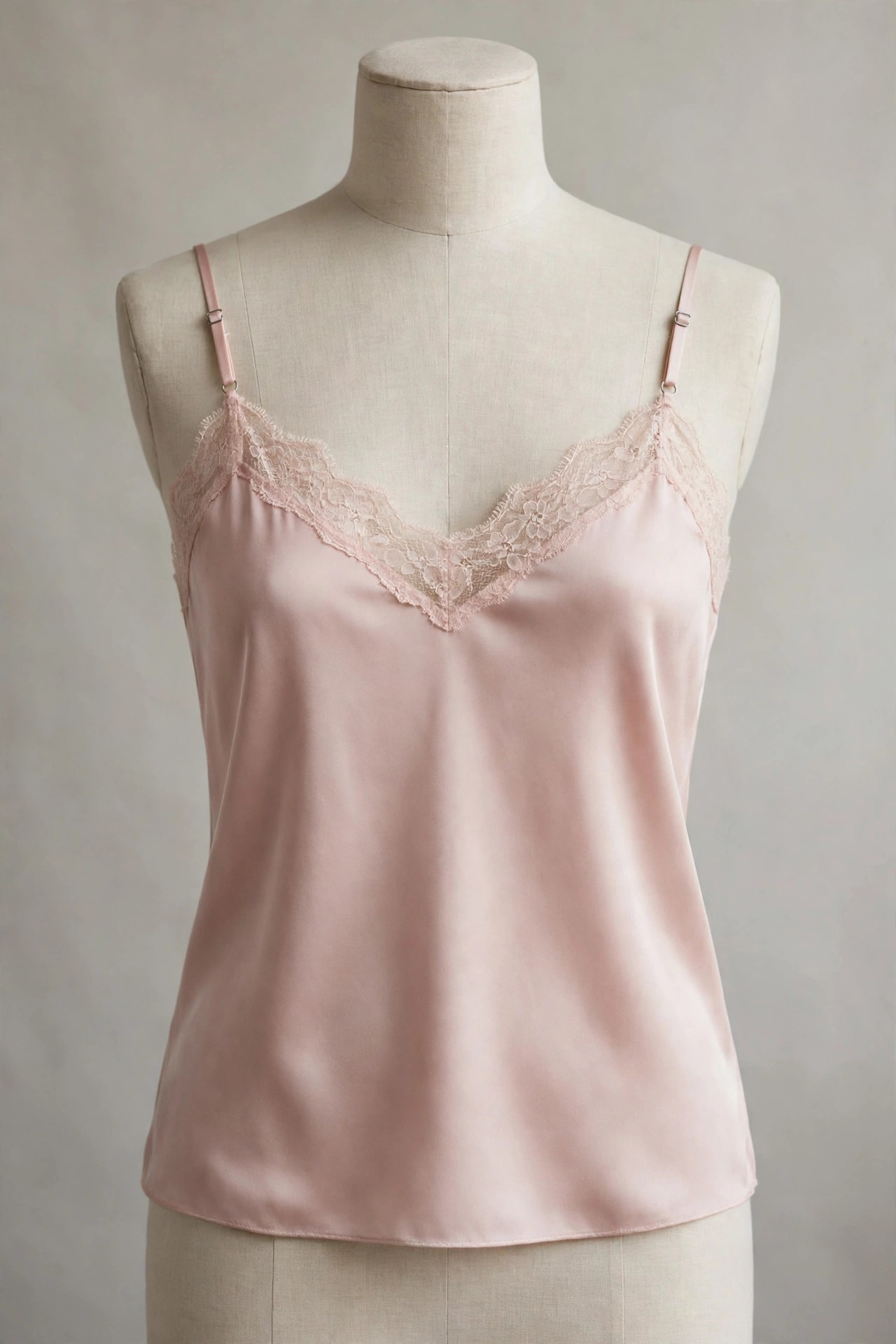
A camisole is a sleeveless top with narrow straps, cut close enough to layer smoothly yet finished enough to be seen. Few garments work as many shifts: under a blazer it softens a tailored outfit, under a sheer blouse it provides coverage, and on its own with sleep shorts it makes a cool sleep set. Better camisoles are cut on the bias or with a little stretch so they follow the torso without clinging, and finish with details — lace at the neckline, adjustable sliders on the straps — that reward being seen at an outfit’s edges. This guide covers the styles, fabrics, and fit checks that turn a camisole from an afterthought into one of the most reached-for pieces you own.
Strap Styles and Necklines
The strap is the camisole’s signature, and its width changes both comfort and use. Spaghetti straps are the lightest and most delicate, ideal under clothing and for sleep, but they concentrate the garment’s weight on a narrow line and can slip on narrow shoulders. Adjustable straps with small sliders solve most fit problems at once, letting you set the neckline height and stop the top from drifting. Wider lace or ribbon straps distribute weight, stay put better, and are designed to be visible under open necklines. Racerback camisoles keep straps off the shoulder points entirely and suit athletic layering. Necklines range from straight and lace-edged to sweetheart, V-neck, and cowl, each suiting different layers: a lace-trimmed V disappears elegantly under a wrap top, a straight neckline reads modern under a jacket, and a high scoop gives the most coverage under sheer fabrics. Choose the neckline for the garment it will live under most often.
Fabrics for Layering and for Sleep
Fabric decides whether a camisole slides under clothing or fights it. Silk is the layering classic because its smooth surface lets blouses, knits, and jackets glide over it instead of catching, and it adds warmth in winter and a cool touch in summer. Cotton and cotton-modal jersey camisoles are softer, stretchier, and easier to wash, making them the everyday and sleepwear standard; they grip slightly more under clothing, which some wearers prefer because the top stays tucked. Satin-finish synthetic camisoles mimic silk’s look at lower prices and work well as visible tops, though they breathe less for sleep. Lace camisoles, where lace forms the upper bodice or deep trim, are worn to be seen at a neckline. For sleep, prioritize softness and enough length to stay in place; for layering, prioritize a smooth finish and a length that tucks cleanly.
Camis With Support: Shelf Bras and Padding
Many camisoles include a built-in shelf bra — an elasticized inner panel that gives light support and modesty without a separate bra. Shelf-bra camis work well for sleep, lounging, and layering for smaller to medium busts, and they simplify packing for travel. Padded and molded-cup camisoles go further, shaping the bust and eliminating show-through, which makes them popular under thin summer tops and in workplaces where a smooth line matters. The honest limitation is support level: a camisole’s narrow straps and soft construction cannot replace a properly fitted bra for larger busts or active days, and trying to make one do so usually ends in strap pressure and discomfort. Check that the shelf elastic sits below the bust rather than across it, and that padding is removable if you prefer a natural line. If you love the camisole silhouette but need real support, wear the cami over a smooth, strap-concealing bra and let each garment do its own job.
Fit: Length, Cling and Staying Put
A camisole fits well when it skims the torso in a continuous line from bust to hem, with no horizontal pull lines and no billowing at the waist. Too small shows every undergarment edge and rides upward as you move; too large gaps at the armholes and neckline and bunches under fitted layers. Length matters for how you wear it: hip-length camisoles tuck securely and suit layering, while longer tunic lengths pair with leggings and sleep bottoms. Raise your arms and sit down in a fitting room — the hem should stay where you put it and the straps should not slide off. Bias-cut woven camisoles have no stretch, so they need a little more ease than knit ones; if you are between sizes in a woven style, take the larger one. Adjust the straps last, once the body of the camisole sits correctly, and set them so the neckline rests where the design intends rather than hoisting the whole garment upward.
Styling, Sleep Sets and Care
As a visible piece, a camisole pairs naturally with tailoring: a silk cami softens a suit, slips under a leather or denim jacket for contrast, and tucks into a high-waisted skirt for an evening look that needs nothing more than earrings. Lace-trimmed styles are meant to show a sliver at a neckline or beneath an open cardigan, so let them. For sleep, match a camisole with shorts in summer or full-length pajama bottoms in winter, choosing knit fabrics that move with you. Care follows the fabric: silk and lace camisoles want hand washing or a mesh bag on a gentle cycle, with lace protected from zippers and hooks that snag; cotton knits tolerate regular washing but last longer in cold water, dried flat or on low heat. Store camisoles folded rather than hung by their straps, adjust sliders before washing so they do not twist, and a good camisole will serve in all three of its roles for years.
Related Women's Guides
Photos


Looking for Women's Clothing Stores?
This guide helps you choose women's camisoles by style, fabric and fit. To browse where to buy, visit our women's clothing store directory, where you can find retailers that carry them.