Women's Valentine's Day Lingerie Guide
Valentine's Day lingerie is women's lingerie in holiday colours and fabrics — red, pink and black lace, satin and mesh styles including slips, camisole sets, babydolls and matching sets — described here in product terms.
Shop Women's Valentine's Day Lingerie Now
Shop Women's Valentine's Day Lingerie on Amazon Shop Women's Valentine's Day Lingerie on eBayThe Amazon and eBay links on this page are affiliate links. If you make a purchase through them, Apparel Search may earn a commission.
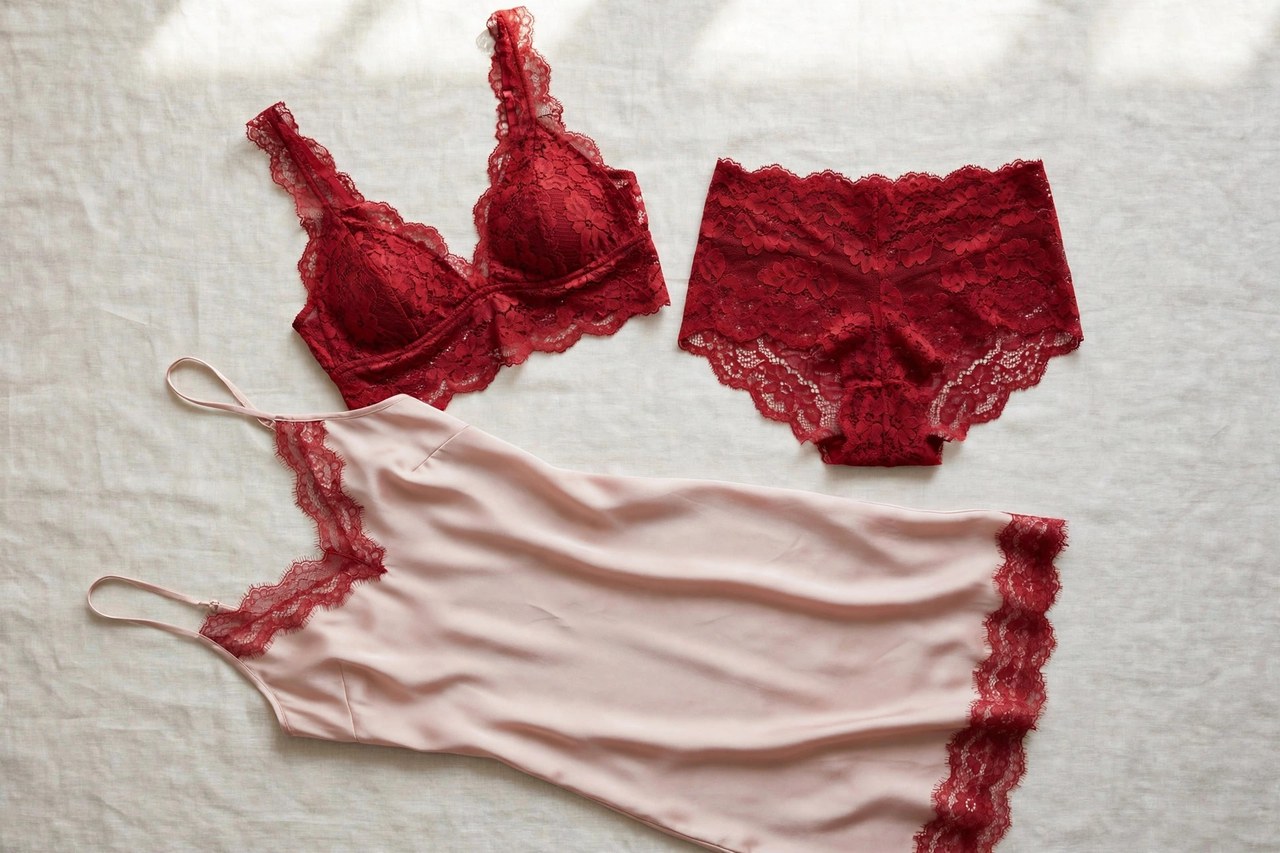
Valentine's Day lingerie is women's lingerie in holiday colours and fabrics — red, pink and black lace, satin and mesh styles including slips, camisole sets, babydolls and matching sets — described here in product terms. This product guide stays with construction and buying facts: lace and satin types, how seasonal sets are sized, edge and strap finishing, and the returns rules that make lingerie a considered purchase, especially as a gift.
This guide covers valentine's day lingerie in the order a careful buyer needs it: what the product is made from, how it is constructed, how it should fit, how to choose it for real use, and how to care for it so it lasts. Apparel Search has published guides to women's clothing for decades, and this rebuilt page keeps the subject focused — measurable details, named materials and checks you can perform in a shop or on a parcel's arrival, rather than general fashion language.
Fabrics and Holiday Colours
Valentine's clothing is defined by palette and motif — reds from scarlet to burgundy, pinks from blush to fuchsia, hearts knitted, printed, embroidered or woven — applied to ordinary garment families: shirts, sweaters, tees, socks, dresses and lingerie in cotton, wool blends, silk, satin, lace and jersey. The fabric rules are the garment's own; the holiday supplies the colour story.
Motif construction divides the category's quality: hearts knitted into a sweater, embroidered onto a shirt or woven into a fabric age with the garment, while surface prints and transfers age on their own faster schedule. Seasonal lingerie is produced in short runs, so size availability is widest in January and thins sharply by mid-February — the practical argument for buying a known size early rather than a guessed size late. Saturated red dyes deserve respect in every fabric — they bleed in early washes and fade in sun faster than almost any other colour family.
Fit and Seasonal Sizing
Holiday ranges are cut on the brand's ordinary blocks, so sizing follows the garment family, not the season: shirts by bust and shoulder, knitwear with its ease, socks by shoe size, lingerie by its own charts. The seasonal trap is availability, not fit — short runs mean the right size exists in January and is gone by the week of the holiday.
Gift buying is this category's fit problem, and the solutions are adjustability and paper trails: stretch lace, tie sides, wrap shapes and relaxed cuts forgive estimation, while receipts and intact tags make exchange possible. For sized basics like socks and tees, a known size from the recipient's existing wardrobe beats any guess.
Buying for the Holiday — and After
Choose valentine's day lingerie by measurable criteria in a fixed order: the garment's own quality specifications (fabric, motif construction, finishing), fit or adjustability, how much wear it will get beyond the holiday, and only then the strength of its Valentine's theme. In practice, rank these checks in the order your own use demands — frequency of wear first, then weather, washing facilities and budget — because that order differs by wardrobe, and it is the real reason two careful buyers can correctly choose differently from the same rail.
Judge price with the calendar in mind: full price in season buys choice of size; the same garment after the holiday is a clearance item, and classic reds and pinks do not date. Pay for construction quality in pieces you will rewear yearly, and let one-evening pieces be the inexpensive ones.
Washing Reds and Delicate Pieces
Wash reds and pinks separately in cold water until the rinse runs clear, inside out, with a colour-catcher sheet for insurance; dry away from direct sun. Delicate holiday pieces — lace, satin, fine knits — get the gentle treatment their fabrics always require: mesh bags, mild detergent, no tumble heat.
Store the season's pieces clean — stains set over a year in a drawer — folded with tissue for knits and embellished items, and note that printed motifs should not be ironed directly. A garment put away properly in February is a garment that comes out next February looking bought-new.
Common Questions
How is lingerie sized, and why does it vary so much?
Bras use band-and-cup sizing, while slips, babydolls and sets usually use dress sizes or S–XL with far less standardisation between brands. Always work from the brand's own measurement chart — a size that fits in one lingerie range can be a full size out in another.
What should I check when buying lingerie as a gift?
Buy from a retailer whose exchange policy covers unopened lingerie, keep tags and packaging intact, and choose adjustable styles — tie sides, stretch lace and adjustable straps forgive small size errors. A gift receipt matters more here than in almost any other clothing category.
How should lace and satin lingerie be washed?
Hand wash in cool water with a gentle detergent, or use a mesh bag on a delicate machine cycle. Satin's smooth face snags on hooks and rough trims, so fasten any closures first and wash lingerie separately from everyday laundry; dry in air, never tumble heat.
Related Women's Guides
More to Explore on Apparel Search
- Lingerie Guide
- Silk Lingerie
- Cotton Lingerie
- Satin Lingerie
- Plus Size Lingerie
- Lingerie Stores
- Lingerie Wholesalers
- Women's Valentines Day Clothing
- Clothes
- Lingerie Definition
- Fashion Videos
- Fashion Calendar
- Celebrity Fashion
- Black Lingerie
- Blue Lingerie
- Brown Lingerie
- Green Lingerie
- Orange Lingerie
- Pink Lingerie
- Purple Lingerie
- Red Lingerie
- Tan Lingerie
- White Lingerie
- Yellow Lingerie
- underwear
- intimates
- Fashion Designer Directory
Women’s Clothes Guide by Letter: Women's Clothes Directory T · Women's Fashion Directory U · Women's Clothes Directory W · Women's Clothing Directory X · Women's Clothes Directory Y · Women's Clothes Directory Z
Looking for Women's Clothing Stores?
This guide helps you choose women's valentine's day lingerie. To browse where to buy, visit our women's clothing store directory, where you can find retailers that carry them.