Women's Intimate Apparel Guide
What the term actually covers, how the pieces are made, and why the fabrics and laundering of clothes worn next to the skin are a small science of their own.
Shop Women's Intimate Apparel Now
Shop Women's Intimate Apparel on Amazon Shop Women's Intimate Apparel on eBayThe Amazon and eBay links on this page are affiliate links. If you make a purchase through them, Apparel Search may earn a commission.
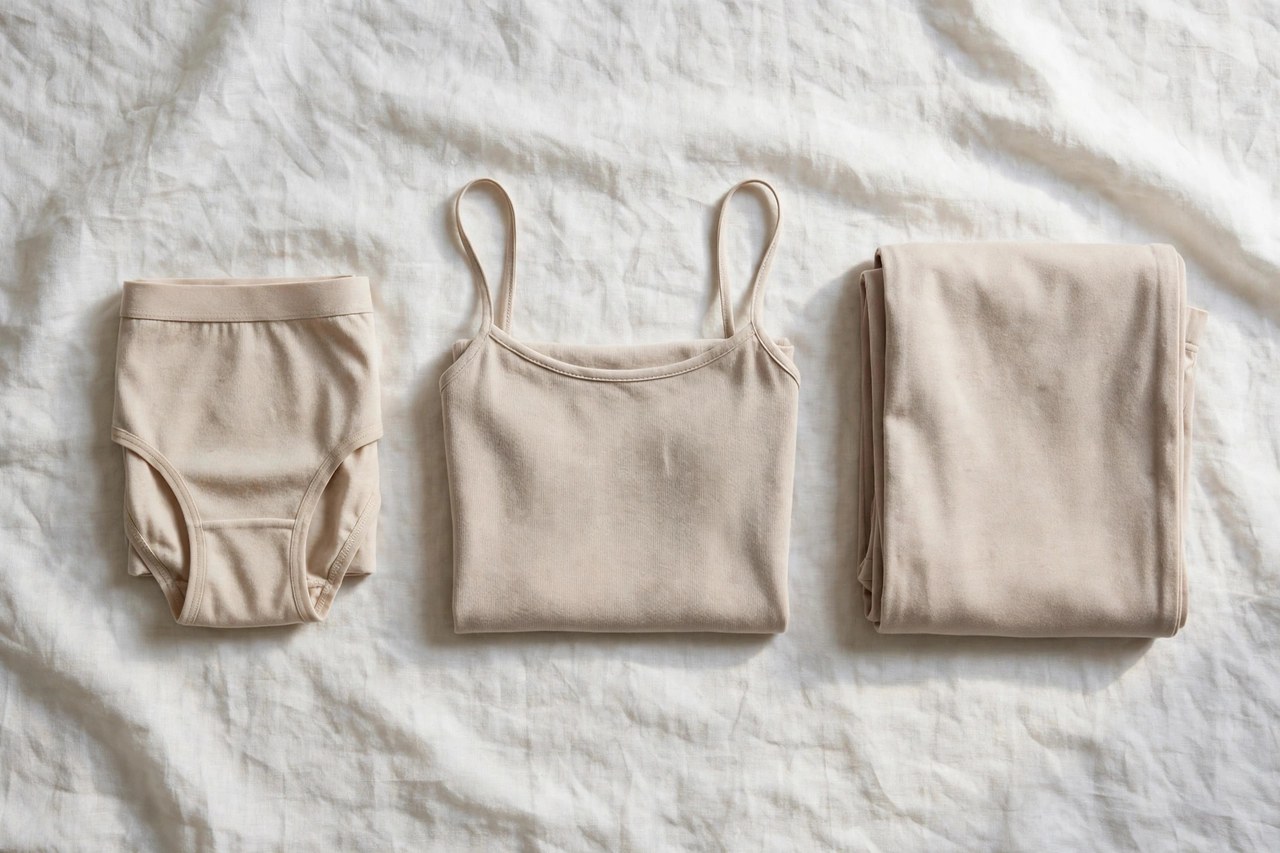
Intimate means private and personal — and intimate apparel is essentially clothing worn in an intimate way: garments worn privately, usually directly against the skin, and typically not on public display. That is not always the case — a camisole under a blazer is intimate apparel worn in public — but privacy and skin contact are what organise the category. This page explains the category itself: what counts, what it is made from, and how it is cared for. The practical companion — measuring, fitting and building a working drawer — is our women's intimates guide.
What Counts as Intimate Apparel
The category covers undergarments — the items worn beneath outer clothes, usually in direct contact with the skin. For women, the everyday undergarments are bras and underwear in its range of cuts: briefs, bikinis, hipsters, boyshorts, thongs and G-strings (panties, in British usage, are knickers). Around them sit the camisole and the sleeveless singlet or tank worn as an underlayer, and the shaping garments that smooth a silhouette under fitted clothing.
The second half of the category is nightwear and lingerie: nightdresses, nightgowns and nighties, pyjamas, night-robes and loose bed dresses, together with slips and chemises worn under dresses. Lingerie in the narrow sense means the more decorative end of both halves — lace, silk and fine mesh — but the trade uses it loosely for the department as a whole, which is why our lingerie guide and this one overlap at the edges.
Fabrics and Construction
Because these garments live on skin, their fabrics are chosen for touch, moisture handling and stretch recovery. Cotton breathes and washes hard; modal and micromodal are softer and smoother under clothes; microfibre knits dry fast and stay sleek; silk and satin are the luxury fibres; lace and mesh provide decoration and ventilation. Nearly everything contains a few percent of elastane — the stretch is what makes a close garment comfortable rather than binding.
Construction details matter more than decoration: flat or bonded seams that will not chafe or show through clothing, a cotton-lined gusset in underwear, smooth elastic that lies flat rather than digging, and tagless finishes. In bras, construction is engineering — cup moulding or seaming, underwire casing, strap adjustment and hook-and-eye bands all decide whether the garment supports or merely covers.
The industry treats intimate apparel as its own branch of manufacturing for good reason: tolerances are small, elastic attachment is a skilled machine operation, and sizing multiplies fast — a single bra style in its full range of band and cup combinations can run to several dozen variants. That variety is also why fit advice in this category is unusually specific, as the companion intimates guide explains.
The Laundering Science of Intimates
Intimate apparel wears out in the wash before it wears out in the drawer, and the mechanism is specific: heat and agitation break elastane, which is why stretched-out elastic is the usual cause of death. The standard defence is a cool or warm gentle cycle, garments inside mesh wash bags, bra hooks fastened so they cannot snag lace, mild detergent, and air drying away from radiators — tumble-dryer heat is the single most destructive habit in this category.
Rotation is the other half of laundering science: elastic fibres need roughly a day of rest to recover their full stretch, so garments worn in rotation last noticeably longer than favourites worn back to back. Delicate fibres divide further — silk wants hand washing or a true delicates cycle, wool-blend base layers want wool detergent — and the ten seconds spent reading a care label is the cheapest garment insurance in the wardrobe.
Related Women's Guides
Photos

More to Explore on Apparel Search
Looking for Women's Clothing Stores?
This guide helps you choose women's intimate apparel. To browse where to buy, visit our women's clothing store directory, where you can find retailers that carry them.