Women's Leather Chaps Guide
Chaps are protective leather leg coverings worn over trousers — working equipment first, for the motorcycle and the saddle, and pure function is what makes them.
Shop Women's Leather Chaps Now
Shop Women's Leather Chaps on Amazon Shop Women's Leather Chaps on eBayThe Amazon and eBay links on this page are affiliate links. If you make a purchase through them, Apparel Search may earn a commission.
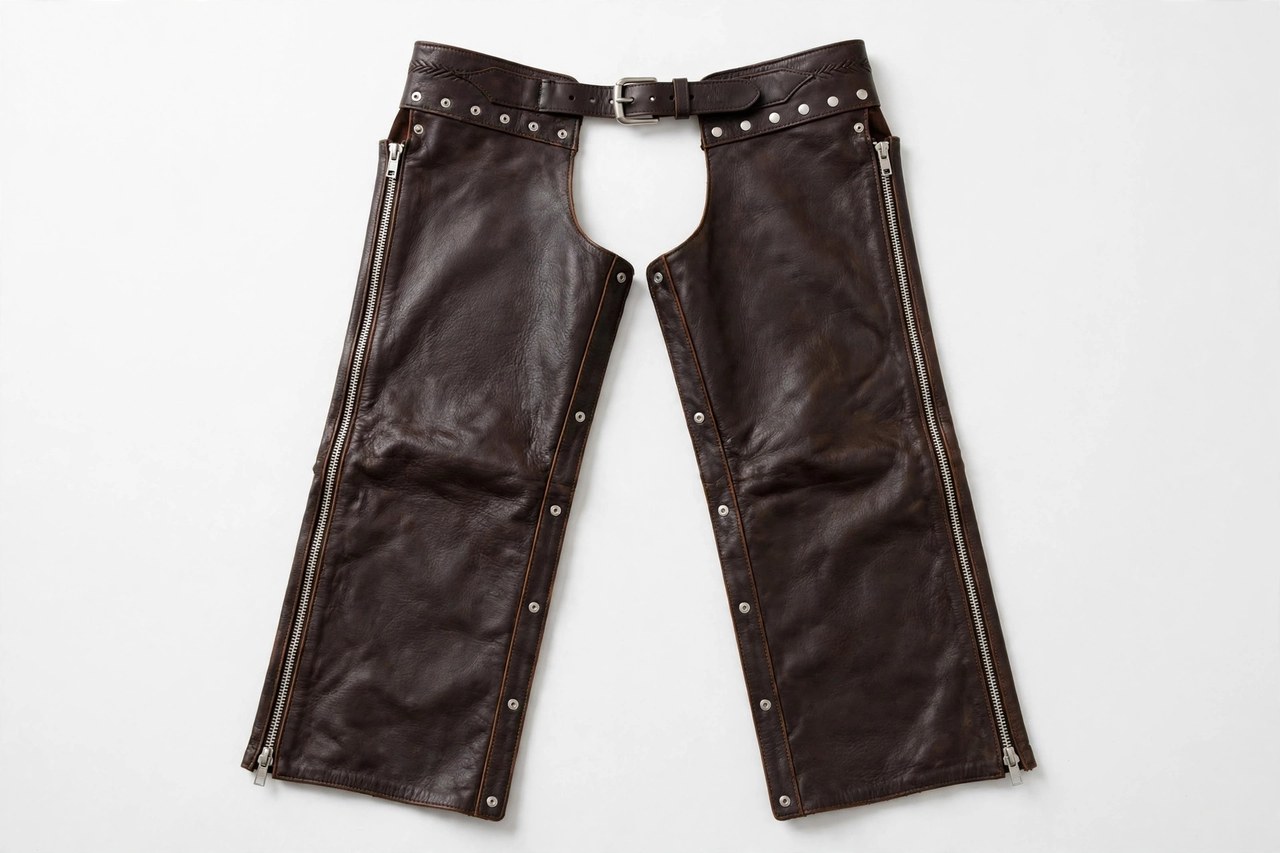
Chaps are seatless leather leggings — two separate leg coverings joined at a belt, worn over jeans or riding trousers to protect the legs from wind, road debris, engine heat, brush and saddle leather. They began as working gear for riders of horses (the name comes from the Spanish chaparreras, protection against the chaparral brush) and were adopted wholesale by motorcyclists, who needed the same protection for the same reasons. This guide covers both uses.
Because chaps are equipment, everything about them is functional: the leather is thick, the closures are heavy, and the fit is judged on the bike or in the saddle, not in front of a mirror.
Styles: Shotgun, Batwing and Half Chaps
Shotgun chaps (also called straight-leg) fit close along the whole leg with a full-length zipper — the standard motorcycle style, with the zip usually running down the outside or back of the leg and snaps covering the bottom. Batwing chaps are fuller through the thigh with a flared, wing-like cut, the classic western working style, giving room over boots and freedom in the saddle. Chinks are the shorter western variant ending below the knee, often fringed. For English riders, half chaps cover only the lower leg, worn with paddock boots as an alternative to tall boots.
Motorcycle chaps add their own details: an adjustable front belt and laced back waistband for fit over different layers, a thigh pocket on some, and sometimes a removable insulated liner for cold-weather riding — the liner turns one pair of chaps into three-season equipment.
Leather and Construction
Chap leather is among the heaviest apparel leather: typically 1.2–1.6 mm cowhide, chosen for abrasion resistance above drape or softness. On a motorcycle, leather's job at speed is to be the layer that slides and wears instead of skin, which is why no textile short of proper riding gear matches a heavy hide here. Seams should be stitched, not glued, and doubled at the belt and zip; zippers are heavy-gauge metal; snaps are covered at the ankle so they do not catch or scratch the machine's finish.
Fit means coverage in position: waist adjustable over riding clothes, thigh room to sit without the belt digging, and length that reaches the boot top when seated with knees bent — chaps that are right standing are often short seated, so they are sold long and cut to length at the hem, which is traditionally left unfinished or fringed for exactly that reason.
Care
Brush off road dust, wipe salt and grit promptly, and let wet chaps dry slowly off the body. Condition the leather a few times a season — chaps live outdoors and dry out faster than closet leather — and pay attention to the zip: a stiff zip worked with grit in it will score its track, so clean it before forcing it. Store hung by the belt or rolled, not folded sharply, and a well-kept pair of heavy chaps is effectively lifetime equipment.
Measure for chaps in riding clothes, not street clothes: waist over the belt you ride in, thigh at its fullest over jeans, and length to the boot's heel with the knee bent. Most makers cut chaps long deliberately — the hem is trimmed after purchase, straight across or with a fringe cut into the same leather — and a cobbler or leather shop will do it in minutes if you do not trust your own shears. Riders who switch between summer jeans and lined winter layers should size waistband and thigh to the winter load: a chap that fits in July and will not zip in January is a summer-only tool.
More Leather Guides
Photos


More to Explore on Apparel Search
Looking for Women's Clothing Stores?
This guide helps you choose women's leather chaps and riding gear. To browse where to buy, visit our women's clothing store directory, where you can find retailers that carry them.