Shearling
Fabric Definitions — fabric and textile definitions from Apparel Search
Search Apparel Search
At a Glance
Definition: Shearling is a sheepskin or lambskin pelt given a limited shearing to bring its wool to a uniform depth, then tanned with the wool still on, so one side is leather or sueded leather and the other is evenly shorn wool.
Category: Fabric Definitions
Shearling is not sheared wool, and the distinction is the whole definition. It is the pelt of a yearling sheep that has been shorn only once, given a limited shearing process to bring the wool fibers to a uniform depth for a uniform look and feel, and then tanned with that wool still attached. A shearling garment or item of footwear is therefore made from a single natural material with two working surfaces.
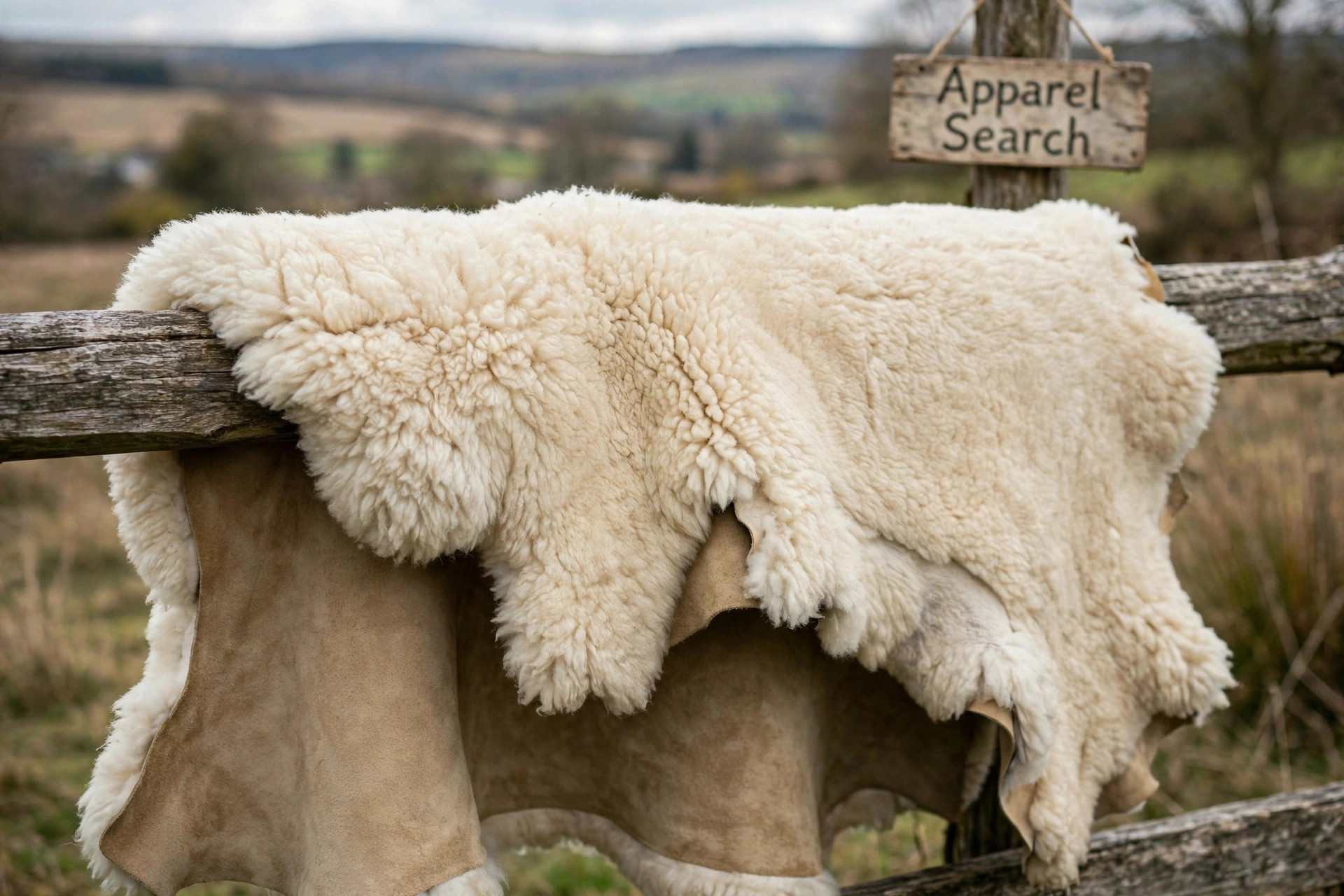
One Pelt, Two Working Surfaces
A typical shearling pelt has leather, or sueded leather, on one side and shorn fibers on the other. Because the wool was never separated from the hide, there is no glue line, no woven backing and no quilting — insulation and shell are a single piece of material. Garment makers use the reversibility directly: shearling coats and jackets are sewn with the sueded leather out and the wool in for warmth, or reversed for a wool-out look, and the material needs no lining, since the cut edge of the pelt is clean and stable.
The uniform clip depth is what makes this possible at garment scale. Unclipped sheepskin varies too much in length and density to cut into matched panels, while shearling behaves like a consistent cloth across the whole pelt. Shearling's price reflects what it is: a whole natural pelt, not a manufactured yardage — each piece is one animal's skin, with a size and shape no mill controls.
Moisture, Warmth and Year-Round Comfort
The fibers of shearling tend to wick away moisture or retain moisture, depending on humidity, and a garment or item of footwear made from them tends to be comfortable year round. The wool layer absorbs vapour in humid air and releases it in dry conditions, buffering the microclimate against the skin, while its crimp holds insulating air and the leather face stops the wind that would strip that insulation away.
That physics explains the classic applications — winter coats and jackets, gloves, hats and lined boots. In footwear it produces the familiar result of shearling-lined boots: warm in cold weather without the clamminess of a synthetic lining, because the wool is actively moving moisture rather than merely trapping heat. Quality is judged by the density and evenness of the wool, the softness of the tanned skin, and the absence of thin or bare patches in the pelt, and care is the care of its two faces at once — the sueded side brushes and spots like suede, while the wool side wants gentle cleaning that does not strip the fibers.
Not to Be Confused With
Shearling is sometimes confused with fur, but the two pelts are finished very differently. Shearling is sheepskin whose wool has been clipped to one uniform depth, giving an even, dense surface with leather or sueded leather on the reverse. Fur keeps the animal's natural coat at its natural lengths, with long guard hairs over a soft underfur — a varied, unclipped surface.
Common Questions
Is shearling the same as sheared wool?
No — that is the common misconception the definition corrects. Shearling is not loose sheared wool fiber; it is the whole pelt of a yearling sheep shorn only once, tanned with its wool still attached, so the wool and the leather remain one material with leather or sueded leather on one side and shorn fibers on the other.
Why is shearling comfortable in different temperatures?
The fibers of shearling tend to wick away moisture or retain moisture, depending on humidity, and the wool layer insulates while the leather side blocks wind. Together those properties mean a garment or item of footwear made from shearling tends to be comfortable year round rather than only in deep cold.
How is shearling different from fur?
Shearling is sheepskin whose wool has been clipped to a uniform depth, giving an even, dense, suede-and-wool surface. Fur, by contrast, keeps the animal's natural coat at its natural lengths, with long guard hairs over a soft underfur — a varied, unclipped surface.