Worsted
Fabric Definitions — fabric and textile definitions from Apparel Search
Search Apparel Search
At a Glance
Definition: Worsted is a yarn and cloth usually made from wool that is combed so the fibres lie parallel and well twisted, giving a hard, smooth texture usually woven in a twill weave.
Category: Fabric Definitions
Word Origin
Worsted takes its name from the village of Worstead in Norfolk, England, which became — along with North Walsham and Aylsham — a centre for the manufacture of yarn and cloth after weavers from Flanders arrived in Norfolk in the 12th century.
Worsted is the name of a yarn and cloth usually made from wool. The name derives from the village of Worstead in Norfolk, England, which became, along with North Walsham and Aylsham, a centre for the manufacture of yarn and cloth after weavers from Flanders arrived in Norfolk in the 12th century. The yarn is well twisted and spun of long staple wool, and the wool is combed so that the fibers lie parallel.
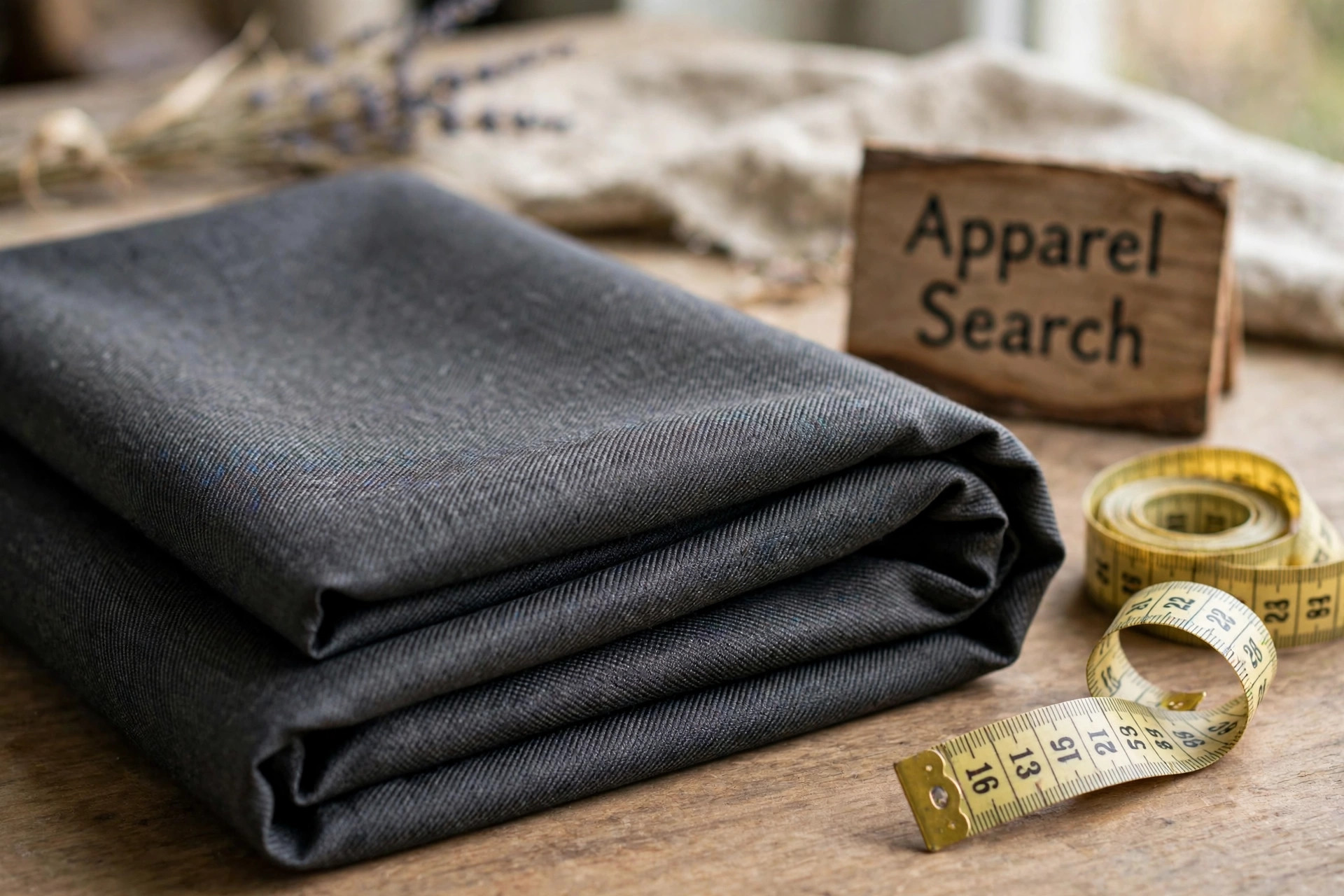
Combed Parallel Fibres Make the Yarn
Everything about worsted follows from one preparation step: combing. Carding, the preparation used for woolen yarn, brushes the wool into a loose web but leaves the fibres mixed in length and direction. Combing goes further — it passes the wool through fine combs that remove the short fibres and lay the remaining long staple fibres side by side, parallel. Spun from that parallel arrangement, worsted yarn can be twisted firmly and evenly, and the definition's phrase 'well twisted' matters: high, even twist on parallel long fibres produces a yarn that is dense, smooth, strong for its weight, and almost free of the fuzzy halo that surrounds a woolen yarn.
Because the fibres lie along the yarn rather than poking out of it, worsted yarn has a clean surface that shows weave patterns crisply and resists pilling better than a loosely spun yarn of the same wool. The definition notes that nowadays medium and short fibers are also used, not only long staple — but the combing step, the parallel lay, and the firm twist remain what make the yarn worsted rather than woolen.
Hard, Smooth Cloth in Twill Weaves
Woven up, worsted yarn gives cloth with a hard, smooth texture — 'hard' here meaning firm, compact and resistant, a cloth that holds a crease and keeps a tailored shape. The usual weave is a twill weave, whose diagonal lines suit the yarn's clarity: the definition names whipcord, gabardine and serge as typical worsted cloths, and all three are twills whose diagonals read sharply precisely because the yarn surface is smooth.
That combination — smooth combed yarn, visible twill line, firm finish — is why worsted became the standard suiting cloth. The same yarn serves beyond suiting: worsted is also used for carpets, garments, hosiery and gloves, each use exploiting the yarn's smoothness and durability. Contrast woolen: the pairing organizes the whole wool trade — combed and smooth against carded and soft, two yarns from the same fibre, divided by preparation. For more on the fibre, see wool fiber.
From Worstead, Norfolk to a Generic Word
The word began as a place. Worstead in Norfolk gave its name to the cloth made there after Flemish weavers arrived in the 12th century and, with neighbouring North Walsham and Aylsham, made the district a centre for yarn and cloth manufacture. The Flemish connection matters: the Low Countries were then the most advanced wool-working region in Europe, and the immigrant weavers brought the combing and weaving skills that produced a finer, smoother wool cloth than the local standard. Over the centuries the place-name detached from the place and attached to the process: 'worsted' came to mean any yarn or cloth made the combed, parallel-fibre way, wherever it was spun.
Not to Be Confused With
Worsted and woolen are the two great systems of wool yarn, and they are opposites in preparation. Worsted wool is combed so the fibres lie parallel, short fibres are removed, and the yarn is smooth, shiny and compact, woven into hard, smooth cloth. Woolen wool is carded — never combed — so its fibres stay mixed, and the yarn is bulky, soft and warm, with good thermal insulation. If a wool cloth is smooth, crisp and sharply defined, it is worsted; if it is fuzzy, matte and warm, it is woolen.
Common Questions
What is worsted made from?
Worsted is usually made from wool. The yarn is spun of long staple wool — though nowadays medium and short fibers are also used — and the wool is combed so that the fibers lie parallel before spinning.
Why is worsted cloth smooth?
Because the fibers are combed parallel and the yarn is well twisted, worsted yarn is smooth and compact with few loose fiber ends. Woven, usually in a twill weave, it produces cloth with the hard, smooth texture seen in whipcord, gabardine and serge.
What is the difference between worsted and woolen?
Worsted yarn is combed, so its longer fibers lie parallel and are tightly twisted into a smooth, strong yarn. Woolen yarn is carded rather than combed, leaving shorter fibers in a looser, fuzzier arrangement, so woolen cloth is softer and warmer-feeling but less smooth and less sharply defined than worsted cloth.