Twill
Fabric Definitions — definitions of fabrics, cloths, laces and textile materials from Apparel Search
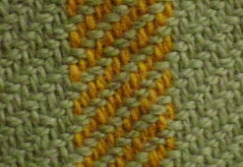
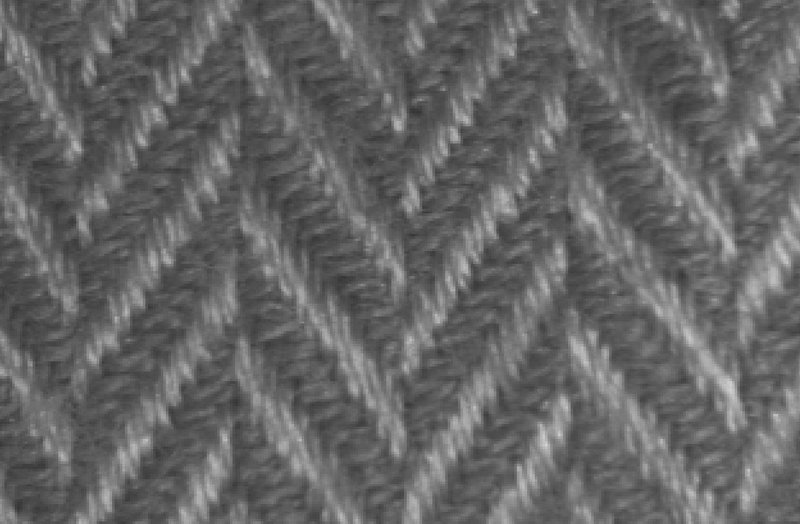
Twill is a type of fabric woven with a pattern of diagonal parallel ribs. It is made by passing the weft threads over one warp thread and then under two or more warp threads, and examples of twill fabric are gabardine, tweed and serge. A twill with ribs on both sides is called a fishbone twill, and the basic 2/2 twill is probably the second most simple weave after plain weave.
|
One Step to the Side, RepeatedTwill is the second fundamental weave because it is plain weave with a single idea added: offset. Where plain weave reverses its interlacing at every row, twill shifts it by one thread, so the points where warp and weft cross form a diagonal line across the cloth instead of a grid. That one shift changes everything about the fabric's behavior. Fewer interlacings per thread mean the yarns float a little longer, so twill drapes better than plain weave, hides dirt and wrinkles better because the diagonal texture breaks up light and shadow, and wears longer because the load is spread over longer yarn segments. It also gives twill its strong identity: the diagonal rib is visible, countable and directional — a cloth can be read by its angle, steep or shallow, and by whether the rib runs left or right. Gabardine steepens the rib into a fine, hard line; serge balances it two-up, two-down so both faces show it; denim dyes one yarn set and lets the diagonal carry the color story. The Twill FamilyAlmost every durable woven garment fabric belongs to the twill family, and the definition's examples mark its range: gabardine for rainwear and suiting, tweed for country cloth, serge for uniforms — plus denim, chino, drill and whipcord, all twills in different weights and yarns. The fishbone variant reverses the diagonal at intervals to make herringbone, a pattern that reads as texture from a distance and as chevron up close. For a buyer, the diagonal is a diagnostic: hold a suspect cloth at an angle and look for the rib. If the lines run straight across or lengthwise, the weave is plain or a rib; if they run diagonally, the cloth is a twill, whatever its fiber or finish, and its properties — drape, durability and the way it takes a crease — follow from that geometry. Twill's position as the second simplest weave is exactly why it is so common: one small change to plain weave, and the whole wardrobe of workwear, suiting and outerwear opens up. On the shirt shelf, twill's fine diagonal rib gives the twill shirt its smooth face and clean drape - the quiet default of the dress-shirt drawer. Common QuestionsHow does twill form diagonal lines?By stepping the interlacing: each weft passes over one warp thread and under two or more, and each successive row starts its pattern one thread later. The binding points therefore march diagonally across the cloth, producing the pattern of diagonal parallel ribs that defines twill. What is a 2/2 twill?A twill in which each weft goes over two warp threads and under two, stepping one thread per row — the basic twill described in the definition, and probably the second most simple weave after plain weave. Its diagonal is balanced, with ribs visible on both faces, and an old sampler shows it clearly despite messy yarn and uneven spacing. What is fishbone twill?A twill with ribs in both directions, called fishbone twill — the herringbone pattern — in which the diagonal reverses at regular intervals, forming a chevron or bone-like zigzag. It combines twill's diagonal character with a symmetrical, non-directional surface. More to ExploreMore from Apparel Search: Fabric Definitions | Clothing Industry Glossary | Fashion Terms | Apparel Search Home
|