Garment
Clothing Definitions — definitions of garments and clothing terms from Apparel Search
Search Apparel Search
At a Glance
Definition: A garment is a single finished article of clothing — one shirt, dress or coat — the counting unit in which clothing is made, shipped and sold.
Category: Clothing Definitions
Word Origin
Garment comes from Old French garnement, meaning equipment or clothing, from garnir, to equip or furnish — the same root as garnish. A garment was originally part of a person's equipment: the furnished, finished articles someone was outfitted with, which is close to how the trade still uses the word.
A garment, most simply defined, is clothing — but with a precision the everyday word lacks: a garment is one finished article of clothing, a single shirt, dress or coat, made and completed as one item. It is the industry's counting unit. Garments are designed, cut, sewn, inspected, shipped and sold one piece at a time, which is why the trade speaks of garment manufacturing, garment workers and garment hangers. This page explains the term, and the differences between the four words most often confused with it — garment, clothing, apparel and fashion — each defined in its own page in this section, and gathered in our clothing terminology survey.
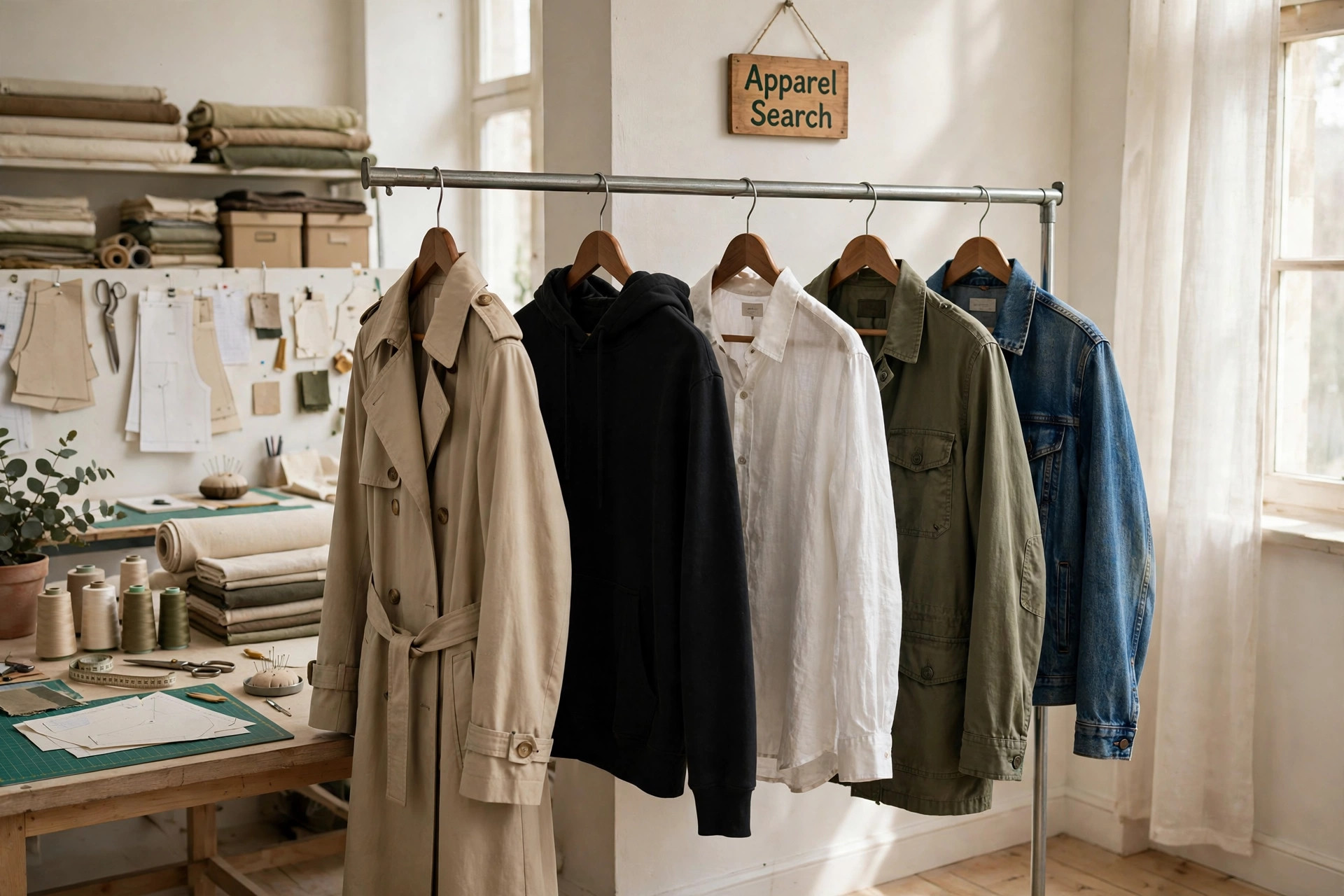
One Item at a Time
The whole force of the word is in the count. A garment can be picked up, inspected, altered, returned or sold; it has seams, a size, a label, care instructions and a price. A production order is placed in garments, a rail in a shop holds garments, and a customer's bag carries garments home. Where clothing can be discussed as an idea — its history, its meaning, its cost — a garment is always a physical object with a beginning on the cutting table and an end in a wardrobe.
That concreteness is why the word anchors the vocabulary of making and selling. A garment is finished: the term excludes cloth, trim and half-made work, and begins at the moment the article is complete and wearable. Everything upstream of that moment belongs to textiles; everything at and after it — pressing, ticketing, hanging, shipping, retailing, wearing, repairing — is the life of a garment, and the brief's own pointer to read about garments follows the term into that working vocabulary.
Garment, Clothing, Apparel and Fashion
The four terms divide the subject by viewpoint. Garment looks at the object: a single made article, produced by the garment industry and handled by garment workers. Clothing looks at the practice: everything worn, spoken of in general and never counted. Apparel looks at the business: it is the word of the trade press, of apparel manufacturing and apparel retailing, slightly formal and commercial where clothing is everyday. Fashion looks at change: the styles, silhouettes and cycles that make this year's garments differ from last year's.
In practice the words overlap, and each definition page in this section keeps its own focus — the apparel, clothing and fashion definitions develop their terms at length, and the clothing terminology page surveys the vocabulary as a whole. The distinctions still matter in industry language, because each word belongs to a different desk: a factory produces garments, a retailer sells apparel, a consumer wears clothing, and a designer works in fashion. Keeping the counting word for the factory and the general word for the wardrobe is most of what the terminology requires.
The Garment Industry's Word
The word also carries the industry's geography and history. The garment district of a city is where its clothing factories and showrooms gather; garment workers are the people who sew the articles themselves, as distinct from the textile workers who make the cloth. The phrase ready-to-wear translates, in factory language, into garments made in standard sizes for stock — counted, folded and shipped as individual garments, each complete with its label and ticket, rather than made to measure for one customer.
Because the garment is the unit of production, it is also the unit of quality and of responsibility. A fault is found in a garment, a recall names garments, a size run is counted in garments. The word's slight formality — a shopper says clothes, a manufacturer says garments — is the mark of that professional use: garment is what clothing is called by the people who make it, at the moment they are counting it.
Garment Compounds: Bags, Steamers and Hangers
The word's compounds all take their name from the single finished articles they serve. A garment bag protects one suit or dress in transit; a garment steamer prepares individual articles for the rail or the wearer; a garment rack and a garment hanger hold garments one by one, in the order they will be chosen. Even garment care and garment dyeing name processes applied article by article, to finished things rather than to cloth by the roll.
That is the word's value, and the reason this short definition sits at the centre of the section. Every other page here defines one kind of garment — a coat, a dress, a boot, a hat — and the links between them assume a reader who knows what kind of thing a garment is: not a material, not a style, not an industry, but one made and finished article of clothing, ready to be worn.
Not to Be Confused With
Garment is the counting word: it names one item — one garment, two garments, a garment bag holding a single suit. Clothing is the collective word for everything worn and cannot be counted that way; nobody owns twelve clothing. When a single finished article is meant, garment is the precise term; when dress in general is meant, clothing is.
Common Questions
What is a garment?
A garment is a single finished article of clothing — one shirt, one dress, one coat. It is the industry's counting word: garments are designed, cut, sewn, shipped and sold one piece at a time.
What is the difference between a garment and clothing?
Garment names the individual item: one garment, two garments. Clothing is the general, uncountable word for what people wear collectively. A wardrobe contains clothing, and it is made up of individual garments.
What is the difference between apparel and fashion?
Apparel is the trade word for clothing, used for the industry and its products. Fashion is style — the changing forms clothing takes — rather than the articles themselves. A factory produces garments, a retailer sells apparel, and a designer works in fashion.