Dressmaker
Miscellaneous Definitions — the maker of custom clothing for women, from fashion plates to wedding gowns, from Apparel Search
Search Apparel Search
At a Glance
Definition: A dressmaker is a person who makes custom clothing for women, such as dresses, blouses and evening gowns, fitting each garment to an individual client rather than producing stock for a rail.
Also known as: Mantua-maker (historically); modiste
Category: Miscellaneous Definitions
Word Origin
The Oxford English Dictionary first records dressmaker in 1803.
A dressmaker is a person who makes custom clothing for women, such as dresses, blouses and evening gowns. Also called a mantua-maker historically, or a modiste, the dressmaker was for most of the nineteenth century the normal source of women’s clothing for anyone who did not sew at home: she copied or adapted the latest fashions from Paris from printed illustrations called fashion plates. This page covers the history of the trade, its older names, the adjective in “dressmaker details”, and the niche custom dressmakers fill today between haute couture and ready-to-wear.
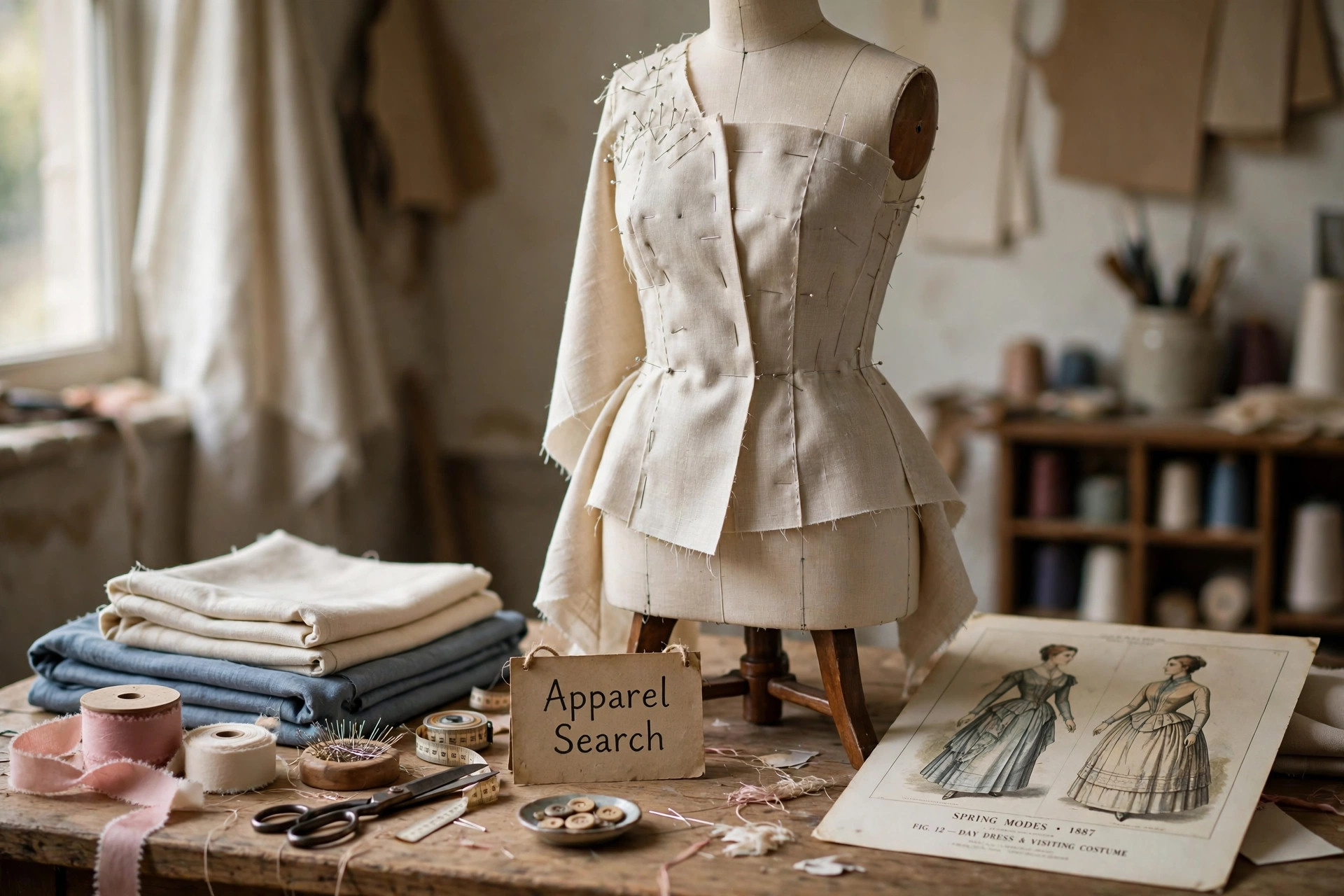
Custom Clothing for Women, From Fashion Plates
A dressmaker’s work is custom work. The dressmaker makes clothing for women, such as dresses, blouses and evening gowns, for an individual client, to that client’s measurements, taste and occasion, rather than for a rail of anonymous stock. Throughout the nineteenth century and until the rise of ready-to-wear, most women who did not make their own clothes at home resorted to a local dressmaker, who copied or adapted the latest fashions from Paris based on printed illustrations called fashion plates.
That system placed the dressmaker between the fashion capital and the client. Her skill was interpretive as much as technical: translating a pictured gown into cloth, trimmings and a fit for a particular woman in a particular town, often without ever seeing the Paris garment itself. Clients expected a consultation, a choice of fabric and trimming, fittings as the garment was built — fitted to the wearer rather than to a standard dress size — and a finished dress made for one body. The trade also sat within a division of the clothing crafts: the dressmaker served women with fitted garments, while the tailor worked principally in structured, tailored clothing, and the seamstress sewed without necessarily designing or fitting as the dressmaker did.
The word itself is comparatively recent for so old a craft. The Oxford English Dictionary first records dressmaker in 1803, at the start of the century in which the local dressmaker became a fixture of every town. Before ready-to-wear, the choice for most women was binary: make clothes at home, or take them to her. Her premises were where fashion, as pictured in Paris, met the realities of local cloth, local budgets and individual figures — which is why two towns could follow the same fashion plate and still dress noticeably differently.
Mantua-Maker, Modiste and Dressmaker Details
The dressmaker has carried other names in other periods. A mantua-maker, in the eighteenth century, was a maker of mantuas, or in general a dressmaker, named for the loose gown that was then a central garment of women’s dress. A modiste is a maker of fashionable clothing and accessories, with the implication that the articles made reflect the current Paris modes — the word carries the flavour of the fashionable shop, where the maker’s taste and currency were themselves the product.
Dressmaker as an adjective denotes clothing made in the style of a dressmaker, frequently in the term dressmaker details, which includes ruffles, frills, ribbon or braid trim. Dressmaker in this sense is contrasted to tailored — soft and trimmed against structured and plain — and it has fallen out of use since the rise of casual wear in the mid-twentieth century simplified women’s clothing and thinned its trimmings.
The Modern Niche
Today, custom dressmakers fill a niche between haute couture and ready-to-wear, and are most often consulted for one-of-a-kind special occasion dresses, such as wedding gowns and prom dresses. That niche is defined by the occasions where fit and individuality matter most and where a standard size is most likely to disappoint: a wedding gown photographed all day, worn once and kept for decades, justifies fittings and custom construction in a way everyday clothing no longer does.
The modern dressmaker therefore does much of what her nineteenth-century predecessor did — consulting, adapting designs the client brings as pictures, now photographs and phone images instead of fashion plates, fitting in stages, and finishing a garment for one wearer, alongside related custom makers such as the corset maker. Ready-to-wear took the everyday trade; the dressmaker kept the occasions.
Common Questions
What is a dressmaker?
A dressmaker is a person who makes custom clothing for women, such as dresses, blouses and evening gowns. A dressmaker is also called a mantua-maker historically, or a modiste, a maker of fashionable clothing and accessories reflecting the current Paris modes.
When was the word dressmaker first recorded?
The Oxford English Dictionary first records dressmaker in 1803. Throughout the nineteenth century, most women who did not make their own clothes at home used a local dressmaker, who copied or adapted the latest fashions from Paris based on fashion plates.
What are dressmaker details?
Dressmaker as an adjective denotes clothing made in the style of a dressmaker, frequently in the term dressmaker details, which includes ruffles, frills, ribbon or braid trim. Dressmaker in this sense is contrasted to tailored, and has fallen out of use since the rise of casual wear in the mid-twentieth century.