Style
Fashion Definitions — fashion history and style definitions from Apparel Search
Search Apparel Search
At a Glance
Definition: In fashion, style is a distinctive and often constant trend in the way a person dresses, while fashion itself is a popular style or practice, especially in clothing, footwear, accessories, makeup or body.
Category: Fashion Definitions
Fashion is a popular style or practice, especially in clothing, footwear, accessories, makeup or body. Fashion is a distinctive and often constant trend in the style in which a person dresses, and in regard to fashion, what we wear helps determine our sense of style. Style may also refer to genre, design, format or appearance across many fields besides dress. The terminology treatment of the same word, covering style as a garment's design and as a person's overall appearance, is at Style — Fashion Terms.
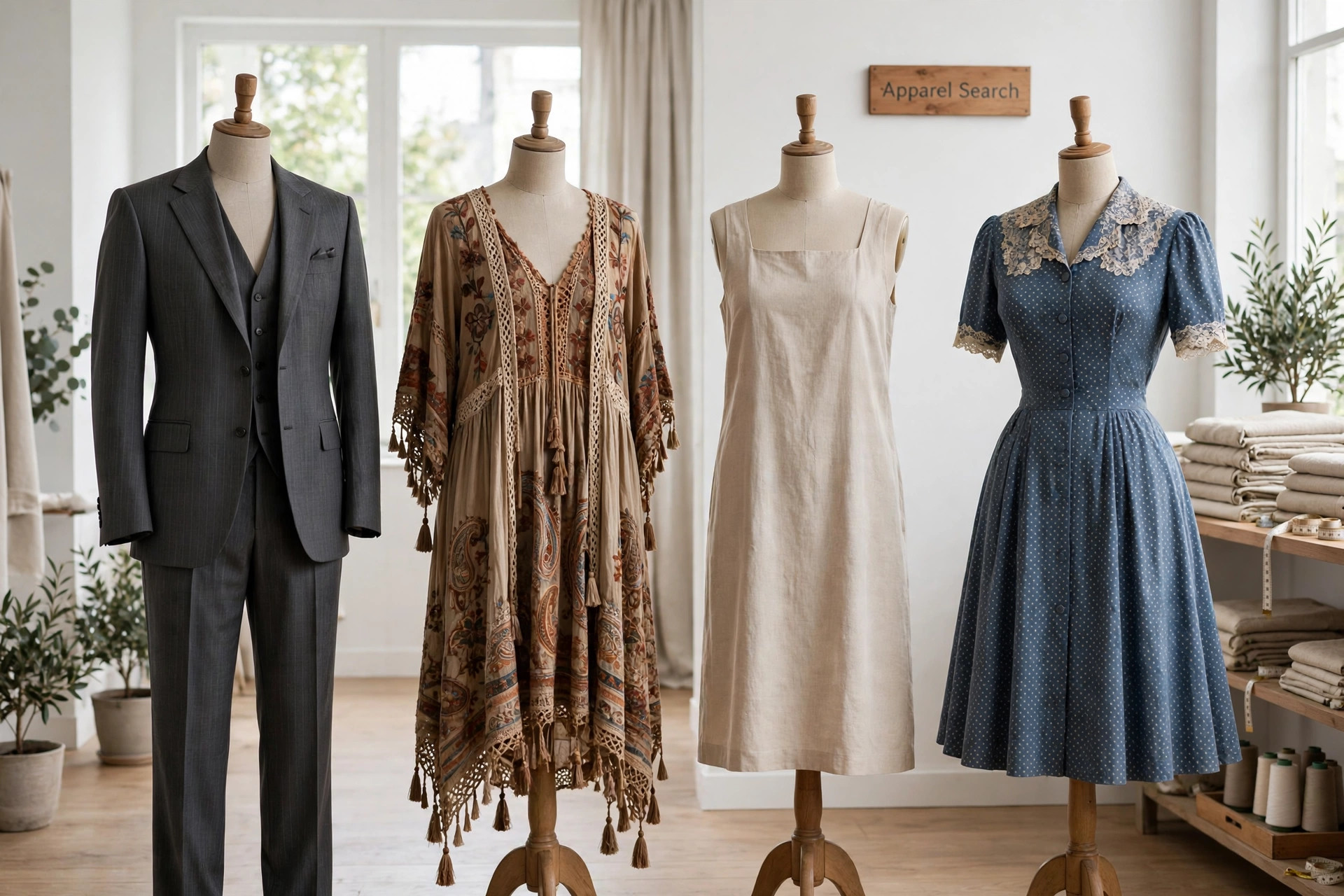
Fashion Changes; Style Is the Constant Inside It
The definition contains its own distinction, in the words distinctive and often constant. Fashion, as a popular style or practice, is collective and temporary by nature: it is what is being worn widely now, and its value partly depends on being current. Personal style is what remains recognisable about a person's dress while fashions pass through it. Two people can wear the same season's fashion and look entirely different, because each has filtered it through settled preferences — a preferred silhouette, a range of colours, a level of formality, a way of wearing jewellery or a refusal of it, a standard of fit. Those preferences are style. They explain why a well-dressed person's older photographs look dated in their garments but not mistaken in their choices: the fashion belonged to its year, the style belonged to the person.
This is also why style is the more useful word for anyone building a wardrobe. Buying fashion produces a collection of pieces that were each current once. Developing style produces a test that new purchases must pass: does this garment fit the shapes, colours and occasions that already define how I dress, and will it combine with what I own? A piece that passes the test earns its place across several fashions; a piece that fails it is worn while its trend lasts and then stranded. The fashion victim is the person with fashion but no style to govern it, altering a look completely from season to season. The fashionista, by contrast, follows fashion closely in the service of a style that stays legible.
One Word, Many Trades
Style is a working term in field after field, and the shared meaning underneath the list is a characteristic manner of doing something. In music, style names a genre, the set of conventions by which a kind of music is recognised. In writing, style covers both literary genre and the practical machinery of the style guide, the book of rules by which a publication keeps spelling, punctuation and usage consistent; stylistics studies variation in the language use of an individual, such as formal and informal style. In typography, style is one of the three traditional design features of a typeface along with size and weight, its values being regular, italic or condensed. In web design, style is literal code: cascading style sheets separate how a page looks from what it says, so one change of style can redress an entire site as completely as a new wardrobe redresses a person.
The older senses show the word's range. A style is the gnomon of a sundial, the part that casts the shadow by which time is read. Style is also a title or manner of address, including Chinese courtesy names, the formal names used in social life. Even the flower has a style, the stalk-like part of the pistil. These uses seem unrelated until the common thread is seen: in each case style is the characteristic form by which something is identified, whether that something is a person dressing, a writer writing, a typeface printing or a sundial telling time. Fashion uses the word most visibly because clothing is the style most people practise daily and in public, but the discipline is the same everywhere — choose a manner, keep it coherent, and let it become recognisable.
The Working Vocabulary Around Style
Because style has to be read before it can be sold, a professional vocabulary has grown up around predicting and applying it. Trend forecasting and colour trends forecasting attempt to name next season's manner before it arrives; stylist agencies supply the professionals who assemble a coherent style for a client, a shoot or a publication; and the fashion blog — the original page points readers to the Style Blog — is where individual senses of style are published and argued over. Each develops a different side of the same idea: style as something that can be recognised, forecast, hired and discussed.
Not to Be Confused With
Style is often confused with fashion, but the two words measure different things. Fashion is a popular style or practice: collective, current, and changing with the seasons. Style, in the personal sense, is distinctive and often constant — the recognisable way one person dresses within and across changing fashions. A person can follow every fashion and have no settled style, or keep a clear style while ignoring most fashions.
Common Questions
What is style in fashion?
Style is a distinctive and often constant trend in the style in which a person dresses. Fashion is a popular style or practice, especially in clothing, footwear, accessories, makeup or body, and what a person wears helps determine that person's sense of style.
How does style differ from fashion?
Fashion is the popular style or practice of the moment, shared by many people and changing with seasons. Style, in the personal sense, is distinctive and often constant: it is the recognisable way an individual dresses within and across changing fashions.
What does style mean outside clothing?
Style can mean genre, design, format or appearance in many fields: a music genre, the gnomon part of a sundial, a title or honorific, one of the three traditional design features of a typeface alongside size and weight, cascading style sheets in web design, and a style guide or literary genre in writing.