Gown
Clothing Definitions — definitions of garments and clothing terms from Apparel Search
Search Apparel Search
At a Glance
Definition: A gown is a long, formal dress — usually floor-length and made from luxurious fabric — worn for evening, ceremonial and state occasions; the word also names loose ceremonial robes such as academic gowns.
Also known as: Evening gown (the principal modern sense)
Category: Clothing Definitions
Word Origin
Gown comes from Old French goune, a long loose robe, probably from a Latin word for a leather garment. For centuries it named the main outer garment of both sexes — long, loose and full — before narrowing in modern use to women's formal dress and to official robes.
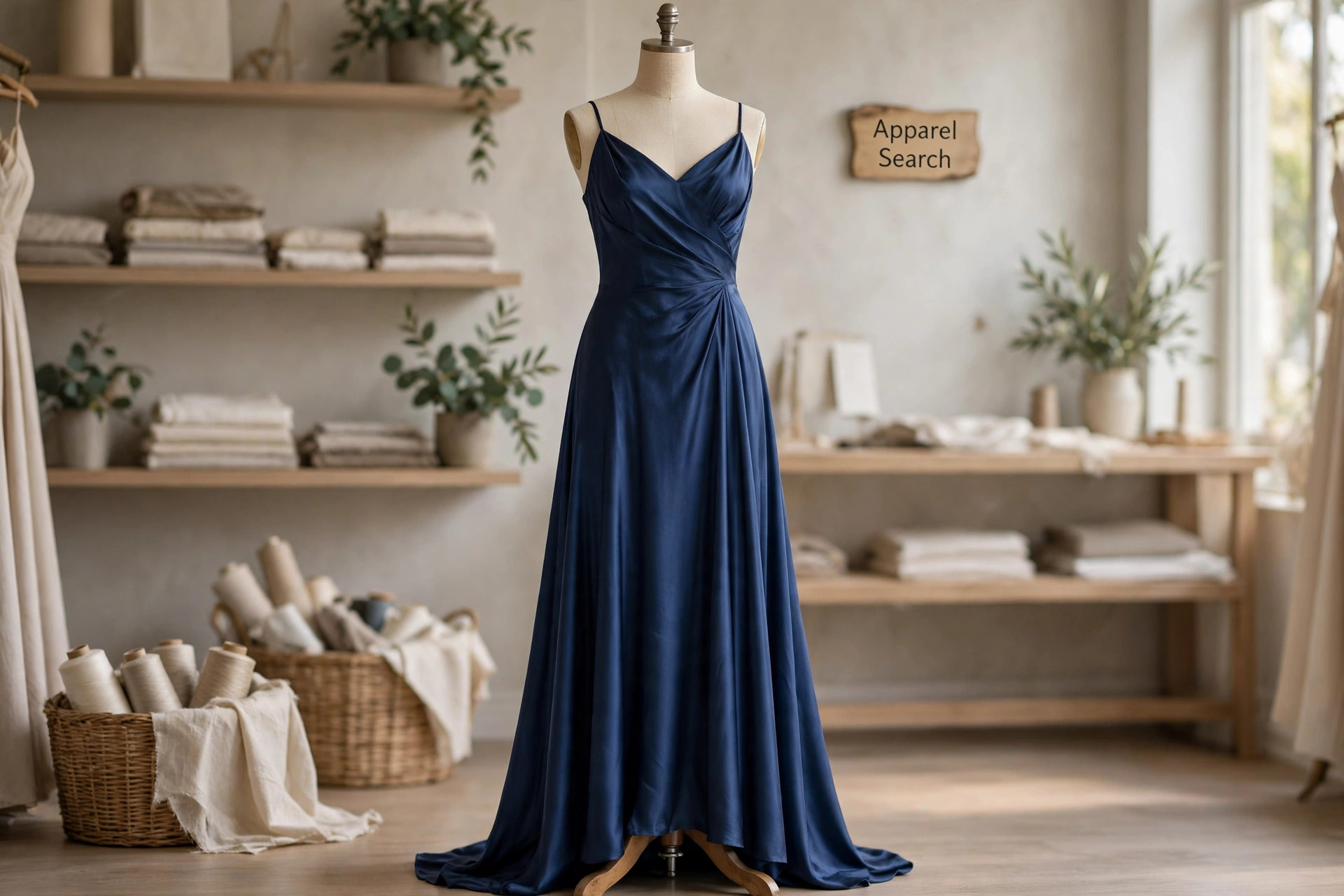
A gown is the grandest member of the dress family: a long, formal dress, usually reaching the floor and made from rich fabric, worn when the occasion itself is grand — balls, state dinners, formal weddings and awards ceremonies. In the language of dress codes it is the women's counterpart to men's formal wear, answering white tie and black tie invitation for invitation. But the word reaches further than the ballroom: brides, patients, judges and graduates all wear things called gowns. This page covers the evening gown and its rules first, then the other garments that share its name.
The Evening Gown and the Dress Codes
The evening gown is defined by the dress code it answers. For white tie — the most formal evening code, where men wear tailcoats — the corresponding women's dress is the ball gown: full-length, with a full skirt made for dancing, worn at state occasions, formal balls and debutante presentations, where a debutante traditionally wears white. Elbow-length gloves are the classic accompaniment to a sleeveless ball gown, the glove length rising as the sleeve disappears.
For black tie the rules relax by degrees. A full-length gown is always correct, but ballet length and tea length — hems between mid-calf and ankle — are also accepted, and at some black tie events a cocktail dress of day-dress length passes. The gradient is the point: white tie admits no shortening at all, black tie admits some, and the further an event sits from those codes, the more the word gown gives way to the word dress.
Fabrics, Cut and Accompaniments
A gown is made from luxury fabric — that is part of the definition, not a preference. Velvet, brocade and silk in its satin, chiffon and organza forms are the classic choices, fabrics with weight, lustre or structure enough to carry a full-length skirt and to register across a large room. The cut follows: a fitted or structured bodice, a skirt with real volume or a long column line, and finishing — beading, embroidery, a train — at a level day dress never attempts. Long gloves, fine jewellery and evening shoes complete a dress code that is a system, not a single garment.
Regional and modern variations bend the system without breaking it. Scottish formal dress pairs a white gown with a tartan sash — worn in the tartan of the wearer's own clan, her husband's clan, or an approved district tartan — when accompanying a man in a formal kilt. And the ball skirt, a 1990s introduction, splits the gown into separates: a full, long evening skirt worn with a cashmere sweater or lace camisole, meeting the code's length and richness while abandoning the single dress.
The Other Gowns: Wedding, Night and Hospital
Several familiar garments borrow the name while sharing only its length and looseness. The wedding gown is the bride's formal dress — in modern use the most commonly sewn gown of all, and the one context where a full train and veil remain standard. The nightgown is sleepwear, a loose long garment whose name records an era when the same long cut served in bed and out of it. The hospital gown is the back-fastening patient garment, designed for examination and treatment rather than appearance — a gown by shape alone.
Historical forms fill out the family. The tea gown was the informal, loosely fitted dress of the late nineteenth century, worn at home in the afternoon without a corset's full rigour; the mandarin gown adapts the name to a Chinese-influenced formal robe. Each of these is defined on its own page; what unites them is the word's original sense of a long, loose, full garment, before it narrowed to the ballroom.
Gowns of Office: Court and Academic Dress
The gown's second life is as a robe of office. Court dress — the formal dress prescribed for royal courts and legal courts — includes gowns worn by judges, barristers and officials, garments whose cut declares the wearer's office rather than the wearer's taste. The academic gown is the most widely worn of all: the loose robe of graduates and university teachers, its facings, hoods and sleeve shapes encoding institution and degree, covered in our Academic Dress definition.
These official gowns explain the word's older breadth. For centuries a gown was simply the principal outer garment — the loose, long robe worn over everything else, by men as well as women — and the historical frock and gown overlapped in that role. What a gown was worn over mattered too: full skirts were built up on understructures such as the petticoat. The modern evening gown is the survivor of that long history in women's dress, while the robe of office survives in the courts and universities — two branches of one word, both still in daily use.
Not to Be Confused With
Every gown is a dress, but most dresses are not gowns. Dress is the general word for the garment made of a bodice and skirt in one, at any length and any level of formality, from a sundress to a wedding dress. Gown is reserved for the formal, long end of the family — evening, bridal, ceremonial and state wear, usually floor-length and made to a higher level of occasion. Our questions section sets out the difference between a dress and a gown in full.
Common Questions
What is a gown?
A gown is a long, formal dress, usually floor-length and made from a luxurious fabric such as silk, velvet or brocade, worn for evening, ceremonial and state occasions. The word also names loose official robes, such as academic and court gowns.
What is the difference between a gown and a dress?
A dress is the general garment — a bodice and skirt in one, at any length or formality. A gown is the formal, long end of the dress family: evening, bridal and ceremonial dresses of floor length and high occasion. Every gown is a dress; most dresses are not gowns.
What gown lengths are correct for white tie and black tie?
For white tie, the corresponding women's dress is the full-length ball gown. For black tie, a gown may be full-length or ballet or tea length, from mid-calf to ankle, and a cocktail-length dress is acceptable at some black tie events.