Nightgown
Clothing Definitions — definitions of garments and clothing terms from Apparel Search
Search Apparel Search
At a Glance
Definition: A nightgown, also called a nightdress, is a loosely hanging gown worn by women for sleeping, in lengths from hip-length to floor-length and in soft fabrics chosen for comfort in bed.
Also known as: Nightdress; nightie (a short nightgown)
Category: Clothing Definitions
The nightgown is the standard loose sleeping dress: a gown that hangs from the shoulders without fastening or fitting closely anywhere, made to be put on at bedtime and forgotten. It is nowadays women's nightwear, though it began as a garment everyone wore. Its variety is produced by three simple variables — length, fabric and bodice — running from the brief babydoll at hip length to the floor-length gown at the peignoir end of the range. This page explains the styles and fabrics, and where the nightgown sits among the other garments of the nightwear family, in plain product terms.
Styles Across a Simple Garment
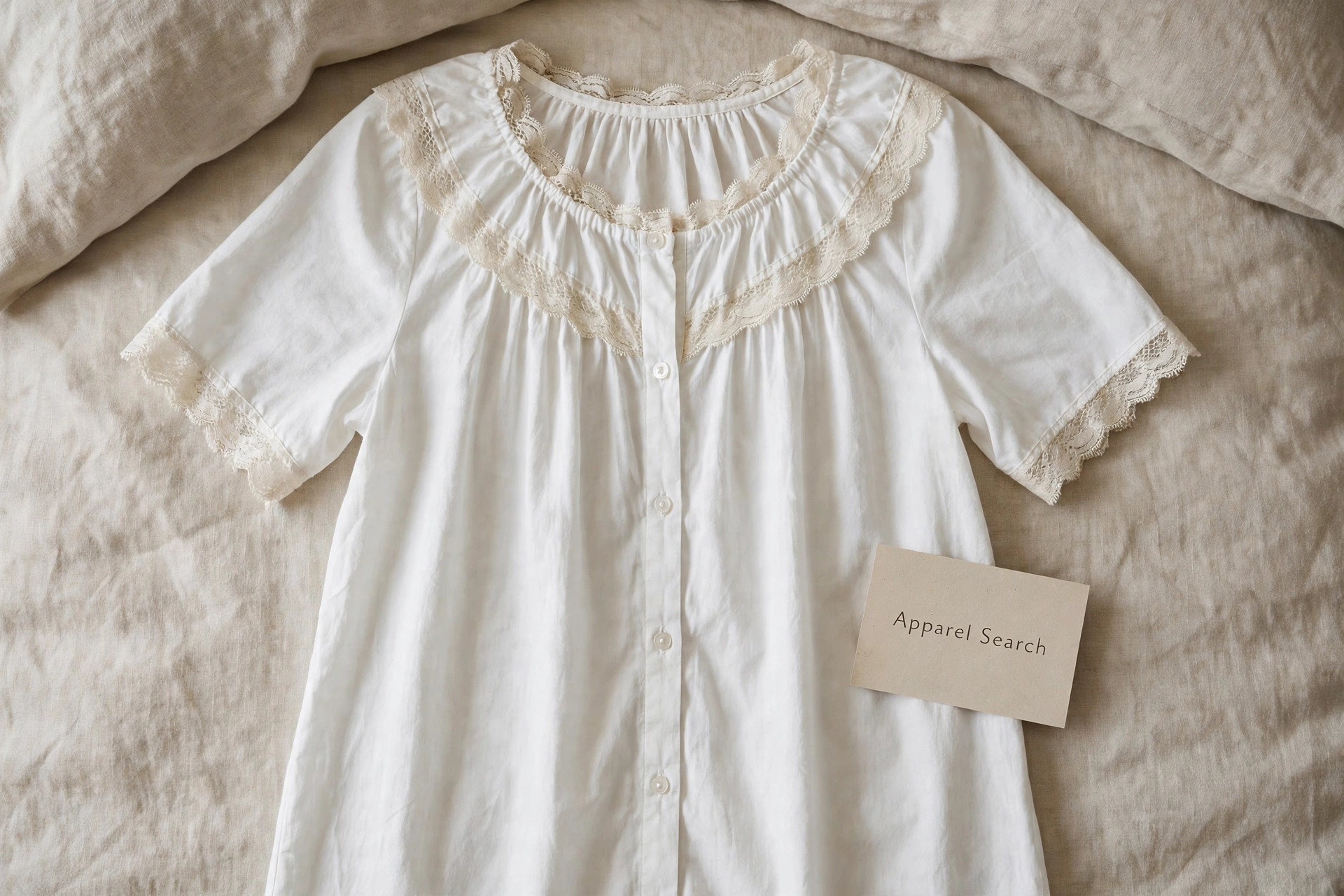
Length does most of the sorting. At the short end the babydoll is a brief, usually empire-line gown, sold with matching briefs; the standard nightdress falls to the knee or calf; long gowns reach the ankle or floor. Sleeves follow season — sleeveless and capped sleeves for summer, long sleeves for winter — and bodices are gathered into a yoke, smocked, buttoned down the front for nursing, or cut plain. The skirt is always left loose: nothing about the garment is meant to fit, and its comfort is precisely its shapelessness, shaped only at the bodice for appearance's sake.
Fabric grades the range by warmth and by luxury. Brushed cotton and flannel are the winter workhorses; cotton lawn and voile the summer standards; silk and satin the luxury options, with nylon and polyester covering the volume market. Trimming is light — lace or appliqué at the neckline and hem, embroidery on the yoke — and it is the quantity of that decoration, more than any difference of cut, that moves a gown toward the negligee at the decorative end of the department.

From Everybody's Shirt to Women's Dress
The nightgown descends from the day shirt. For centuries the washable shirt worn next to the skin by day was slept in at night, and longer versions of it — nightgowns and nightshirts alike — were made for men as well as women through the eighteenth and nineteenth centuries. The change came with pyjamas, which arrived from Asia in the late nineteenth century and took over men's nightwear almost completely. As the shirt-form went to the nightshirt and the two-piece form to pyjamas, the gown became women's dress, and acquired the shaped bodice, yoke and trimmings that mark it out from a shirt.
Buying considerations are practical ones, and they explain the garment's persistence. Length is chosen against warmth and against tripping on stairs; sleeves against the season; fastenings — where they exist at all — are placed to be comfortable lying down; everyday gowns are chosen washable, in cotton that survives the machine, while silk and satin are kept for the finer end. Optional matching panties — knickers in British usage — are sold with the shorter styles. In the nightwear department the nightgown stands as the middle term: plainer than the negligee, more dress-like than the nightshirt, and still the default answer to what a sleeping gown is.
Care, and the Nightgown Today
Care is graded by fabric, as the buying choices are. Cotton and flannel gowns are machine-washed with ordinary laundry and are the practical default for children-free adult wear and for anyone who washes nightwear frequently; lawn and voile want a gentler cycle; silk and satin are washed by hand or on a silk setting and kept away from high heat. Lace and appliqué survive longest when the gown is turned inside out. Because a nightgown is worn against the skin for a third of the day, softness after washing matters more than appearance on the rail, and plain cotton improves with washing in a way sheers and satins do not.
The nightgown's position today is secure but shared. Pyjama sets and separates take much of the market, and the nightshirt serves wearers who want the same single garment in shirt form; the negligee takes the decorative end. What remains distinctly the nightgown's is the middle ground: the washable, comfortable, dress-form sleeping garment, sold in every fabric from brushed flannel to silk, in lengths from the babydoll to the floor. It is one of the oldest garments in the wardrobe still in daily use in recognisably its historic form.
Sizing follows dress sizing rather than the one-size tradition of the older nightshirt, and the better makers cut the larger sizes with a fuller skirt rather than simply a wider bodice — a detail worth checking, since a nightgown that pulls across the back fails at the one thing it is for.
Not to Be Confused With
The nightwear family's three forms are told apart by cut. A nightgown is cut as a dress — bodice and skirt, hanging loose — and is women's wear. A nightshirt is cut as a long shirt, with a shirt's placket and sleeves, and is worn by men and women. Pajamas are not a gown at all but two pieces, a jacket and trousers. Gown, shirt, or set: the cut names the garment. A dressing gown, despite the shared word, is none of the three — it is a wrap worn over nightwear, not slept in as the main garment.
Common Questions
What is a nightgown?
A nightgown, also called a nightdress, is a loosely hanging item of nightwear, nowadays worn by women. Its length varies from hip-length babydoll styles to floor-length gowns.
What fabrics are nightgowns made from?
Nightgowns are made in cotton and cotton lawn for everyday wear, flannel for winter warmth, and silk, satin and chiffon for finer styles, often trimmed with lace or embroidery.
How does a nightgown differ from a nightshirt?
A nightgown is cut as a dress, with a shaped or gathered bodice and skirt, and is women's nightwear. A nightshirt is cut as a long shirt, historically worn by everyone and still made in shirt styling.