Hem
Miscellaneous Definitions — the folded, sewn finish that keeps a cut edge from raveling, from Apparel Search
Search Apparel Search
At a Glance
Definition: A hem is the edge of a piece of cloth that has been folded up, folded up again and sewed down, so the cut edges are completely enclosed in cloth and cannot ravel — and, by extension, any cloth treatment that prevents raveling.
Category: Miscellaneous Definitions
To hem a piece of cloth, the cut edges are folded up, folded up again, and then sewed down. The cut edges are thus completely enclosed in cloth, so that they cannot ravel, and a hem is also the edge of the cloth treated in this manner. The hem may be sewn down with a line of invisible hem-stitch or blind-stitch, or sewn down by a sewing machine, usually leaving a visible line of sewing. This page covers the folded construction itself, the hand and machine stitches that secure it, the other edge finishes the term extends to, and the deeper hem used on heavy cloth. For where the finished garment ends, see the separate hemline page.
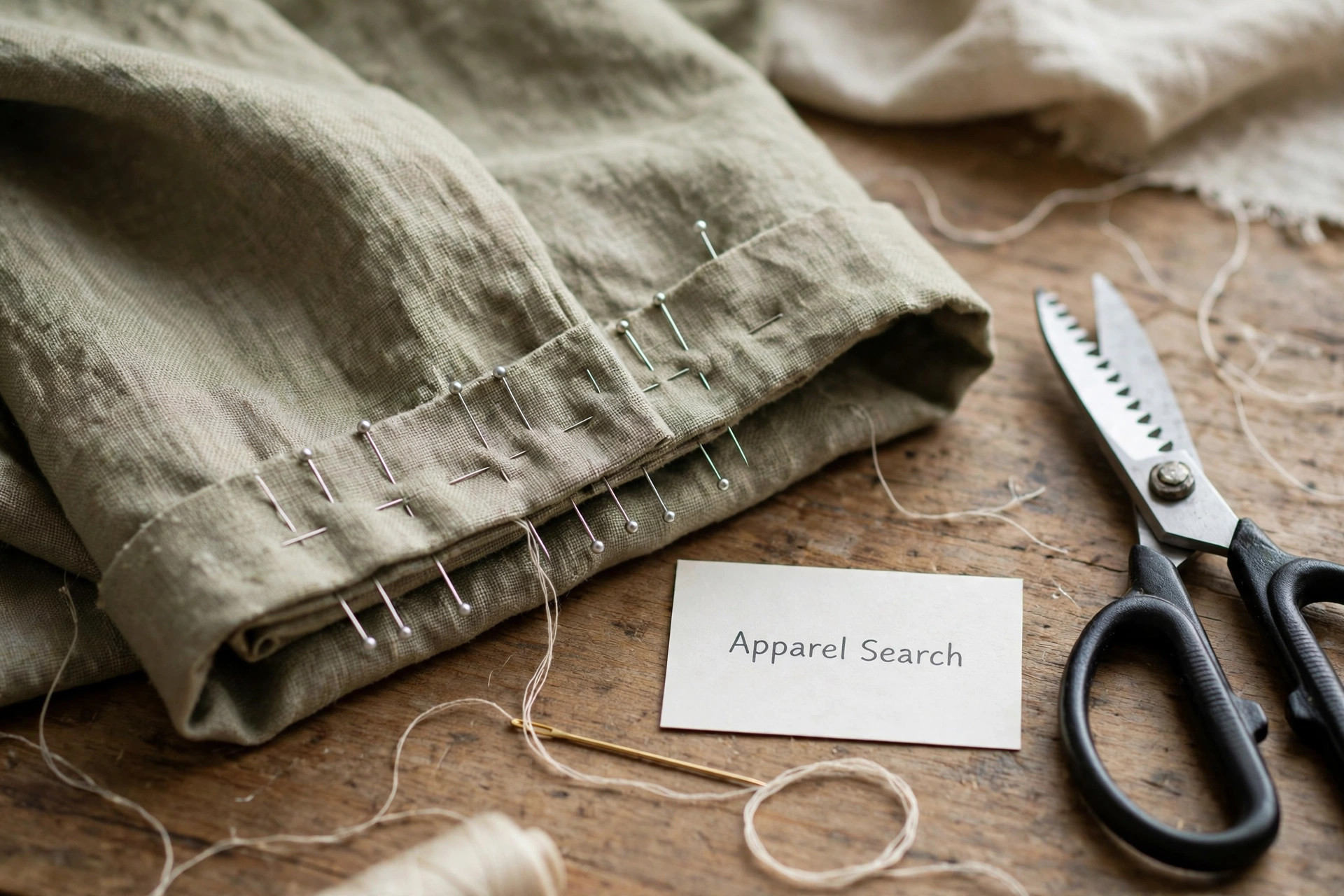
Fold, Fold Again, Sew Down
The hem exists because woven cloth has a weakness: a cut edge unravels. Threads at a raw edge have nothing holding them, and wear and washing pull them free one by one until the garment frays back from its own border. The classic hem solves this with geometry rather than extra material. The cut edge is folded up once, which turns the raw edge inward, and folded up again, which buries it completely inside the fold. Sewing down the fold then locks the whole arrangement: the edge that could ravel is enclosed in cloth on all sides, protected from friction and from the pull of loose threads. Every wearer has handled this construction at the bottom of a trouser leg or the edge of a skirt without noticing it, which is the mark of a good hem — it is infrastructure, not decoration.
Hand or Machine: How the Fold Is Secured
How the fold is secured divides hand work from machine work. A hem-stitch or blind-stitch catches only a thread or two of the outer cloth with each stitch, so from the outside the line of sewing is invisible; it is the finish expected on tailored and fine garments. A sewing machine sews a hem quickly and strongly, usually leaving a visible line of sewing, which casual garments accept as part of their look. Modern sewing machines can make many decorative and functional stitches, so the number of possible hem treatments is large, and machines can also sew a reasonable facsimile of a hem-stitch — though the stitches will usually be larger and more visible, which is why most haute couture hems are still sewn by hand.
Other Ways to Finish an Edge
Because the purpose is preventing raveling, the term hem is also extended to other cloth treatments that prevent raveling. An edge can be serged: an overlock is a kind of stitch that sews over the edge of one or two pieces of cloth for edging, hemming or seaming, and an overlock sewing machine will usually cut the edges of the cloth as they are fed through — such machines being called sergers in North America. Delicate cloth can be hand rolled and then sewn down with tiny stitches, a finish still seen as a high-class finish to handkerchiefs. Edges can be pinked with pinking shears, whose zigzag cut slows fraying, or covered with binding, which wraps the raw edge in a separate strip of fabric, and there are many other inventive treatments besides.
Deep Hems and the Dressmaker's Hem
Weight changes the engineering. Heavy material with deep hems cannot hang all its weight from one line of stitching at the top of the fold, so heavy material with deep hems may be hemmed with what is called a dressmaker's hem — an extra line of loose running stitch is added in the middle of the hem, so that all the weight of the cloth does not hang from one line of stitching. Hem depth itself is a design and alteration decision: a deep hem adds weight that helps a garment hang straight, and it leaves material in reserve so the garment can be let down later — the reason children's clothes and quality trousers are sold with generous hems.
Not to Be Confused With
Hem is not the same as hemline. The hem is the folded construction that finishes a garment's edge — cloth folded up, folded up again and sewn down so the cut edge cannot ravel. The hemline is the position of that finished edge: where the garment ends, and how long it is. A hemline can rise or fall with fashion without the hem's construction changing at all.
Common Questions
What is a hem?
A hem is the edge of a piece of cloth that has been folded up, folded up again and sewed down so the cut edges are completely enclosed and cannot ravel. The term is also extended to other cloth treatments that prevent raveling.
Why are most haute couture hems sewn by hand?
Machines can sew a reasonable facsimile of a hem-stitch, but the stitches will usually be larger and more visible. Most haute couture hems are sewn by hand so the stitching stays invisible on fine garments.
What is a dressmaker's hem?
Heavy material with deep hems may be hemmed with a dressmaker's hem — an extra line of loose running stitch added in the middle of the hem, so that all the weight of the cloth does not hang from one line of stitching.