Pinking Shears
Miscellaneous Definitions — the sawtooth-bladed scissors that cut a zigzag edge and limit fraying, from Apparel Search
Search Apparel Search
At a Glance
Definition: Pinking shears are scissors whose blades are sawtooth instead of straight, leaving a zigzag pattern instead of a straight edge — a cut that, on woven cloth, limits the length of any frayed thread and thus limits the damage fraying does.
Category: Miscellaneous Definitions
Word Origin
The cut produced by pinking shears has given its name to pinks, the hardy carnations of the Dianthus genus named for their petals' pinked edges; the color pink was then named after these flowers.
Pinking shears are scissors whose blades are sawtooth instead of straight, and they leave a zigzag pattern instead of a straight edge. They have a utilitarian function for cutting woven cloth: unfinished cloth edges fray easily, and while the sawtooth pattern does not prevent fraying, it limits the length of the frayed thread and thus limits the damage. The same blades also make decorative cuts, and the tool has left a surprising mark on the language, naming first a flower and then a color. This page covers how the zigzag edge works, the tooth patterns available, and the naming chain from shears to pinks to pink.
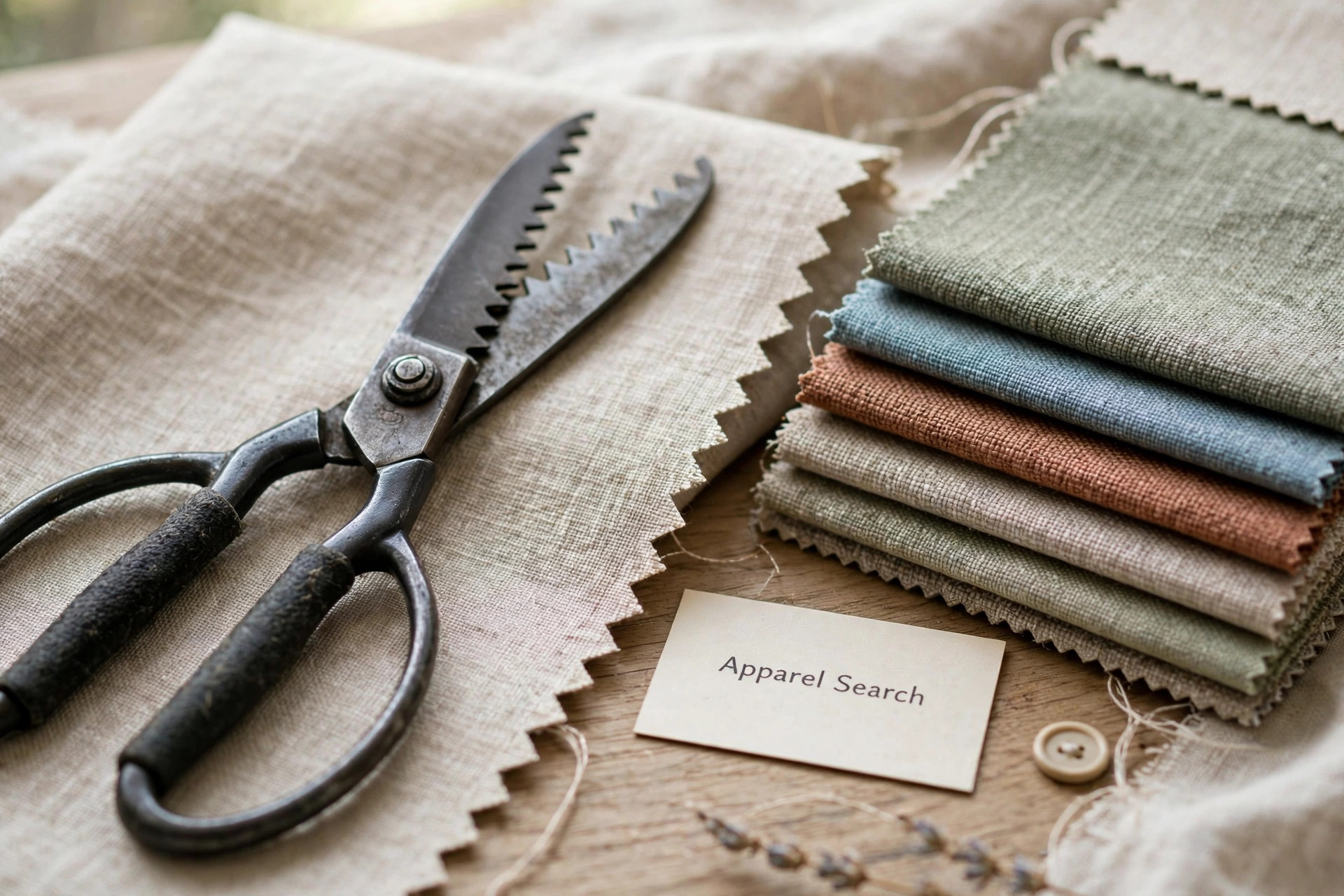
A Zigzag Edge That Limits Fraying
Woven cloth is a grid of threads, and a straight cut across that grid leaves every thread end free at the same line. Wear, handling and washing pull those ends loose — the weave becomes undone and threads pull out easily — producing the familiar frayed edge. Pinking changes the geometry of the problem. Because the blades are sawtooth, the cut edge runs in a zigzag, so no single line of thread ends is exposed at once, and any thread that begins to work loose can only fray back to the next tooth of the pattern. The sawtooth does not prevent fraying altogether, but it limits the length of the frayed thread and thus limits the damage, buying the edge time and stability.
That makes pinking a quick, practical edge finish for seams and samples where a folded hem or overlocked finish is not needed, and it is one reason pinking shears are valued for cutting fabric swatches, whose edges must stay neat through repeated handling — in the original page's words, pinking shears are fabulous for cutting fabric swatches. In the sewing room the shears sit among the edge finishes a maker chooses between for each fabric and purpose: a hem encloses the raw edge completely, a binding wraps it, an overlocked stitch sews over it, and pinking trims it into a self-limiting zigzag with a single cut and no extra material or stitching. Used with an understanding of their limit — they slow fraying rather than stop it — pinking shears remain the fastest complete answer to the raw edge problem that woven cloth presents on every cut.
Decorative Teeth and the Tool Itself
The same blades serve decoration as readily as utility. Pinking shears can be used for decorative cuts, and there are a number of patterns beyond the standard zigzag: arches, saw-tooth of different aspect ratios, or asymmetric teeth. Changing the tooth changes both the look of the edge and its behavior — a finer tooth gives a subtler finish on light cloth, while a bolder tooth makes a deliberate scalloped or peaked effect on craft and dress fabrics.
The tool itself demands more force than ordinary scissors, because two toothed blades must mesh cleanly along their whole length, and a well-made pair is judged by how evenly those teeth meet: gaps leave uncut threads and snag the fiber ends the cut was meant to tidy, while a clean mesh shears the zigzag in one pass. For swatch books, sample cards and internal seam allowances, that speed and simplicity are exactly what is wanted.
How Shears Named a Flower and a Color
Few sewing tools have left a mark on the language as surprising as this one. The cut produced by pinking shears has given its name to pinks: hardy carnations of the Dianthus genus, named for their petals' pinked edges, whose frilled, notched petal margins look as though they have been cut with toothed blades. The color pink was then named after these flowers, a chain that runs from tailor's tool to flower to color word, so every use of the color name quietly recalls a zigzag cut edge in cloth. The color's place in the modern palette is charted in resources such as Pantone swatches, but its name began at the cutting table.
To pink, as a verb for making a notched or perforated edge, is the sense the flower's name preserves in everyday speech. The shears therefore earn their page twice over: as a working answer to fraying on woven cloth, and as the unlikely source of one of the most used color words in fashion.
Common Questions
What are pinking shears?
Pinking shears are scissors whose blades are sawtooth instead of straight. They leave a zigzag pattern instead of a straight edge when they cut.
Why are woven cloth edges pinked?
Cloth edges that are unfinished will easily fray, as the weave becomes undone and threads pull out easily. The sawtooth pattern does not prevent the fraying but limits the length of the frayed thread and thus limits the damage.
Where does the color pink get its name?
The cut produced by pinking shears gave its name to pinks, hardy carnations of the Dianthus genus named for their petals' pinked edges. The color pink was then named after these flowers.
Can pinking shears make decorative cuts?
Yes. Pinking shears can be used for decorative cuts, and there are a number of patterns, including arches, saw-tooth of different aspect ratios, and asymmetric teeth.