Nightwear
Clothing Definitions — definitions of garments and clothing terms from Apparel Search
Search Apparel Search
At a Glance
Definition: Nightwear, also called sleepwear or nightclothes, is clothing designed to be worn for sleeping, including pajamas, nightgowns, nightshirts and the robe and fine garments worn with them.
Also known as: Sleepwear; nightclothes; nightdress
Category: Clothing Definitions
Nightwear is the family name for clothing made to be slept in. It is private dress, worn at home and in the company of people one knows well, and some wearers keep it for the cold season only, sleeping in underwear or nothing in summer. This page is the family page for the group: it explains how the category is organised and where each named garment belongs. Its best-known members are the two-piece pajamas and the dress-like nightgown, with the nightshirt, the negligee and the shorter and finer styles described below completing the set.
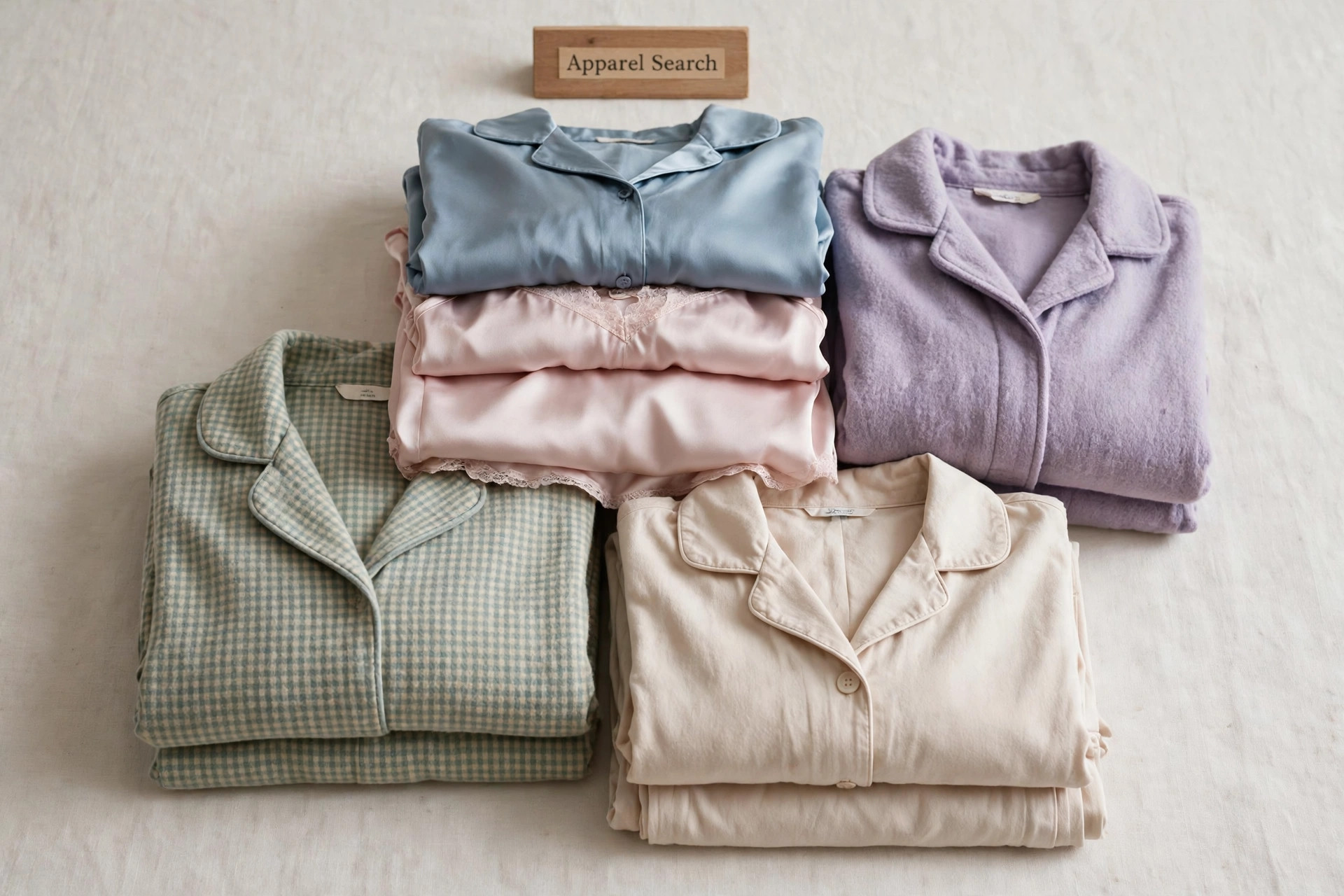
The Garments of the Nightwear Family
Nightwear divides first by cut. Two-piece pajamas, a buttoned or pull-on top worn with trousers or shorts, are the unisex standard and the most bought form. One-piece gowns divide by shape: the nightgown is cut as a dress, long or short, with sleeves or straps; the nightshirt is cut as a long shirt, with a shirt's collar, placket and curved hem; and the babydoll is the short, loose gown, usually worn with briefs, named in this guide at the Babydoll Definition. A slip worn as a nightdress, a plain straight gown with narrow straps, belongs to the same group.
The fine end of the family is decorative rather than merely comfortable. The chemise is a straight, slip-like gown, historically an undergarment that became a nightgown in its own right. The negligee is a sheer, trimmed gown made to be seen as much as slept in. The peignoir is the long robe worn over a nightgown or negligee, often sold with it as a matching set. Robes and dressing gowns belong to the same department although they are worn over nightwear rather than slept in, and modern loungewear has blurred the category's edge by designing similar soft garments for waking hours at home.

Fabrics and Seasons
Fabric choice follows the skin and the season. Cotton absorbs moisture, breathes and washes hot, which makes it the everyday default for adults and children alike. Brushed cotton flannel and brushed jerseys trap a layer of air in their raised surface and are the standard winter cloths. Cotton lawn and fine jersey serve summer, in short sets and sleeveless gowns. Silk and satin are cool and smooth against the skin but need gentle washing, and synthetic sheers and laces make the decorative end of the range, the negligees and babydolls, affordable.
Because of this grading by warmth, nightwear is one of the most seasonal categories in the wardrobe. Many wearers keep two weights, light cotton for summer and long flannel for winter, and some wear nightwear only in the cold months. Retailers organise the rail the same way, by fabric weight and sleeve and leg length as much as by style, and a set bought for a heated modern house may be a full weight lighter than the same style bought for an unheated one.
Fit, Fastenings and Safety
Fit is deliberately loose everywhere except where safety rules require closeness. A sleeping garment must not bind when the wearer turns, so bodies are cut easy, waists are elasticated or drawstring rather than belted, and sleeves and legs are finished with soft cuffs or plain hems. Fastenings are kept flat and few, since the wearer lies on them: small buttons, short zips, poppers and ties, placed at the front or side where they will not press into the body.
Children's nightwear is the regulated exception. In many countries it must meet flammability standards, which are met either by flame-resistant fabrics or by a close, snug fit that leaves little loose cloth and little air between cloth and skin. That is why children's sets are cut noticeably closer than adults' and why their labels carry the safety wording and size charts they do. Adult nightwear carries no such rule, and its looseness is a comfort feature, not a fault.
Nightwear and Its Neighbours
Nightwear sits between two neighbouring categories. Below it is underwear, which some people sleep in instead, and the boundary is one of purpose: underwear is made to be worn under other clothing, nightwear to be the only layer. Above it, in the shops, is lingerie, and the fine nightwear in this family, the negligee, chemise and peignoir sets, is usually sold from the lingerie department, where the same garments are presented as decorative dress for the bedroom rather than as plain sleepwear.
Read as a system, nightwear is simple: a base garment for sleeping, chosen from the pajama, gown and shirt forms above; warmth graded by fabric, from summer lawn to winter flannel; and a robe over the top for the hours around bed. Each named garment in this section fills one place in that system, and the member pages linked from here define each of them in full.
Common Questions
What is nightwear?
Nightwear, also called sleepwear, nightclothes or nightdress, is clothing designed to be worn while sleeping. The category includes pajamas, nightgowns, nightshirts, babydolls, chemises, negligees, peignoirs and slips worn as nightdresses.
What fabrics is nightwear made from?
Nightwear is made for comfort against the skin: cotton and cotton blends for everyday sets, brushed flannel for winter warmth, and silk, satin and fine sheers for decorative styles. Children's nightwear is subject to flammability safety standards in many countries.
Why is some nightwear seasonal?
Body temperature falls during sleep and houses are cooler at night in winter, so nightwear is graded by warmth: light cotton and short sets for summer, long flannel and brushed fabrics for winter, with some wearers keeping nightwear for the cold season only.