Cocktail Dress
Clothing Definitions — definitions of garments and clothing terms from Apparel Search
Search Apparel Search
At a Glance
Definition: A cocktail dress is a shorter-length formal dress, from just below the knee to tea length, worn at cocktail parties and semi-formal to formal occasions.
Also known as: cocktail gown
Category: Clothing Definitions
Word Origin
The name records the hour the dress was made for. The cocktail hour — the early-evening drinks party that became a fixture of social life in the 1920s — needed a dress smarter than afternoon dress and shorter than a dinner gown, and by the 1940s cocktail dress was the established trade and social term for it.
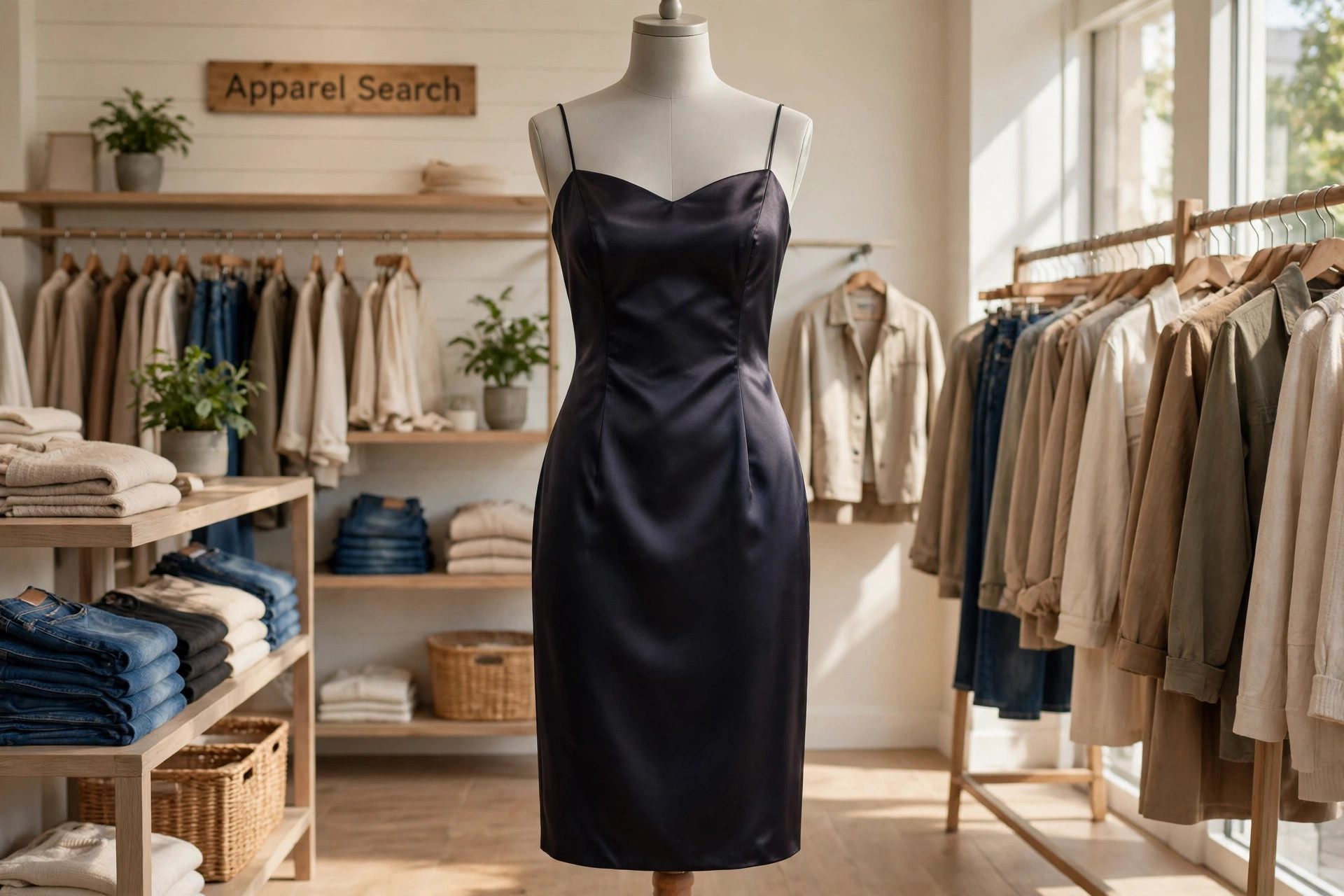
The cocktail dress exists to solve a calibration problem: an evening event that calls for celebration dress but not for a ball gown. Also called a cocktail gown, it is a shorter-length dress worn at cocktail parties and other semi-formal and formal occasions — dressier than an afternoon dress, deliberately short of full length. Its range is wide by design, stretching from a simple silk sheath worn when gentlemen are in dark suits to a full-skirted, embellished dress that can accompany black tie, and the invitation's dress code tells the wearer where in that range to land.
Matching the Dress to the Occasion
The traditional guide to the cocktail dress was the men's dress at the same event. At semi-formal occasions where gentlemen wear dark suits, a less elaborate cocktail dress is correct — and at the plainest end, a dress suit or a good afternoon dress serves the same level. When the men are in black tie, the longer, full-skirted cocktail dress is the matching answer, although in the late 1960s and early 1970s short cocktail dresses were also accepted as black tie attire. The pairing logic explains the category's breadth: cocktail is a level of formality, not a single silhouette.
What the cocktail dress never does is cross into the territory above it. Balls and other white tie affairs require ball gowns; a cocktail dress, however elaborate, is the wrong garment there. Knowing the ceiling is as much a part of the definition as knowing the floor.
Length: Knee, Tea and Ballerina
Length is the cocktail dress's defining measurement. The range runs from just below the knee — the modern default — through tea length, about two inches above the ankle, to ballerina length, touching the ankle. That last stop is a border crossing: ballerina-length dresses usually fall into the evening gown category, because at ankle length the eye reads the dress as a gown whatever the invitation says. Skirt shape travels with length: the closer the dress comes to formal, the fuller the skirt tends to be, a relationship the ballerina skirt and, at the opposite extreme of movement, the hobble skirt both illustrate from dance and fashion history.
Understructure follows the silhouette. A full-skirted cocktail dress of the classic period was built over a petticoat to hold its shape; the modern sheath needs no such architecture but depends instead on fabric with body and on precise fit. Either way, the dress is engineered for standing, circulating and dancing rather than for sitting through a banquet — it is party equipment, not dinner equipment.
Accessories do the final calibration, which is why the same dress can serve two levels of occasion. Formal shoes, evening jewellery and a small bag lift a plain silk cocktail dress to black tie company; simpler shoes and daytime jewellery pull an embellished dress back toward semi-formal. Hosts once spelled this out on invitations, and the modern dress-code line — cocktail attire — still assumes the wearer will do this arithmetic. The dress supplies the length and the fabric; the finish is set by what is worn with it, a flexibility no full-length gown, fixed at the top of the scale, can match.
The Dancing Costume Era and Modern Fabrics
The style's classic period was the mid-20th century, when some couturiers began describing full-skirted cocktail gowns as dancing costumes — dresses made to move at formal dances while still not qualifying as ball gowns. The name captures the garment's social job in that era: the cocktail hour and the dance that followed it were the centre of formal social life, and the dress was designed for both. The Artistic Dress Movement had argued a generation earlier for freer, less encumbered party dress, and the cocktail dress is in part that argument winning.
Fabrics set the level within the category. Silk, satin and chiffon have always been the popular choices, and a wide variety of other materials, styles and accessories are acceptable: a matte crepe sheath reads semi-formal, the same cut in beaded satin reads formal. Modern cocktail dressing has loosened the old men's-dress calibration — the cocktail attire dress code now stands on its own — but the underlying grammar is unchanged: shorter than a gown, smarter than a day dress, and finished like an occasion. Formal headwear has its own retail tradition for these events, listed in our cocktail party hat retailers.
Not to Be Confused With
A cocktail dress stops short of the floor; an evening gown — covered in our gown and evening dress definitions — is full length and is required at balls and white tie affairs. The little black dress is not a separate length category but a classic cocktail-dress formula: a simple, versatile black dress, often at cocktail length, that can be dressed up or down for exactly these occasions.
Common Questions
What is a cocktail dress?
A cocktail dress is a shorter-length gown worn at cocktail parties and other semi-formal and formal occasions. It is dressier than an afternoon dress but stops short of the full-length ball gown reserved for white tie and balls.
How long is a cocktail dress?
Cocktail dress lengths range from just below the knee to tea length, about two inches above the ankle, and sometimes ballerina length, touching the ankle — although ballerina-length dresses usually fall into the evening gown category.
What fabrics are cocktail dresses made from?
A wide variety of materials, styles and accessories are acceptable, with silk, satin and chiffon always popular choices. The fabric and finish set the level: a silk or satin dress with formal accessories can accompany black tie, while plainer versions suit semi-formal occasions.